
Now Reading: ‘Like putting a microscope into the core of the sun’: World’s 1st space-based neutrino detector launches to orbit
-
01
‘Like putting a microscope into the core of the sun’: World’s 1st space-based neutrino detector launches to orbit

‘Like putting a microscope into the core of the sun’: World’s 1st space-based neutrino detector launches to orbit

The world’s first space-based neutrino detector launched to space last week to study elusive neutrino particles that constantly bombard Earth. The mission will test technology that could help researchers in the future to unravel hidden processes taking place deep inside the sun.
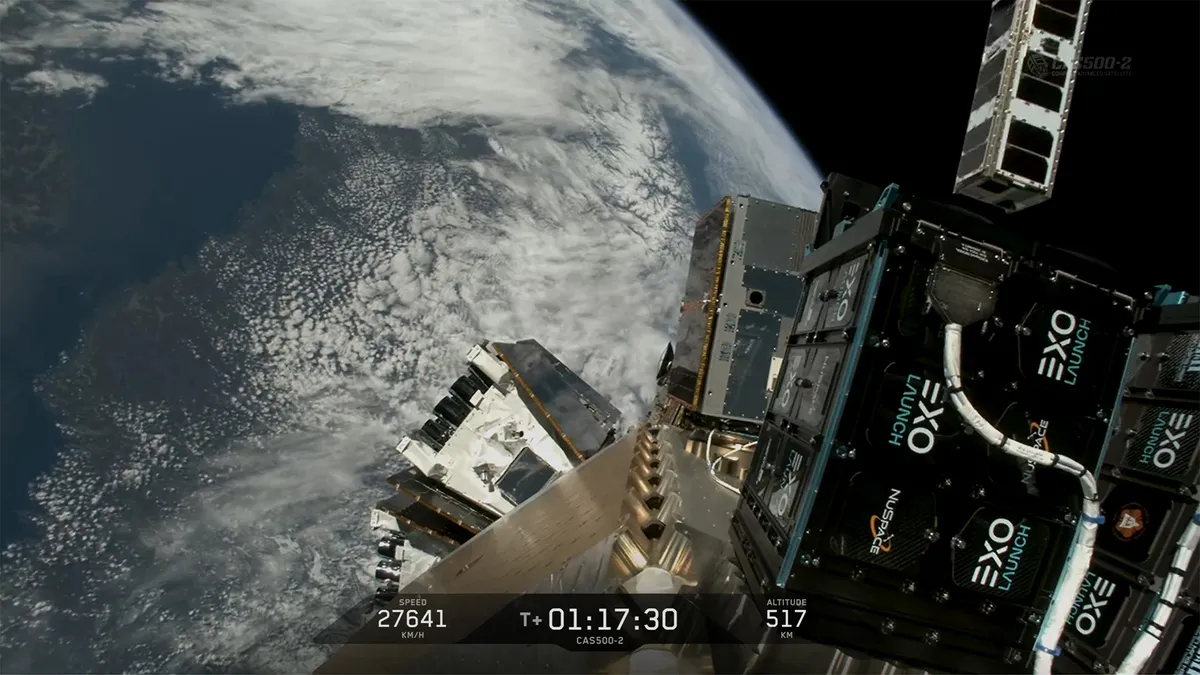
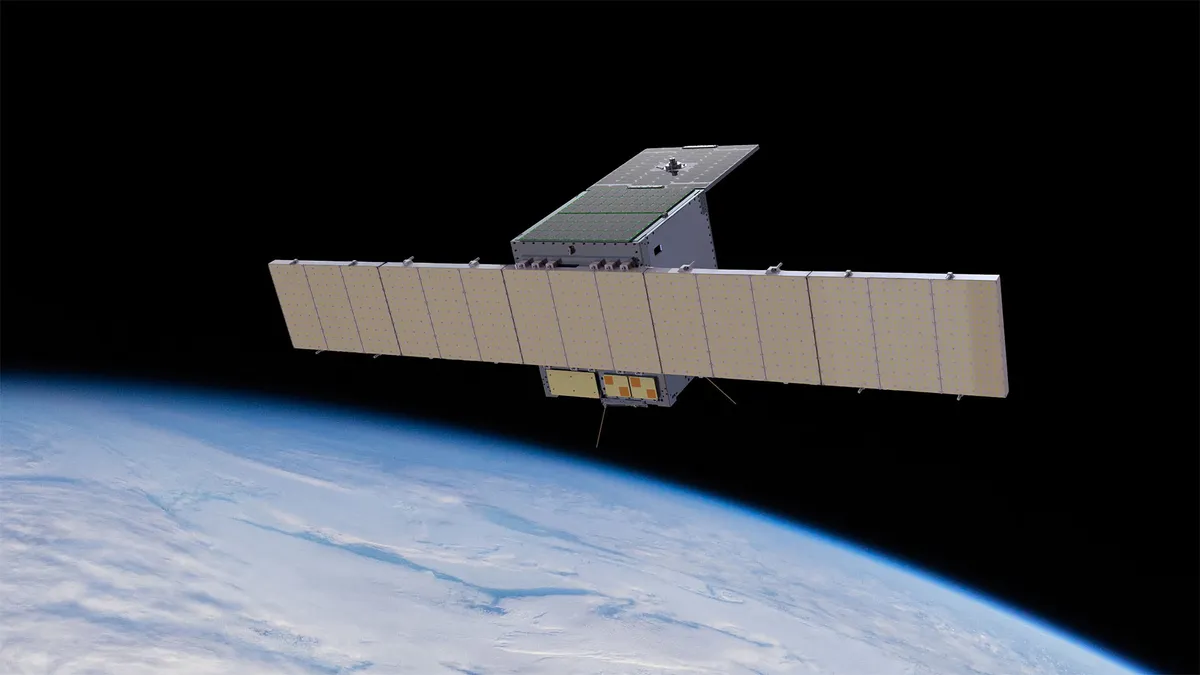
The detector, made of crystals of gallium and tungsten, is embedded in a 3U cubesat (about 12 inches long and 4 inches wide, an equivalent to 30 and 10 centimeters), which will orbit the planet at the altitude of 310 miles (500 kilometers) for about two years. The small instrument rode to orbit on the SpaceX CAS500-2 rideshare mission on May 3.
Neutrinos are near massless particles that emerge during natural nuclear decay, in nuclear fission reactions such as those taking place in nuclear reactors, and in nuclear fusion processes inside stars. Despite being the most abundant particles in the universe (tens of trillions of neutrinos pass through your body every second, according to the U.S. Department of Energy), neutrinos are notoriously difficult to detect.
Their elusive nature is caused by their barely there mass and lack of electric charge. To register the presence of neutrinos on Earth usually requires massive detectors buried deep underground. The neutrino’s sparse reactions with matter are caused by the weak nuclear force, which guides the process of radioactive decay.
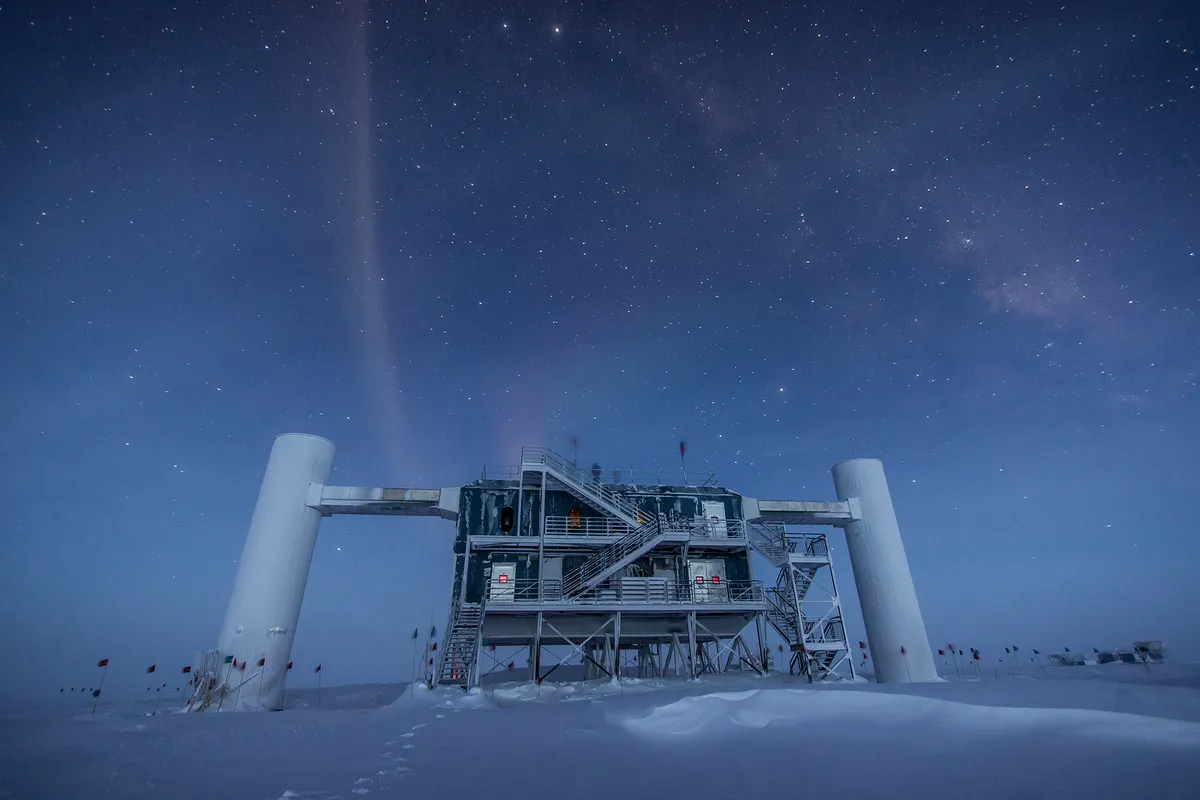
When a neutrino interacts with the nuclei of atoms, it transforms into an electron and a couple of more exotic particles known as muons and tau particles. To make sure the muons and electrons detected by the detectors really come from neutrino interactions, the detectors need to be placed deep underground where other cosmic particles cannot reach. The world’s largest neutrino detector, China’s Jiangmen Underground Neutrino Observatory, is buried 2,300 feet deep (700 meters) underground. The IceCube Neutrino Observatory on the South Pole sits even deeper — between 4,750 and 8,040 feet (1,450 and 2,450 meters) deep in the ice sheet.
The universe is awash with neutrinos that have been cruising through space since the Big Bang. But many also come from inside the sun. Yet, others reach our planet after being thrust into space in distant supernova explosions (the final blasts of stars that run out of fuel in their cores).
The high concentrations of neutrinos near the sun is what interests Solomey. The Snappy detector, currently undergoing testing in orbit, has a simple purpose — to validate that neutrino detection in space works. The gallium-based detector aboard the cubesat is also more sensitive to neutrino impacts than the argon-based detectors mostly used on Earth.
Solomey hopes that if the experiment proves successful, it might persuade NASA to place a neutrino detector on a possible future mission towards the sun.
“We could do a huge amount of solar neutrino interaction detections, but we could also increase the position resolution to get the image of the solar fusion shells that are around the core,” Solomey explained. “We could study particle physics, the transport of the solar neutrinos as they get out of the sun and head towards deep space and some of them go towards Earth.”
Because of the exceptional sensitivity of the gallium-based detector, Solomey thinks the team might be able to catch even the less energetic neutrinos that evade Earth-based detection.
Neutrinos come in different “flavors” based on the processes that created them. Solomey thinks that by analyzing en masse the neutrino flux streaming from the sun, researchers could open a unique window into the life-giving fusion processes that take place deep inside the star’s core, far away from the reach of any human-made scientific instruments.
Because neutrinos barely interact with matter, they emerge from the immense depths of the sun within seconds of being born, said Solomey. On the other hand, scientists estimate that it takes some 100,000 years for the physical matter to bubble up the 435,000 miles (700,000 kilometers) from the sun’s core to its surface.
“It’s like putting a microscope into the core of the sun,” said Solomey. “There are different types of fusion processes that occur in different layers away from the sun’s core, and we could look at and study the structure of the solar fusion core looking at these different kinds of neutrinos.”










Stay Informed With the Latest & Most Important News
Previous Post
Next Post



Advertisement
-
 01Two Black Holes Observed Circling Each Other for the First Time
 -
 02From Polymerization-Enabled Folding and Assembly to Chemical Evolution: Key Processes for Emergence of Functional Polymers in the Origin of Life
 -
 03Astronomy 101: From the Sun and Moon to Wormholes and Warp Drive, Key Theories, Discoveries, and Facts about the Universe (The Adams 101 Series)
 -
 04True Anomaly hires former York Space executive as chief operating officer
 -
 05Φsat-2 begins science phase for AI Earth images
 -
 06Hurricane forecasters are losing 3 key satellites ahead of peak storm season − a meteorologist explains why it matters
 -
 07Binary star systems are complex astronomical objects − a new AI approach could pin down their properties quickly