
Now Reading: Live coverage: SpaceX to launch first Starlink deployment mission since problem strikes satellite
-
01
Live coverage: SpaceX to launch first Starlink deployment mission since problem strikes satellite

Live coverage: SpaceX to launch first Starlink deployment mission since problem strikes satellite

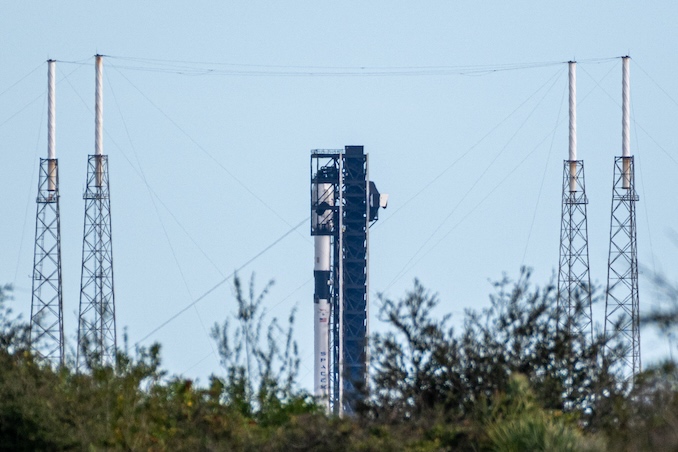
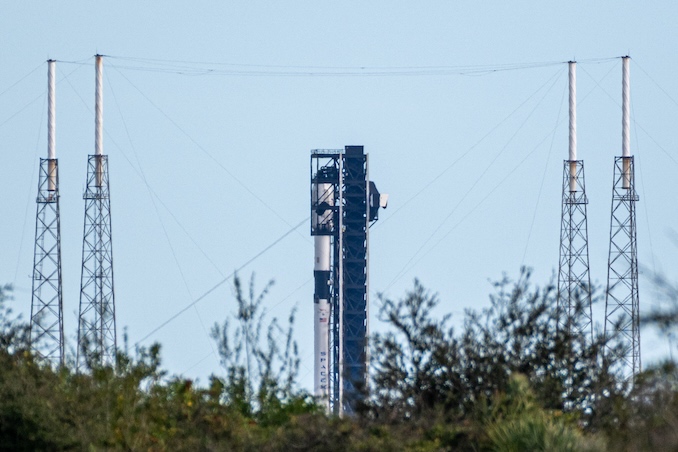
Update Jan. 3, 12:44 a.m. EST (0544 UTC): SpaceX adjusted the T-0 liftoff time.
SpaceX is preparing to launch its first Starlink mission since one of its satellites in orbit was knocked out of action in an incident on Dec. 17.
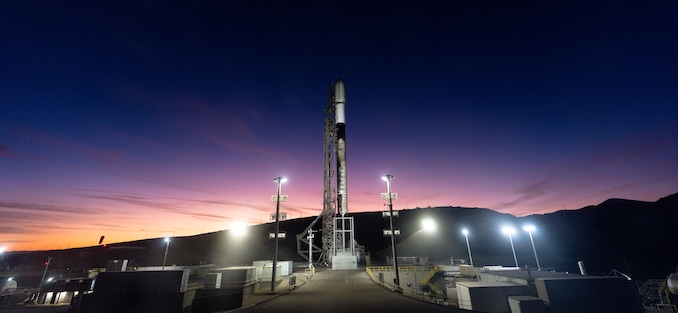
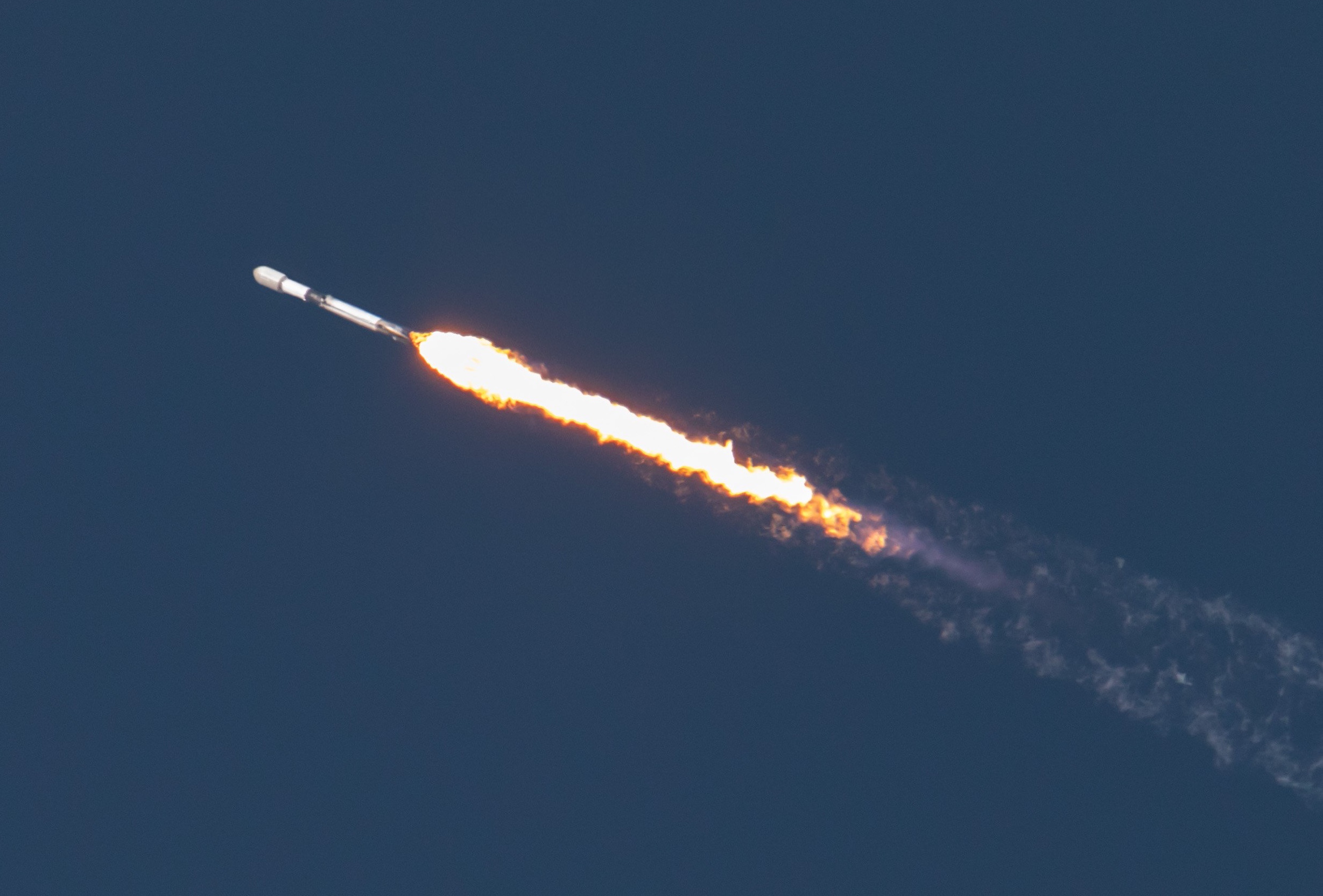
Liftoff of the Starlink 6-88 mission is scheduled for 1:48 a.m. EST (0648 UTC) from Space Launch Complex 40 at Cape Canaveral Space Force Station. The rocket will fly on a south-easterly trajectory upon leaving the pad.
Spaceflight Now will have live coverage beginning about an hour prior to liftoff.
The mission was originally scheduled launch on Dec. 19, but was delayed when SpaceX lost contact with Starlink satellite number 35956, which was launched Nov. 23, 2025, from Vandenberg Space Force Base in California. The satellite was orbiting at an altitude of 418 km.
“The anomaly led to venting of the propulsion tank, a rapid decay in semi-major axis by about 4 km, and the release of a small number of trackable low relative velocity objects,” SpaceX said in a social media post on Dec. 18.
Two days later, on Dec. 20, Michael Nicolls, the vice president of Starlink Engineering, took to social media to share imagery of the satellite collected by Vantor’s (formerly known as Maxar Intelligence) WorldView-3 satellite on Dec. 20 that showed the satellite was “largely intact.”
Imagery collected by Vantor’s WorldView-3 satellite about 1 day after the anomaly shows that @starlink Satellite 35956 is largely intact. The 12-cm resolution image was collected over Alaska from 241 km away. We appreciate the rapid response by @vantortech to provide this… https://t.co/8OcTZsk5Gx pic.twitter.com/1PafjFwuRP
— Michael Nicolls (@michaelnicollsx) December 20, 2025
“Additional data suggest that there is a small number of trackable debris objects from the event, and we expect the satellite and debris to reenter and fully demise within weeks,” Nicolls wrote.
Former astronaut Ed Lu, founder & Chief Technology Officer of Leolabs, a company that provides real-time orbital tracking data, said the company’s radar had detected hundreds of objects.
“As per usual, these objects tend to spread out along the orbital track, and have already spread out over 6000km,” said Lu.
In its original social media post, SpaceX said it was taking the incident very seriously: “Our engineers are rapidly working to root cause and mitigate the source of the anomaly and are already in the process of deploying software to our vehicles that increases protections against this type of event.”
The satellites for the Starlink 6-88 were already at the launch pad inside the rocket’s payload fairing, but were returned to SpaceX’s processing facility at HangarX on Dec. 19 in the wake of the in-orbit incident, presumably to allow modifications.
Sunday’s Falcon 9 rocket launch, the first from Florida in 2026, will add 29 Starlink V2 Mini Optimized satellites to the megaconstellation which now numbers more than 9,300 satellite in orbit, according to stats maintained by astronomer and expert orbital tracker, Jonathan McDowell.
On Saturday, the 45th Weather Squadron forecast a 30 percent chance for favorable weather at the opening of the launch window, which improves to 70 percent as time goes on. Meteorologists said a cold front will be moving through the area during the launch opportunity.
“Model solutions have great agreement on timing with the worst weather likely occurring at the front of the window, as band of showers (that likely triggers the Cumulus Cloud Rule) moves through around midnight,” launch weather officers wrote. “There is also good model agreement for improvement into the window, with lingering thick clouds being the main concern by the end.”
SpaceX will launch the Starlink 6-88 mission on a brand new Falcon 9 booster, as the company continues to add to its fleet. There were eight new boosters that debuted in 2025 and six introduced in 2024.
The new booster, believed to bear the tail number of 1101, will target at landing on a drone ship, called ‘Just Read the Instructions,’ positioned in the Atlantic Ocean to the northeast of The Bahamas, about 8.5 minutes after liftoff.
If all goes well, this will be the 147th landing on this vessel and the 555th booster landing for SpaceX to date.
Building on records
The predawn flight planned for Sunday comes after a year of big growth for the Starlink component of SpaceX’s business.
In its annual progress report published just after the new year, SpaceX said it closed out 2025 with a total of more than nine million global customers across more than 155 countries and markets. It said it had added more than 35 new markets over the year as well as 4.6 million customers.
This year, we activated Starlink in 35+ new markets, and are now covering 155+ countries and a global area home to 3.2 billion people, including those who live in some of the most remote places on Earth pic.twitter.com/DaDeFKDX9t
— Starlink (@Starlink) December 31, 2025
Last year, SpaceX launched 122 Falcon 9 rockets carrying Starlink satellites onboard, deploying 3,168 into low Earth orbit. Among those were 286 that supported the Direct to Cell component of the constellation.
“With enhancements to the V2 Mini satellite design, we began launching more satellites on each Starlink mission, adding more than 270 Tbps of capacity to the constellation this year,” SpaceX stated in its report.
The company attributed its ability to ramp up launch cadence to “Starlink’s vertical manufacturing for satellite production and our relentless commitment to recovering and reusing Falcon 9 first stage boosters and payload fairings.”
SpaceX also touted the rollout of its Direct to Cell service, citing its operation across 22 countries with more than six million monthly customers. It completed the first generation of its DTC network with the launch of the Starlink 12-26 mission in mid-June.
“Operating at 360 kilometers above the surface of the Earth, Direct to Cell satellites fly lower than any other constellation in order to optimize the link between the cell phone and satellite,” SpaceX wrote. “Starlink Direct to Cell is the largest and most robust in-space communications provider for unmodified cellular devices—and the only one actively serving customers.”
Another company, AST SpaceMobile, is also looking to compete in this space of bringing cellular reception and data to unmodified phones and recently launched its sixth BlueBird satellite from India in December. The BlueBird 7 satellite is in Florida and will be launched on a Falcon 9 rocket likely in the coming weeks.
Coming up…
On Jan. 1, Nicolls announced on social media that the roughly 4,400 Satelink satellites currently orbiting at about 550 km (342 mi) will be lowered to an altitude of about 480 km (298 mi). The action is being done in coordination with U.S. Space Command along with other satellite operators and regulators, Nicolls said.
“As solar minimum approaches, atmospheric density decreases which means the ballistic decay time at any given altitude increases – lowering will mean a [greater than] 80 percent reduction in ballistic decay time in solar minimum, or four plus years reduced to a few months,” Nicolls wrote. “Correspondingly, the number of debris objects and planned satellite constellations is significantly lower below 500 km, reducing the aggregate likelihood of collision.”
Earlier in the month, Nicolls expressed concern with a 200-meter close approach to another satellite, Starlink-6079 (56120), at 560 km in altitude, blaming a lack of coordination or deconfliction with a launch from China days prior.
Chinese company CAS Space, the company who likely launched the satellites that created the close approach, said it was in contact with SpaceX for more details. It called for “re-establishing collaborations” between the U.S. and China.
Glimpsing into the future, @SpaceX successfully deployed simulator Starlink satellites on two Starship test flights this year, as we prepare to launch the next generation Starlink and Direct to Cell constellations to orbit pic.twitter.com/UQSeogUhK9
— Starlink (@Starlink) December 31, 2025
The company also said in its annual progress report that it was planning to introduce the next generation Starlink Version 3 satellites in 2026, launching them aboard SpaceX’s Starship-Super Heavy.
“Each one of these new satellites is designed to provide over terabit per second of downlink capacity (more than 1,000 Gbps) and over 200 Gbps of uplink capacity to customers on the ground,” SpaceX wrote in its 2025 progress report. “This is more than 10 times the downlink and 24 times the uplink capacity of the second-generation satellites.”
During a conference talk in Ohio last year, Bill Gerstenmaier, the senior principal flight reliability engineer at SpaceX, said that following the first launch of a Starship V3 rocket, if successful, they may try an orbital launch on the next flight.
Last year it twice demonstrated the deployment of simulated satellites during suborbital test flights of the rocket.










Related Posts
Stay Informed With the Latest & Most Important News
Previous Post
Next Post



Advertisement
-
 01Two Black Holes Observed Circling Each Other for the First Time
 -
 02From Polymerization-Enabled Folding and Assembly to Chemical Evolution: Key Processes for Emergence of Functional Polymers in the Origin of Life
 -
 03Astronomy 101: From the Sun and Moon to Wormholes and Warp Drive, Key Theories, Discoveries, and Facts about the Universe (The Adams 101 Series)
 -
 04True Anomaly hires former York Space executive as chief operating officer
 -
 05Φsat-2 begins science phase for AI Earth images
 -
 06Hurricane forecasters are losing 3 key satellites ahead of peak storm season − a meteorologist explains why it matters
 -
 07Binary star systems are complex astronomical objects − a new AI approach could pin down their properties quickly