
Now Reading: Lunar Outpost Advances in Space Exploration as Key Player in NASA’s Artemis IV Mission
-
01
Lunar Outpost Advances in Space Exploration as Key Player in NASA’s Artemis IV Mission

Lunar Outpost Advances in Space Exploration as Key Player in NASA’s Artemis IV Mission

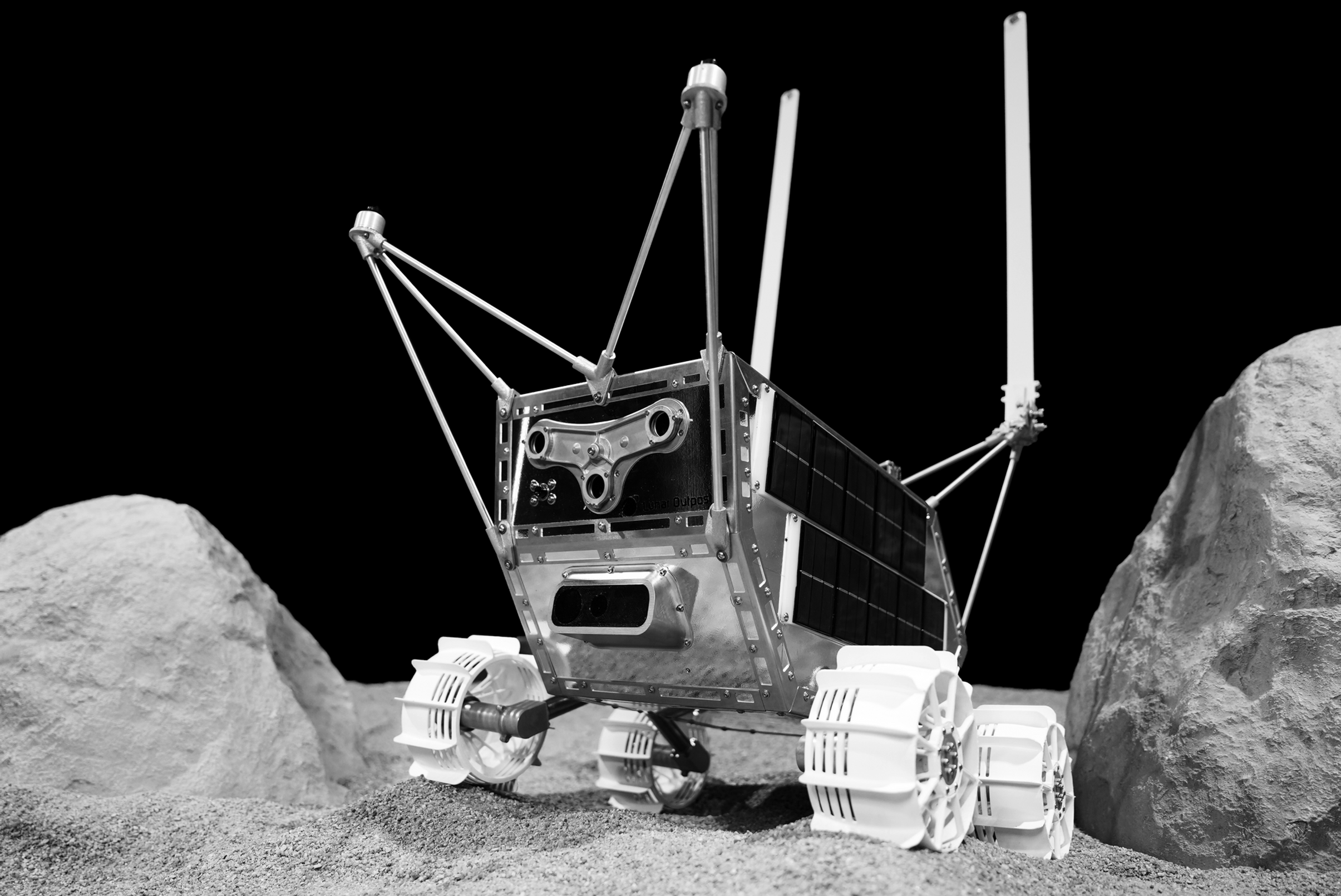

Lunar Outpost, established in 2017 in Golden, Colorado, has transitioned from a lunar mobility startup to a significant contributor to NASA’s Artemis program. The company announced on December 4, 2025, that it has been chosen for the Artemis IV mission, demonstrating its shift from commercial endeavors to collaboration in a major federally-backed lunar exploration initiative.
This selection follows years of thorough technical enhancements, highlighted by Lunar Voyage 1 in March 2025, during which the Mobile Autonomous Prospecting Platform (MAPP) rover became the first U.S. commercial rover to land on the Moon. Although the mission faced challenges when the Intuitive Machines IM-2 lander landed sideways, preventing the rover from operating fully, key subsystems were still tested successfully in the lunar environment.
Lunar Outpost reported that certain systems, including the rover’s navigation computer, autonomous thermal control, stereo cameras, and power management systems, achieved NASA’s Technology Readiness Level 9. This rating signifies that these technologies have been validated through actual mission operations. However, the rover’s mobility systems could not be fully validated due to its inability to leave the lander’s deployment area.
For the Artemis IV mission, Lunar Outpost will collaborate with experts from the Laboratory for Atmospheric and Space Physics (LASP) at the University of Colorado Boulder, the University of Central Florida, and the University of California, Berkeley. Together, they will conduct the DUSTER investigation, focused on examining lunar dust and plasma. Unlike previous MAPP missions that relied on commercial landers for deployment, the Artemis IV rover will be placed on the lunar surface directly by astronauts at the South Pole landing site.
The rover will be equipped with two instruments developed by LASP: the Electrostatic Dust Analyzer and the Relaxation SOunder and differentiaL VoltagE (RESOLVE), designed to analyze lunar dust and plasma behavior during various mission activities. The data gathered will enhance NASA’s comprehension of lunar conditions, which is vital for ensuring astronaut safety and efficient long-term surface operations.
Lunar Outpost has designed a range of rover platforms tailored for different mission requirements. The standard MAPP rover is compact, weighing between 5 and 10 kg, with a payload capacity of up to 15 kg. The rover is equipped with advanced features like four-wheel drive, articulated suspension, and solar panels for power, operating at a speed of up to 10 cm/s. A more robust version, MAPP-Ultra, weighs 30 kg and can carry a 30 kg payload while achieving speeds of 1 m/s. The heavy-lift variant, HL-MAPP, can transport up to 200 kg, providing essential support for scientific experiments and habitat infrastructure.
The extreme thermal conditions of the lunar environment, with temperature fluctuations from -173°C to +127°C, present significant engineering challenges. As such, Lunar Outpost is developing innovative thermal management solutions instead of traditional heating methods. Additionally, the MAPP series employs a specialized dynamic suspension system, ensuring stable contact with the ground and enabling the rover to navigate obstacles effectively.
To improve its power systems, Lunar Outpost has partnered with General Motors to incorporate advanced battery technologies akin to those used in electric vehicles. Their navigation systems use sophisticated visual-inertial odometry, offering real-time positioning crucial for coordination with astronauts during lunar operations.
The Stargate Ground System Software, which supports mission operations, achieved TRL-9 during the Lunar Voyage 1 mission, underlining its readiness for future human spaceflight tasks. The company has secured seven mission contracts encompassing commercial, scientific, and crewed operations.
Upcoming missions include Lunar Voyage 2, set to explore the Reiner Gamma region, where it will deploy additional scientific instruments. The Lunar Voyage 3 mission, expected in 2027, will involve more advanced payloads, while the Australian Roo-ver mission aims to launch Australia’s inaugural lunar rover.
Lunar Outpost is also actively working on various collaborative projects, including the development of the Eagle Lunar Terrain Vehicle as part of NASA’s $4.6 billion Lunar Terrain Vehicle Services program. The prototype is designed for functionality on the lunar surface and is slated for delivery via SpaceX’s Starship.
Field testing and rigorous evaluations are ongoing at their extensive facility in Colorado, reinforcing the company’s commitment to ensuring the viability of its lunar technologies. In an innovative venture, Lunar Outpost partnered with LEGO to create a model of its MAPP rover, merging creativity with science education.
As missions like Artemis IV approach, addressing dust mitigation remains critical, particularly given the unique challenges posed by the lunar regolith. Through its technical advancements and innovative rover designs, Lunar Outpost is well-positioned to play a vital role in the future of lunar exploration, supporting NASA’s long-term goals for human presence on the Moon.










Related Posts
Stay Informed With the Latest & Most Important News
Previous Post
Next Post


Advertisement
-
 01Two Black Holes Observed Circling Each Other for the First Time
 -
 02From Polymerization-Enabled Folding and Assembly to Chemical Evolution: Key Processes for Emergence of Functional Polymers in the Origin of Life
 -
 03Astronomy 101: From the Sun and Moon to Wormholes and Warp Drive, Key Theories, Discoveries, and Facts about the Universe (The Adams 101 Series)
 -
 04True Anomaly hires former York Space executive as chief operating officer
 -
 05Φsat-2 begins science phase for AI Earth images
 -
 06Hurricane forecasters are losing 3 key satellites ahead of peak storm season − a meteorologist explains why it matters
 -
 07Binary star systems are complex astronomical objects − a new AI approach could pin down their properties quickly