
Now Reading: Lux Aeterna raises $10 million ahead of 2027 reusable satellite demo
-
01
Lux Aeterna raises $10 million ahead of 2027 reusable satellite demo


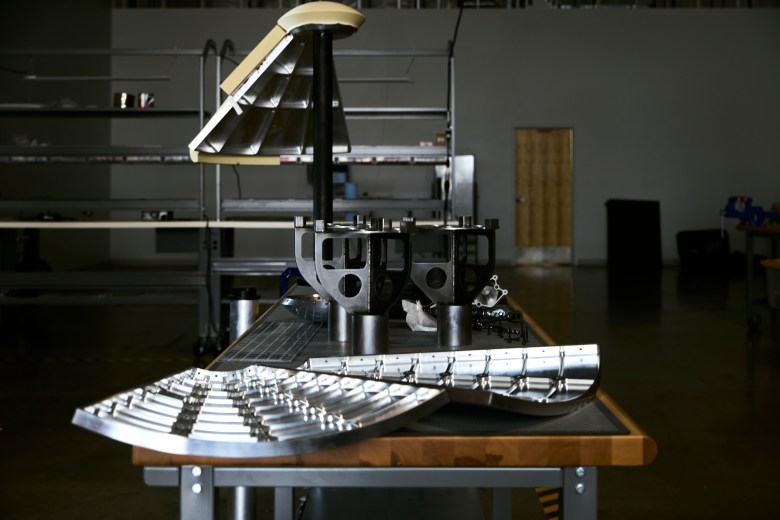
TAMPA, Fla. — Denver-based Lux Aeterna has secured $10 million in seed funding to develop a reusable satellite designed to survive atmospheric reentry and fly again with new payloads, starting with a demonstration flight slated for early 2027.
Early-stage investor Konvoy led the round, announced March 10, bringing Lux Aeterna’s total funding to $14 million since former SpaceX engineer Brian Taylor founded the startup in August 2024.
The venture plans to conduct its first parachute drop test before the end of June using a prototype of its Delphi-1 spacecraft, which is being designed around a rigid heat shield that serves as the satellite’s primary structural bus.
A critical design review originally scheduled to be completed last year has been pushed to early April, ahead of plans to launch Delphi-1 to low Earth orbit (LEO) in the first quarter of 2027 on a SpaceX rideshare mission. The spacecraft would attempt a landing in South Australia shortly afterward, in an inaugural mission Taylor said has already been fully booked by customers.
“We’re not sharing the exact mass of this specific payload, but the spacecraft itself is 200 kg with a 30 kg payload capacity,” he said via email.
“While this mission focuses on proving our core technology at this scale, it’s designed as a stepping stone. Our next-generation vehicles will significantly increase this capacity.”
According to Taylor, customers include a mix of commercial and defense organizations targeting hypersonic testing, on-orbit compute and in-space manufacturing applications.
The startup has also entered multiple partnerships with U.S. government organizations pursuing reusable spacecraft technologies.
Development milestones
Taylor said Lux Aeterna has been building internal tools and testing infrastructure to support development of the spacecraft, including a design suite combining payload requirements with vehicle performance capabilities to accelerate early customer discussions.
“This was a pivotal factor that enabled us to secure customer commitments,” he added.
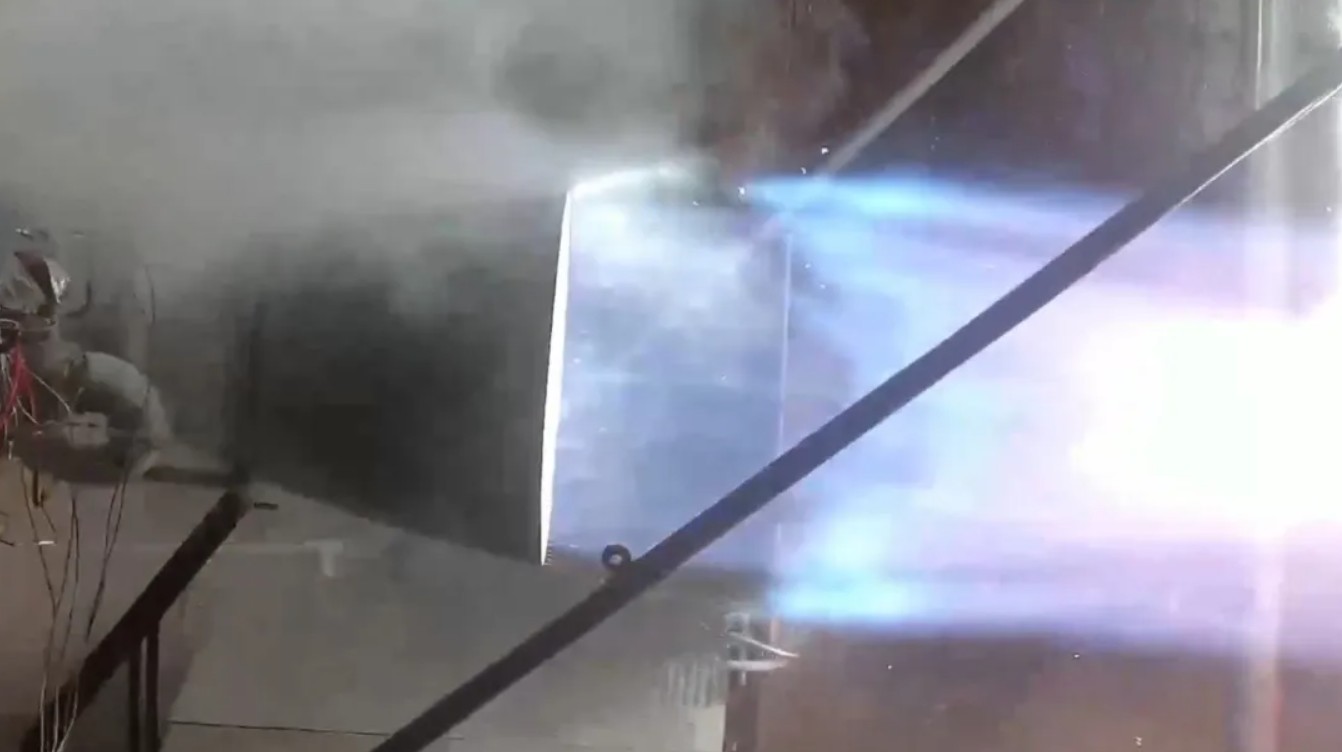
Lux Aeterna has also built a test system that enables engineers to run flight software and simulate missions using spacecraft hardware that includes a reusable heat shield material being developed in-house. Delphi-1’s return to Earth would rely on autonomous software and a heritage chemical propulsion system from an undisclosed supplier to guide reentry.

Unlike capsule-based reentry vehicles that treat thermal protection as an external shell, Delphi’s heat shield structure is designed to enable it to launch and operate like a conventional satellite before returning to Earth for recovery and refurbishment.
According to Lux Aeterna, this approach could open new opportunities in a growing market for short-duration space missions and returning hardware from orbit. While reusable launch vehicles have sharply reduced the cost of reaching space, most satellites remain disposable and destined to burn up in the atmosphere at the end of a LEO mission.
Taylor, who previously helped mass-manufacture satellites at SpaceX and Amazon, said reusable spacecraft could help move the industry away from a “launch-and-burn” model toward lower costs, greater sustainability and mission flexibility.
Lux Aeterna’s agreement with Southern Launch to land Delphi-1 at Australia’s Koonibba Test Range also covers plans for the spacecraft’s first reuse mission in 2028. Taylor said the company is seeing inbound interest in that follow-on flight, but declined to provide further details.
He said the venture currently employs 14 people and plans to grow to about 25 ahead of the Delphi-1 demo.

New investors Decisive Point, Cubit Capital and Wave Function participated in the seed round alongside follow-on funding from existing backers Space Capital, Dynamo Ventures and Channel 39.
Taylor declined to disclose Lux Aeterna’s valuation or provide additional financial details about what he described as a significantly oversubscribed funding round.
“We ultimately reached a point where we had to turn away capital,” he said.










Related Posts
Stay Informed With the Latest & Most Important News
Previous Post
Next Post
Advertisement
-
 01Two Black Holes Observed Circling Each Other for the First Time
 -
 02From Polymerization-Enabled Folding and Assembly to Chemical Evolution: Key Processes for Emergence of Functional Polymers in the Origin of Life
 -
 03Astronomy 101: From the Sun and Moon to Wormholes and Warp Drive, Key Theories, Discoveries, and Facts about the Universe (The Adams 101 Series)
 -
 04True Anomaly hires former York Space executive as chief operating officer
 -
 05Φsat-2 begins science phase for AI Earth images
 -
 06Hurricane forecasters are losing 3 key satellites ahead of peak storm season − a meteorologist explains why it matters
 -
 07Binary star systems are complex astronomical objects − a new AI approach could pin down their properties quickly