
Now Reading: Marcel’s Exclusion from Roswell Investigation Sparks Intrigue and Conspiracy Theories
-
01
Marcel’s Exclusion from Roswell Investigation Sparks Intrigue and Conspiracy Theories

Marcel’s Exclusion from Roswell Investigation Sparks Intrigue and Conspiracy Theories

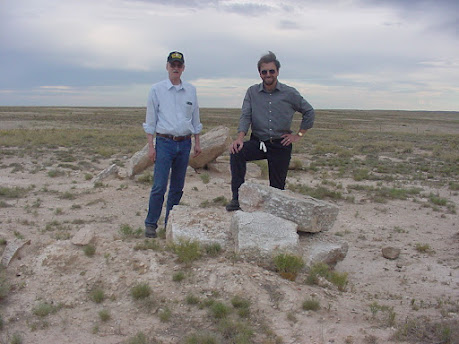

Jesse Marcel, Sr.’s departure from the core investigation of the Roswell incident has long been a topic of intrigue and speculation. His absence raises questions about the management of information and personnel during a time when the military faced unprecedented events that challenged their understanding of aerial phenomena. Understanding the dynamics of Marcel’s exclusion provides critical insight into the protocols and culture of military intelligence during the late 1940s.
Initially, Marcel was tasked with a vital role that involved studying the debris retrieved from the mysterious crash site. His expertise as an Intelligence Officer made him an essential part of the early investigation. However, as events unfolded, Marcel was sent to Fort Worth with samples of the debris, which stripped him of the opportunity to be directly involved in the ongoing examination in Roswell. This logistical decision, while operationally sound, created a rift in continuity. Paul Ridge’s discussions about who was managing security at the Impact Site illustrates the confusion surrounding the command structure during this chaotic time. Was it Major Edwin Easley or Robert T. Darden? This question reflects a broader issue within the military that perhaps impacted Marcel’s role.
During Marcel’s time in Fort Worth, he found himself in meetings with significant military figures, including General Ramey. He was also subjected to media attention that transformed him from a key player to a target for questioning by reporters. Notably, despite orders not to speak to the press, Marcel was quoted in the Fort Worth Star-Telegram, indicating the intense scrutiny he faced. His interviews were pivotal; they underscored the tension between military secrecy and public curiosity, especially when he described seeing debris that he asserted was of extraterrestrial origin. However, this statement came in the wake of Ramey’s assertion that the debris was merely a weather balloon, which further complicated Marcel’s position and credibility.
The timeline of events suggests that Marcel’s absence from the Roswell investigation was largely strategic. By the time he returned from Fort Worth, crucial aspects of the investigation had already concluded, and all evidence had been removed from the site. The military’s decision to classify the findings as top secret ensured that Marcel would not be privy to any new information that might have surfaced during his absence. His return coincided with the end of the probe, effectively rendering his involvement unnecessary and, perhaps, a potential liability. This illustrates the military’s instinct to limit the number of individuals exposed to sensitive information to minimize leaks.
Marcel’s experience raises questions about the communication protocols within the military. His inquiry into a report he had written, only to be met with refusal by Sheridan Cavitt, the CIC Officer in Charge, further highlights the secrecy surrounding the incident. Cavitt’s stance exemplified a broader philosophy within military operations: “need to know.” This ethos dictates that only individuals who require information for their specific duties are granted access to it. With the event concluded from a military perspective, Marcel’s need for information ceased to exist.
Marcel’s situation also reflects a significant truth about the nature of secrecy. As famously noted by Ben Franklin, “Three can keep a secret if two of them are dead.” This quote epitomizes the military’s inclination to restrict knowledge to only those who absolutely need it, particularly in operations that could drastically impact national security. Marcel, having returned to a scene where the investigation had already been wrapped up, found himself on the outside looking in, despite his prior significance in the operation.
The multifaceted reasons behind Marcel’s absence not only reveal the intricacies of military protocols but also illuminate the challenges faced by individuals like Marcel, who found themselves entrenched in a web of secrecy and bureaucratic decision-making during a pivotal moment in history.
As the dust settled in Roswell, the ramifications of the military’s choices extended far beyond the immediate investigation. After Marcel’s return, the military’s narrative that the debris was merely from a weather balloon was solidified, offering a swift and clear-cut explanation for the unusual events that had transpired. This public statement not only aimed to ease growing concerns among the populace but also served to shield the military from scrutiny regarding their handling of what many believed to be a significant phenomenon beyond earthly comprehension.
The aftermath of the investigation shaped the landscape of UFO discourse for decades to come. The official dismissal of the incident as a mere weather balloon crash established a precedent for how the military would manage similar situations moving forward. The Roswell incident, rather than being a simple case of misidentified debris, became emblematic of a larger struggle for transparency versus secrecy in government dealings, particularly regarding unidentified aerial phenomena (UAP).
Furthermore, Marcel’s exclusion from future discourse on the Roswell incident sowed seeds of doubt and intrigue that would bloom into conspiracy theories. As he found himself sidelined, a void emerged in the narrative surrounding what actually occurred that fateful night in July 1947. Eyewitness accounts, including Marcel’s own testimony, became the fodder for speculation and mythologizing, ultimately leading to a myriad of interpretations that compounded the mystery.
In the years following the incident, Marcel’s story, along with those of other witnesses, began to resonate with a growing community of UFO enthusiasts and researchers. His firsthand account of handling the debris—describing not only its peculiar texture but its otherworldly characteristics—ignited curiosity and inspired investigations that continue to this day. Those skeptical of the military’s explanation often referenced Marcel’s insights and experiences, using them as touchpoints for broader discussions about governmental transparency regarding unidentified aerial phenomena.
Interestingly, as public interest in the paranormal and extraterrestrial life surged in the 1950s and 60s, Marcel underwent a transformation from a sidelined officer to an accidental figurehead for UFO proponents. He began to openly discuss his experiences and the materials he encountered, effectively challenging the narrative laid down by the military’s weather balloon explanation. His voice became increasingly important in dialogues surrounding military accountability and the need for an honest assessment of aerial phenomena.
This change in Marcel’s position highlights how individuals involved in classified investigations can become pivotal players outside of their initial roles. Just as public interest in UFOs began to flourish, Marcel’s reflections illustrated the profound disconnect between military secrecy and public understanding. His story, and the stories of others like him, would become crucial in advocating for greater transparency regarding government investigations into unexplained aerial phenomena.
The repercussions of the Roswell incident and Marcel’s subsequent sidelining can still be felt today. The patterns of information control and narrative management established in the late 1940s have persisted, evolving into contemporary discussions about what the government knows about UAPs and the necessity for disclosure. Fresh calls for transparency and the release of classified documents are echoed by a modern audience that remains captivated by the mysteries of our skies.
Moreover, Marcel’s legacy encourages a broader critical examination of military conduct in matters of national interest. It serves as a reminder of the inherent tension between protecting sensitive information and the public’s right to know, a balance that continues to challenge governments in the modern age. His story reminds us that the quest for truth often lies in the hands of those brave enough to share it, regardless of prevailing narratives that may seek to suppress it.










Related Posts
Stay Informed With the Latest & Most Important News
Previous Post
Next Post
Advertisement
-
 01Two Black Holes Observed Circling Each Other for the First Time
 -
 02From Polymerization-Enabled Folding and Assembly to Chemical Evolution: Key Processes for Emergence of Functional Polymers in the Origin of Life
 -
 03Astronomy 101: From the Sun and Moon to Wormholes and Warp Drive, Key Theories, Discoveries, and Facts about the Universe (The Adams 101 Series)
 -
 04True Anomaly hires former York Space executive as chief operating officer
 -
 05Φsat-2 begins science phase for AI Earth images
 -
 06Hurricane forecasters are losing 3 key satellites ahead of peak storm season − a meteorologist explains why it matters
 -
 07Binary star systems are complex astronomical objects − a new AI approach could pin down their properties quickly