
Now Reading: Medical issue could force early end of Crew-11 ISS mission
-
01
Medical issue could force early end of Crew-11 ISS mission


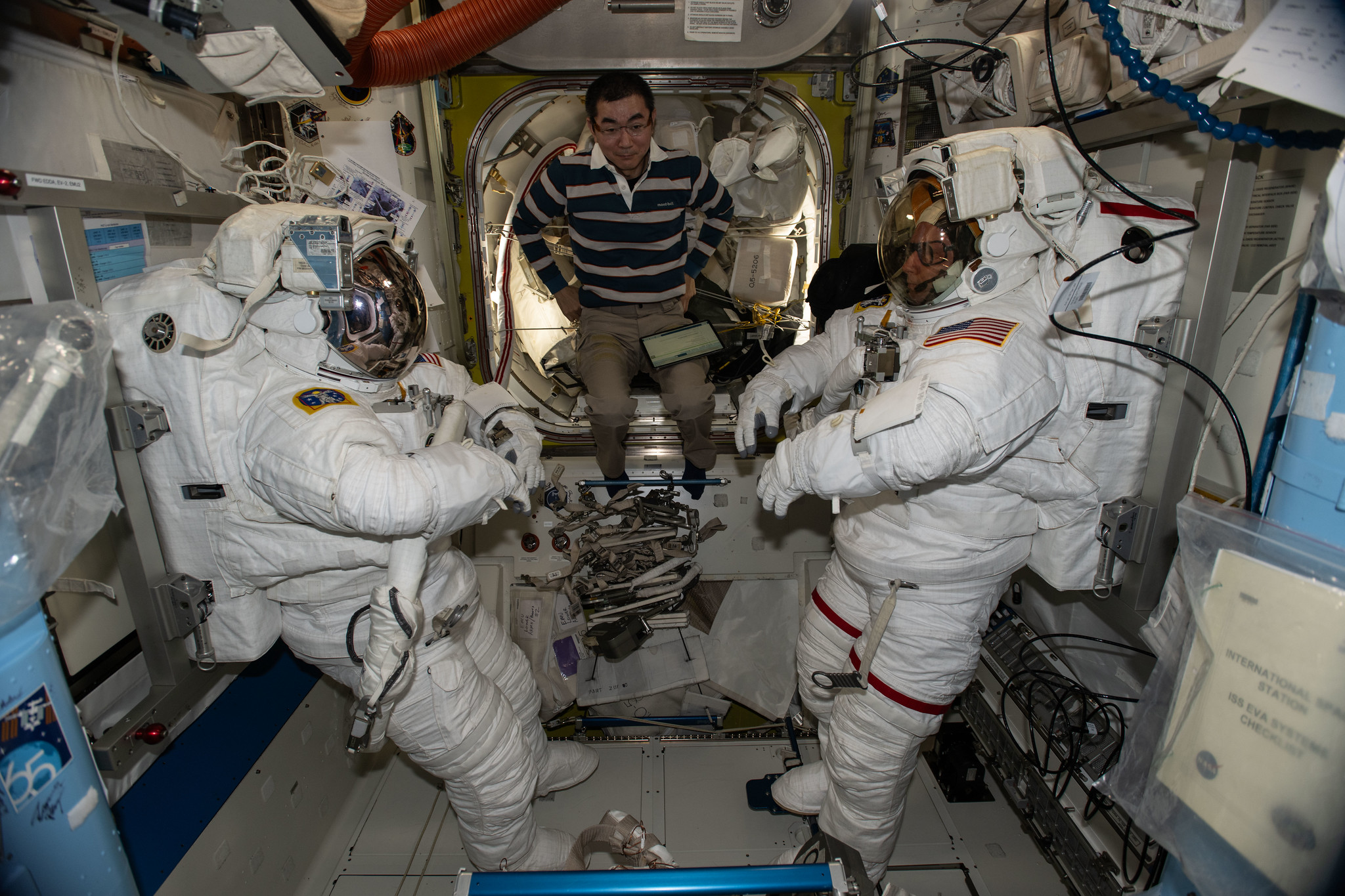

PHOENIX — An unspecified “medical concern” involving one of the astronauts aboard the International Space Station has postponed a spacewalk and could force an unprecedented early return of part of the crew.
NASA announced Jan. 7 that it was postponing a spacewalk scheduled for Jan. 8, citing a medical issue affecting one of the station’s crew members.
“The agency is monitoring a medical concern with a crew member that arose Wednesday afternoon aboard the orbital complex,” NASA said in a brief statement, adding that privacy considerations prevented it from providing additional details. “The situation is stable.”
In a follow-up statement issued shortly after midnight Eastern time Jan. 8, NASA suggested the situation could be more serious. “Safely conducting our missions is our highest priority, and we are actively evaluating all options, including the possibility of an earlier end to Crew-11’s mission,” the agency said, promising an update within 24 hours.
Crew-11 launched to the ISS on Aug. 1 aboard a SpaceX Crew Dragon spacecraft. The mission is commanded by NASA astronaut Zena Cardman, with NASA astronaut Mike Fincke serving as pilot. It also includes Kimiya Yui of the Japan Aerospace Exploration Agency and Oleg Platonov of the Russian space agency Roscosmos as mission specialists.
The Crew-11 astronauts were scheduled to remain aboard the station until at least the latter half of February, when they would be replaced by the Crew-12 mission, currently scheduled to launch no earlier than Feb. 15.
NASA did not say whether the medical issue involved one of the astronauts assigned to conduct the postponed spacewalk. Cardman and Fincke had been scheduled to perform the Jan. 8 spacewalk, whose primary objective was to prepare for the future installation of the final set of new solar arrays on the station.
Earlier Jan. 7, NASA said final preparations for the spacewalk were underway, with Cardman and Fincke organizing tools and supplies. Yui and NASA astronaut Chris Williams, who arrived at the station aboard a Soyuz spacecraft in November, reviewed spacewalk procedures with the pair.
During the day Jan. 7, Yui was heard on open communications loops requesting a private medical conference with a flight surgeon. Such conferences, which allow astronauts to discuss health issues confidentially, are routine during station operations. It is unclear whether that request was related to the medical concern cited by NASA or whether Yui was the crewmember with that medical issue.
NASA has never ended an ISS crew mission early because of a medical emergency, although spacewalks have previously been postponed due to minor medical or related issues, such as discomfort caused by spacesuit fit problems.
If Crew-11 were to return early, the station would revert for up to several weeks to a three-person crew consisting of Williams and Russian cosmonauts Sergey Kud-Sverchkov and Sergey Mikaev, who arrived aboard a Soyuz spacecraft in November.
Crew-12 is in the final stages of training for its mission. NASA moved the launch date from late March to mid-February late last year to avoid conflicts with preparations for the Artemis 2 mission. Crew-12 includes NASA astronauts Jack Hathaway and Jessica Meir, European Space Agency astronaut Sophie Adenot and Roscosmos cosmonaut Andrey Fedyaev, who replaced Oleg Artemyev in early December after Artemyev reportedly took unauthorized images of SpaceX documentation and hardware during training.
While NASA ISS expeditions have previously lasted about six months, Crew-12 could remain aboard the station for as long as eight months. At an ESA press conference Jan. 5, Adenot said she was preparing for an eight-month stay, which would set a record for a European astronaut.
“Everyone agrees that it is doable,” she said, referring to flight surgeons and other medical experts. “So let’s do it.”










Related Posts

Stay Informed With the Latest & Most Important News
Previous Post
Next Post



Advertisement
-
 01Two Black Holes Observed Circling Each Other for the First Time
 -
 02From Polymerization-Enabled Folding and Assembly to Chemical Evolution: Key Processes for Emergence of Functional Polymers in the Origin of Life
 -
 03Astronomy 101: From the Sun and Moon to Wormholes and Warp Drive, Key Theories, Discoveries, and Facts about the Universe (The Adams 101 Series)
 -
 04True Anomaly hires former York Space executive as chief operating officer
 -
 05Φsat-2 begins science phase for AI Earth images
 -
 06Hurricane forecasters are losing 3 key satellites ahead of peak storm season − a meteorologist explains why it matters
 -
 07Binary star systems are complex astronomical objects − a new AI approach could pin down their properties quickly