
Now Reading: Medical issue prompts early return of Crew-11 from ISS
-
01
Medical issue prompts early return of Crew-11 from ISS


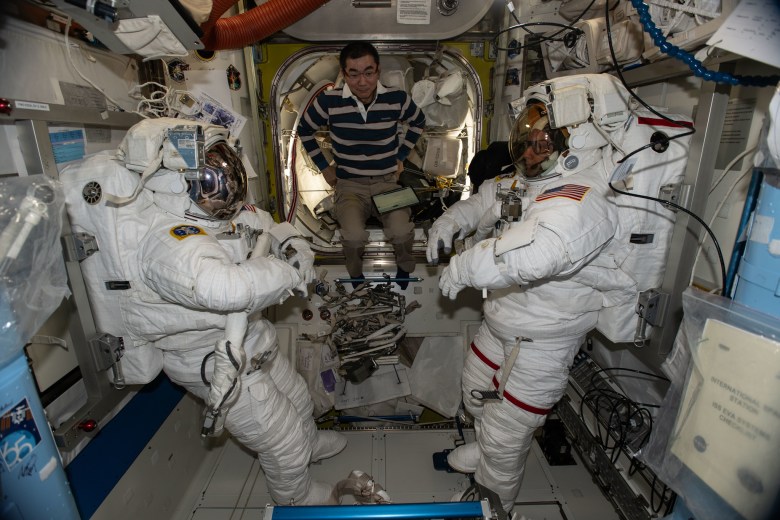
PHOENIX — NASA has decided to bring home four members of the International Space Station crew because of a medical issue with one of them, the first time NASA has cut short a mission because of crew health.
At a Jan. 8 briefing held on a few hours’ notice, NASA announced that the Crew-11 mission, which has been at the ISS since early August, will return to Earth in the “coming days” in response to a medical incident involving one of the crewmembers Jan. 7.
Agency officials declined to go into details about the person involved or the nature of the medical concern, citing privacy issues, but added that the individual was stable. The incident was not linked to preparations for a spacewalk at the station by NASA astronauts Zena Cardman and Mike Fincke that had been scheduled for Jan. 8. NASA postponed the spacewalk after the incident.
“This was a serious medical condition. That is why we’re pursuing this path,” NASA Administrator Jared Isaacman said. However, he noted that the agency decided against an emergency return, which would bring the Crew Dragon spacecraft and its crew back in hours.
“This is not an emergency deorbit,” he said. “Right now, we’re looking for the correct opportunity to use our existing landing sites, our existing recovery vessels.”
Isaacman and other NASA officials at the briefing repeatedly declined to offer any specifics about the incident beyond that it was not linked to spacewalk preparations and that the incident was apparently sudden. “The crew is highly trained and came to the aid of their colleague right away,” said J.D. Polk, NASA chief health and medical officer.
The incident “was sufficient enough that we were concerned about the astronaut,” he said, requiring a “workup” by doctors that would be beyond the capability of the personnel and equipment on the ISS. “The best way to complete that workup is on the ground, where we have the full suite of medical testing hardware.”
Officials said that there would be no changes to standard deorbit procedures because of the affected crewmember, including during the return to Earth and recovery after splashdown.
“The procedures we’re using to prepare for that are nominal procedures because, again, what’s important to us is the whole crew,” said NASA Associate Administrator Amit Kshatriya, “and we don’t want to do anything, given the nature of the condition, that would put any other additional risk on the crew by diverging from our normal processes. That’s why we’re doing essentially a controlled, expedited return.”

Crew-12 plans
Besides Cardman and Fincke, who serve as commander and pilot, respectively, of Crew-11, the mission includes Kimiya Yui of the Japan Aerospace Exploration Agency and Oleg Platonov of the Russian space agency Roscosmos as mission specialists.
Isaacman said the fact that Crew-11 was nearing the end of its stay on the ISS made it a relatively easy decision to bring them back early. “At any phase of the expedition, had the situation presented itself, we would have arrived at the exact same conclusion,” he said.
“It certainly made it that much easier and faster when you already have a crew that has done a fantastic job achieving their on-orbit objectives,” he said, along with the upcoming Crew-12 launch. “I think that made it very easy from our perspective.”
Crew-12 is currently scheduled for launch no earlier than Feb. 15. Isaacman said the agency was considering earlier launch opportunities, but did not disclose how much earlier the mission could be launched.
Once Crew-11 departs, the station will have three people on board: NASA astronaut Chris Williams and Roscosmos cosmonauts Sergey Kud-Sverchkov and Sergey Mikaev. They arrived at the ISS in November on a Soyuz spacecraft.
The three of them can handle routine operations for the ISS for the foreseeable future, but without performing any spacewalks. “Having a single Soyuz on board is a configuration we’re very familiar with,” Kshatriya said.
“Both Russians and Americans are well-trained to operate in the environment that they’re in and can operate the nominal systems and nominal research, per the plan, until their crewmates arrive on Crew-12,” he added.
First early medical return
Crew-11 is the first NASA mission in the agency’s nearly 65-year history of human spaceflight that was cut short because of a medical issue. Crew health has, in a few cases, delayed launches, while technical issues have caused missions to end early.
Polk said that, according to many models of ISS operations over the last 25 years, “we should have had a medical evacuation approximately every three years in that 25-year history, and we have not had one to date.” He said NASA was “erring on the side of caution” to bring the crew back early.
There was, though, a medical issue on a recent return from the ISS. After the Crew-8 Crew Dragon mission splashed down in October 2024, the four-person crew was taken to a Florida hospital for additional medical evaluations, with one of the four hospitalized overnight. NASA did not disclose the person hospitalized or other details.
“Spaceflight is still something we don’t fully understand. We’re finding things we don’t expect sometimes, and this was one of those times,” Michael Barratt, a doctor and one of the members of Crew-8, said at a briefing a couple weeks later. He declined then to discuss specifics of what happened.
“Space medicine is my passion,” he said then. “In the fullness of time, we will allow this to come out and be documented.” NASA has yet to fully document publicly that incident.










Stay Informed With the Latest & Most Important News
Previous Post
Next Post




Advertisement
-
 01Two Black Holes Observed Circling Each Other for the First Time
 -
 02From Polymerization-Enabled Folding and Assembly to Chemical Evolution: Key Processes for Emergence of Functional Polymers in the Origin of Life
 -
 03Astronomy 101: From the Sun and Moon to Wormholes and Warp Drive, Key Theories, Discoveries, and Facts about the Universe (The Adams 101 Series)
 -
 04True Anomaly hires former York Space executive as chief operating officer
 -
 05Φsat-2 begins science phase for AI Earth images
 -
 06Hurricane forecasters are losing 3 key satellites ahead of peak storm season − a meteorologist explains why it matters
 -
 07Binary star systems are complex astronomical objects − a new AI approach could pin down their properties quickly