
Now Reading: Microbial Diversity and Metabolic Adaptations in Mars‐Analog Lava Tubes
-
01
Microbial Diversity and Metabolic Adaptations in Mars‐Analog Lava Tubes


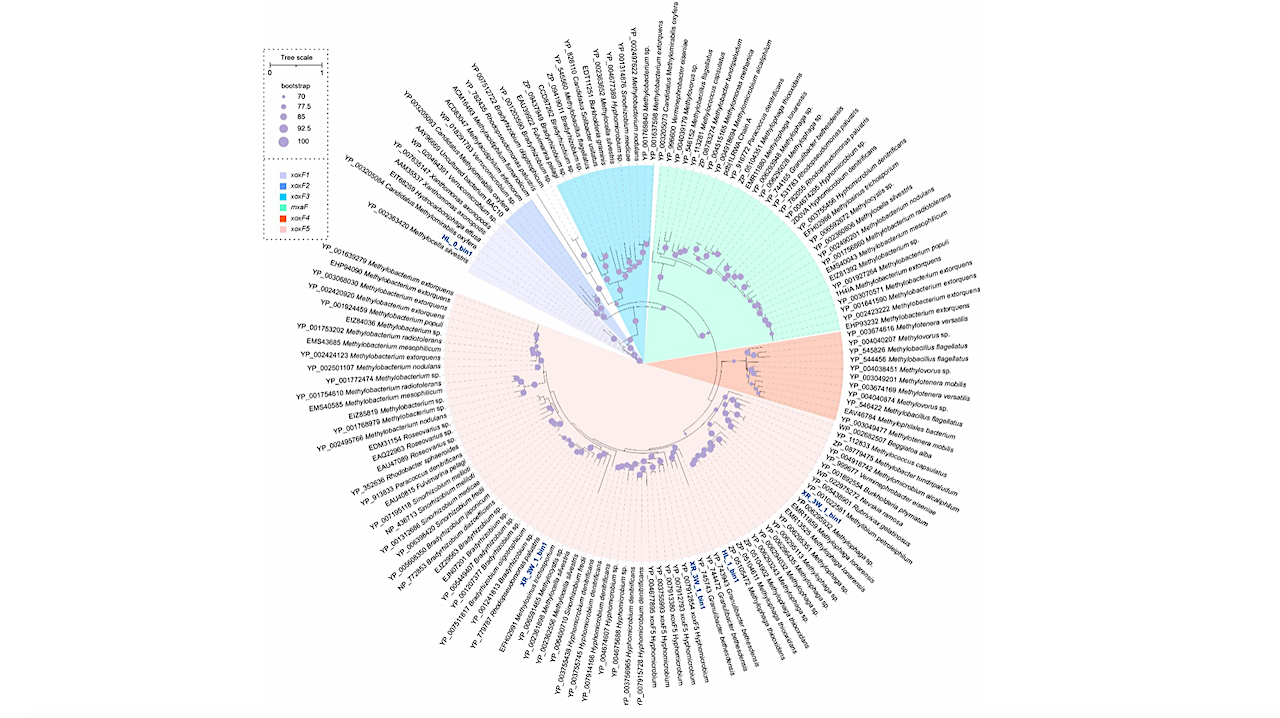
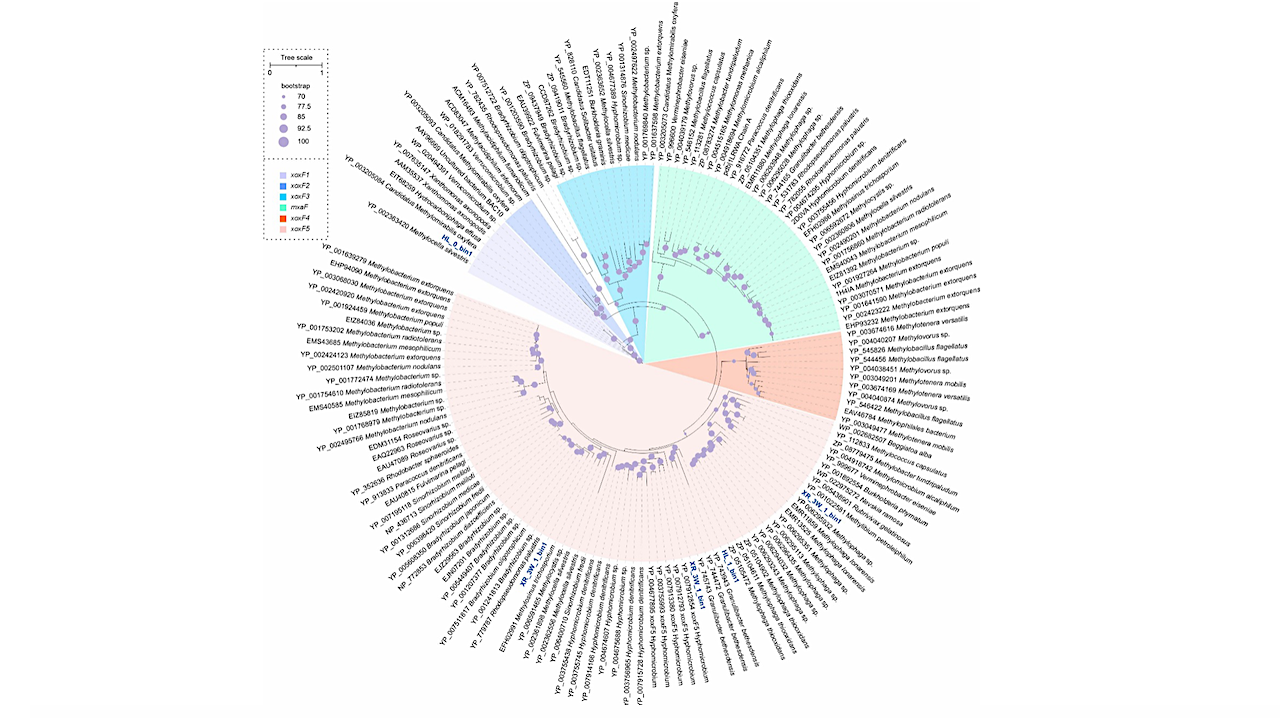
The phylogenetic tree showed the amino acid of xoxF and mxaF genes in MAGs from lava tubes, Haikou City, Hainan Province. The blue words indicated the acquired MAGs in this study. — JGR Planets via x-mol.net
Lunar and Martian lava tubes will offer stable temperatures and radiation protection, making them potential habitats for extraterrestrial life. The Martian atmosphere, containing gases like H2, CO, and CH4, could serve as an energy source for microbes.
To address the knowledge gap concerning microbial communities and their survival strategies in Earth’s lava tubes, which serve as analogs on Mars, we conducted a study at the Shishan Volcanic Group located in Haikou City, Hainan Province.
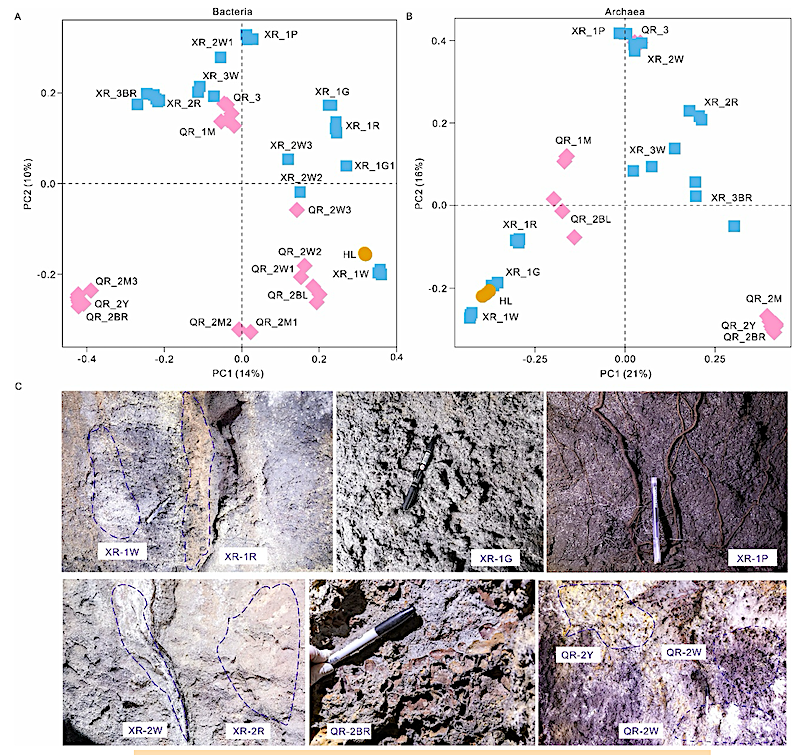
The beta diversity of bacteria and archaea (A, B) and the representation of sample color (C) in lava caves, Haikou City. HL, the Huolong Cave; QR, the Qishi’er Cave; XR, the Xianren Cave. — JG
Through field surveys, microcosm experiments, and multi‐omics analyses, we explored the microbial composition and survival mechanisms within these environments. The results revealed that bacterial communities were predominantly composed of Pseudomonadota, Actinomycetota, and Bacillota, while archaeal communities were primarily represented by Thermoproteota and Thermoplasmatota.
Bacteria had significantly higher abundance and diversity than archaea, and were positively correlated with low organic matter content. Additionally, the pmoA gene, associated with methane metabolism, was found to be highly abundant, which aligns with the observed high methane oxidation rates. Exposure to 10 ppm CH4 downregulated methane monooxygenase, hydrogenase, and CO dehydrogenase expression, indicating microbial adaptation to low‐concentration trace gases for energy.
Genomic analyses show that some bacteria use both the energy‐efficient reductive TCA cycle and the high‐energy Calvin‐Benson cycle to fix carbon dioxide while oxidizing trace gases. This metabolic versatility may provide a competitive advantage over archaea, potentially contributing to the high abundance of bacteria within lava tubes. These findings from Mars‐analog lava tubes provide insights into extraterrestrial life survival strategies, advancing our understanding of astrobiology.
Astrobiology,










Related Posts
Stay Informed With the Latest & Most Important News
Advertisement
-
 01Two Black Holes Observed Circling Each Other for the First Time
 -
 02From Polymerization-Enabled Folding and Assembly to Chemical Evolution: Key Processes for Emergence of Functional Polymers in the Origin of Life
 -
 03Astronomy 101: From the Sun and Moon to Wormholes and Warp Drive, Key Theories, Discoveries, and Facts about the Universe (The Adams 101 Series)
 -
 04True Anomaly hires former York Space executive as chief operating officer
 -
 05Φsat-2 begins science phase for AI Earth images
 -
 06Hurricane forecasters are losing 3 key satellites ahead of peak storm season − a meteorologist explains why it matters
 -
 07Binary star systems are complex astronomical objects − a new AI approach could pin down their properties quickly