
Now Reading: Microgravity Affects The Nervous System And Aging In C. elegans Through Reduced Tactile Stimulation
-
01
Microgravity Affects The Nervous System And Aging In C. elegans Through Reduced Tactile Stimulation

Microgravity Affects The Nervous System And Aging In C. elegans Through Reduced Tactile Stimulation

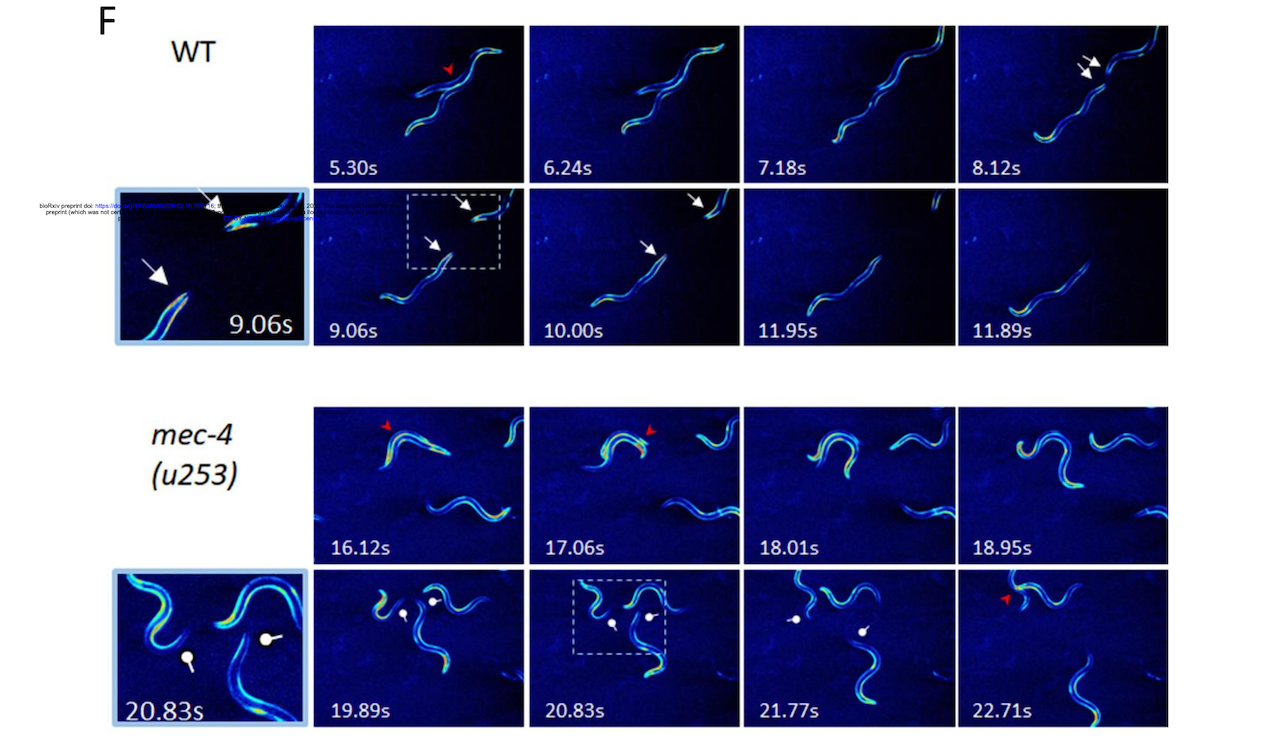
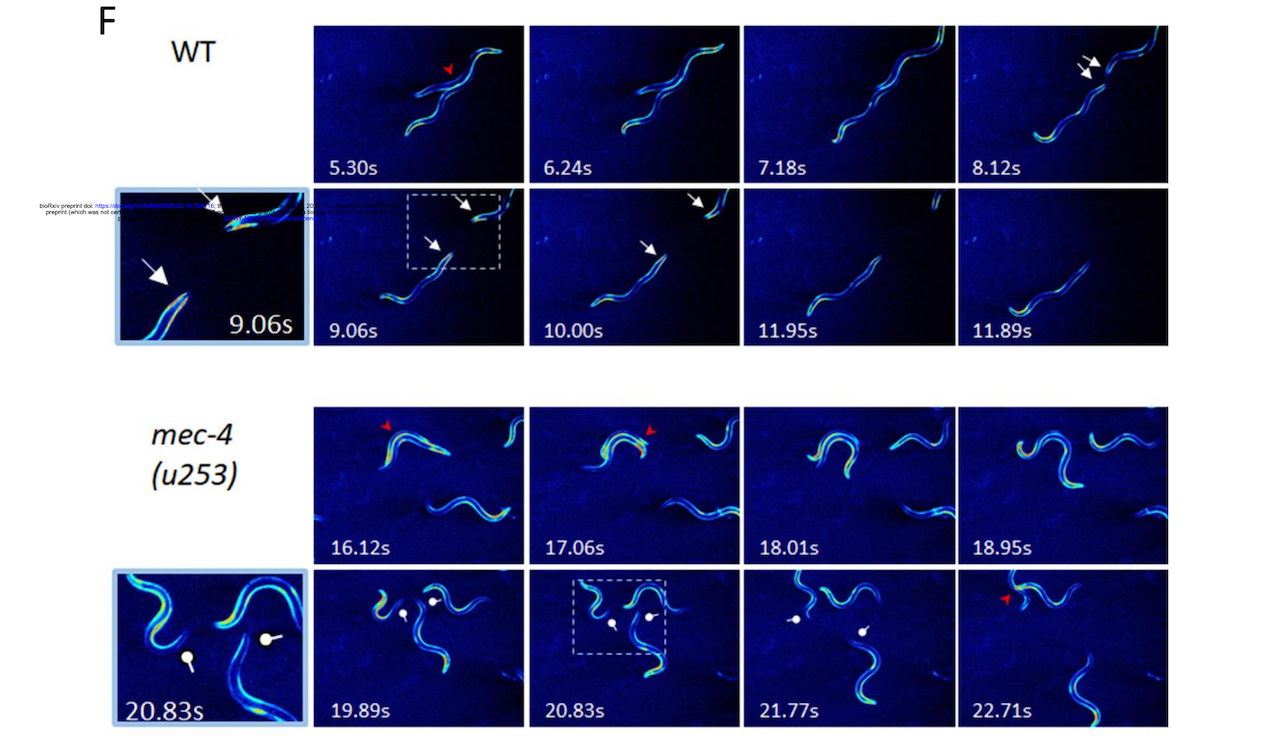
Effect of mec-4 mutations on neuromuscular aging and muscular calcium transients in a terrestrial 1G environment. (A) Heatmap analysis of log2(FC) ratio of autophagy/aggrephagy genes between D01 wild type and mec-4 mutants in 1G environment, plotted between N2 wild-type D01 1G vs. μG and D01 vs. D10 in 1G. (B) Images of muscle mitochondrial aging in mec-4 mutants vs. wild type in 1G culture. Scale bar: 10 μm. (C) Mitochondrial changes were classified as shown in Supplementary Figure 4, using chi-square test analysis (n = 75–250 muscle cells from 15+ worms each). *p0.05, **p0.01. (D) Images of age-related changes in SNB-1::GFP-labeled axon commissures of GABAergic motor neurons in wild-type and mec-4 mutants in 1G culture. Scale bar: 50 µm. (E) Blebs in four axon commissures were categorized according to the damage level and plotted (n = 25, 23, 42, 39, 35, and 31). Chi-square test: *p0.05, **p0.01, ***p0.001. (F) Cytosolic calcium transients during crawling and contact stimulation in wild-type and mec-4 (u253) adult mutants cultured on E. coli OP-50 NGM plate. Calcium concentration changes were visualized using goeIs3 [myo-3p::SL1::GCamP3.35::SL2::unc54 3’UTR + unc-119(+)] and converted using Royal Color. Sequential clips at 1-second intervals were shown in the videos (Supplementary Movie 2). — biorxiv.org
Space travel is becoming accessible, yet our understanding of how space environment and microgravity (µG) affect biology, physiology, and health remains incomplete.
We investigated µG effects on neuromuscular development and aging in Caenorhabditis elegans. Nematodes in µG showed downregulation of genes related to synaptic signaling, dopamine response, locomotion, and cuticle development, with impaired synaptic vesicle dynamics, reduced motility, and shorter body lengths.
Aged worms in µG showed decreased collagen gene expression, increased motor neuron defects, synaptic vesicle accumulation and decreased release, and mitochondrial morphology collapse in body wall muscles, indicating accelerated aging. MEC-4 mechanoreceptor was identified as a key mediator of µG-induced body length reduction and changes in extracellular matrix gene expression.
µG conditions suppressed mechanoreceptor genes, suggesting multiple mechanosensory systems are affected. Physical stimulation through culture medium with small beads in space mitigated many µG-induced expression changes, including mechanoreceptors, neuromuscular defects, and aging-related phenotypes.
These results highlight mechanical stimuli’s role in maintaining neuromuscular integrity during spaceflight and suggest restoring tactile input could counter health risks from reduced stimulation in long-term space missions.
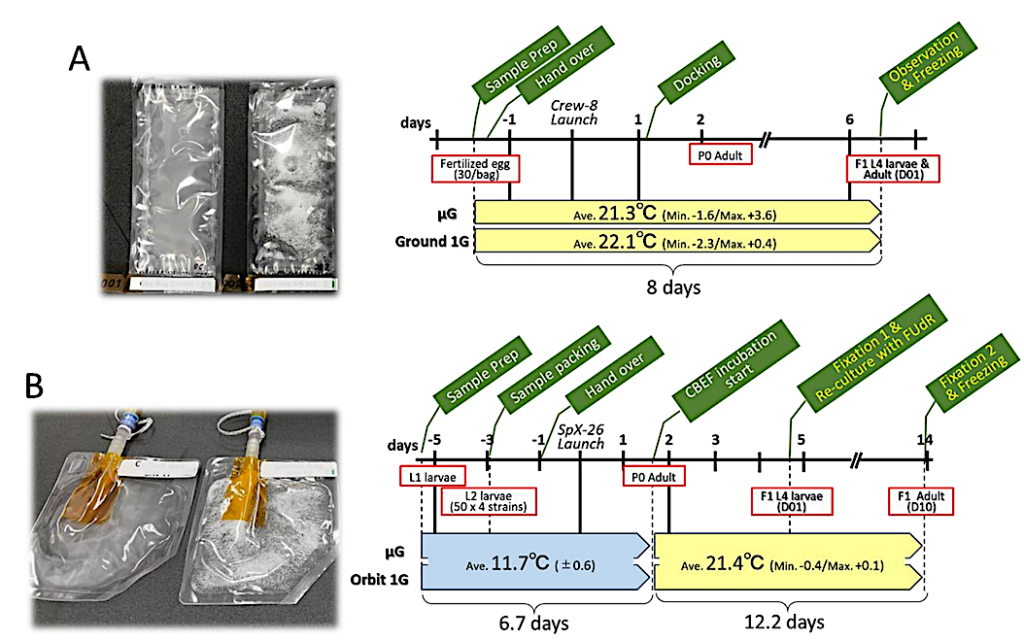
Overview of the C. elegans Neuronal Integrated System (NIS) experiment and cultivation status. (A) Small culture bags were used to observe F1 generation nematode motility, grown from eggs in space μG until adulthood, and to analyze gene expression after freezing. Ground 1G samples at Kennedy Space Center received identical treatment. (B) The larger bag contained 10-day-old adult worms grown in space with FudR added at D01 to inhibit the development of the next generation. Half of the samples were chemically fixed in orbit for histological analysis, while the other half were frozen for gene expression analysis to study the effects of μG aging. Orbit 1G samples underwent artificial 1G centrifugation on the ISS. The culture bags contained white plastic beads for contact stimulation. — biorxiv.org
SIGNIFICANCE
We found that microgravity (µG) conditions suppress the expression of multiple mechanoreceptor genes in Caenorhabditis elegans, indicating that several mechanosensory systems are affected during spaceflight.
Importantly, reintroducing physical stimulation by adding small beads to the culture medium in space partially reversed many of these µG-induced gene expression changes. This intervention also mitigated neuromuscular defects and aging-related phenotypes observed under µG conditions.
Collectively, these findings underscore the essential role of mechanical stimuli in preserving neuromuscular integrity during space missions and suggest that restoring tactile input may be a promising strategy to counteract the health risks associated with reduced tactile stimulation during prolonged spaceflights.
Microgravity affects the nervous system and aging in C. elegans through reduced tactile stimulation, biorxiv.org
Astrobiology,










Related Posts

Stay Informed With the Latest & Most Important News



Advertisement
-
 01Two Black Holes Observed Circling Each Other for the First Time
 -
 02From Polymerization-Enabled Folding and Assembly to Chemical Evolution: Key Processes for Emergence of Functional Polymers in the Origin of Life
 -
 03Astronomy 101: From the Sun and Moon to Wormholes and Warp Drive, Key Theories, Discoveries, and Facts about the Universe (The Adams 101 Series)
 -
 04True Anomaly hires former York Space executive as chief operating officer
 -
 05Φsat-2 begins science phase for AI Earth images
 -
 06Hurricane forecasters are losing 3 key satellites ahead of peak storm season − a meteorologist explains why it matters
 -
 07Binary star systems are complex astronomical objects − a new AI approach could pin down their properties quickly