
Now Reading: Muon Space to develop sensor payload for missile defense satellites
-
01
Muon Space to develop sensor payload for missile defense satellites


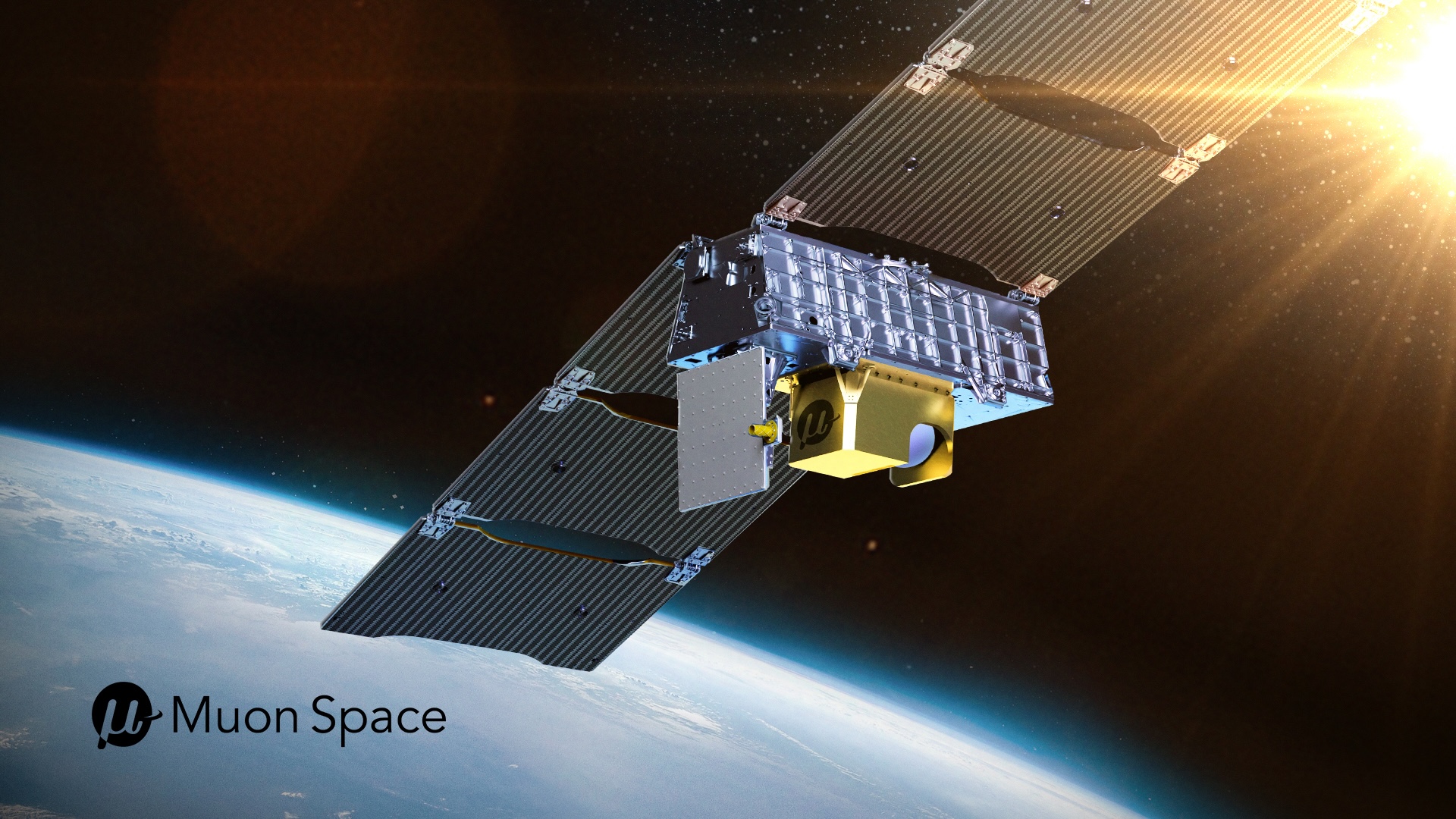

WASHINGTON — Muon Space has secured a $1.9 million contract to develop an infrared sensing payload for missile detection and tracking, the startup announced Dec. 9. The award is a Small Business Innovation Research Direct to Phase 2 contract from SpaceWERX, the U.S. Space Force’s technology arm. The Direct to Phase 2 path lets companies skip an initial feasibility study and move straight to prototype development.
Although announced this week, the contract was issued over the summer and was not affected by the lapse in SBIR authorization that began Sept. 30.
Under the award, Muon will build a high-sensitivity variant of its multispectral electro-optical infrared (EO/IR) payload for the Space Force’s Space Development Agency.
SDA is developing the Tracking Layer, a constellation in low Earth orbit designed to provide continuous detection and tracking of advanced missile threats. The payload will draw on Muon’s Quickbeam scanning architecture, originally created for thermal detection.
CEO Jonny Dyer said the contract “validates our approach of adapting proven commercial space technology for critical defense applications.”
Paula Trimble, vice president of government affairs and strategy, said the work under this SBIR is a “critical step in evaluating alignment of Muon’s technology with the future missile warning/missile tracking architecture being planned by the Space Force, including SDA’s future Tracking Layer tranches.”
The deal adds to Muon’s growing defense portfolio. Earlier this year, the Space Force awarded the company a $44.6 million contract to demonstrate its Quickbeam thermal imaging system for environmental monitoring and weather imaging.
Muon, based in Mountain View, California, developed thermal sensing payloads under a partnership with the nonprofit Earth Fire Alliance. They plan to deploy a FireSat constellation in low Earth orbit to monitor wildfires and other environmental events. The Space Force is assessing whether such commercial systems could help meet defense needs.










Related Posts

Stay Informed With the Latest & Most Important News
Previous Post
Next Post

Advertisement
-
 01Two Black Holes Observed Circling Each Other for the First Time
 -
 02From Polymerization-Enabled Folding and Assembly to Chemical Evolution: Key Processes for Emergence of Functional Polymers in the Origin of Life
 -
 03Astronomy 101: From the Sun and Moon to Wormholes and Warp Drive, Key Theories, Discoveries, and Facts about the Universe (The Adams 101 Series)
 -
 04True Anomaly hires former York Space executive as chief operating officer
 -
 05Φsat-2 begins science phase for AI Earth images
 -
 06Hurricane forecasters are losing 3 key satellites ahead of peak storm season − a meteorologist explains why it matters
 -
 07Binary star systems are complex astronomical objects − a new AI approach could pin down their properties quickly