
Now Reading: Musk wants to go to the moon. But how will he build his ‘self-growing city’?
-
01
Musk wants to go to the moon. But how will he build his ‘self-growing city’?


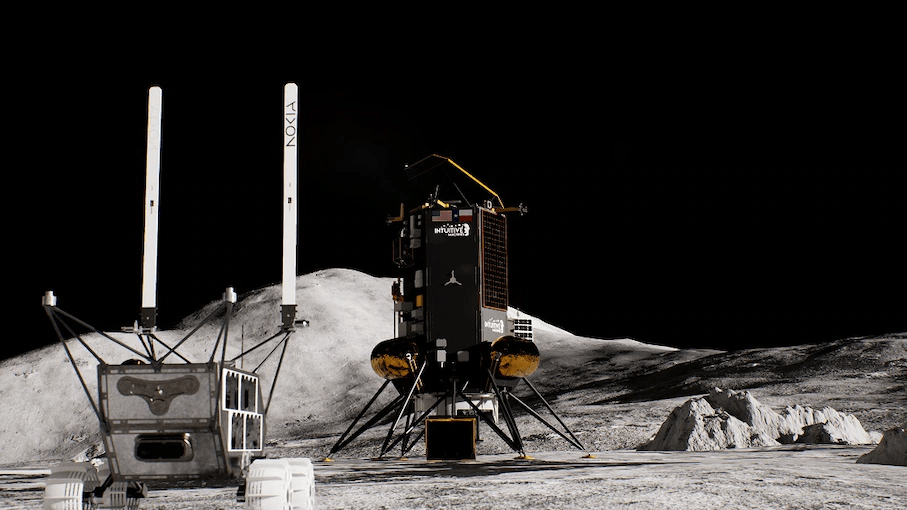

It goes without saying that we shouldn’t take everything Elon Musk says too seriously. There are whole websites dedicated to those times when he has ‘talked the talk’ but failed to ‘walk the walk’ — as well as those times when he has been factually untrue. But his latest claim, which is that he will build a “self-growing city” on the moon by 2030, is worth considering because whether he or someone else is the one to make that happen, we can be cautiously optimistic that it is a question of “when” and not “if.”
There’s a problem here — and it isn’t to do with getting to the moon. It’s true that Artemis is behind schedule, and that it’s been a long time since the United States landed on the lunar surface. But we know it can be done. The problem is much more mundane: cost. Why? Because a city needs to be built. It needs buildings, it needs roads, it needs infrastructure. In short, it needs materials. If a lunar colony is ever to become a reality, we will soon need to see progress in the development of those materials that are already on the moon.
The average time for a moon mission is about three days, but this varies. It depends on the route taken, the propulsion system used, the mission profile, whether the mission is crewed or not and whether the spacecraft lands, orbits or flies by. Crewed missions tend to take longer to get to the moon. All things considered, this is not very long. But it is expensive. So imagine the cost of having to travel and back and forth from Earth to gather materials and build a lunar city.
The fact is that the cost is prohibitive. Materials mean mass; mass means cost. It’s simply too expensive, by any estimate, to treat space rockets and lunar modules as glorified ships and trucks. The materials must therefore already be on the moon. If we can find a way to make moon materials reliable enough to build with, then one huge obstacle to colonizing our nearest celestial body can be overcome.
Some work on this front is already being done, such as the European Space Agency’s initiative to develop in-situ resource utilisation (ISRU), which means using materials already available on the moon rather than transporting everything from Earth. Although this fine lunar dust is weak and unsuitable for building in its raw form, it can be processed in several ways to transform its mechanical properties.
If processed into a fibre, for example, lunar regolith becomes more than 20 times stronger than the next-strongest sintered or melted regolith product. In fibre form, it combines high tensile strength with flexibility and large surface area. That means it could reinforce load-bearing structures for landing pads, roads and shelters, while also functioning as a textile for dust mitigation, filtration and insulation. The same material can contribute to micrometeorite shielding and even serve as a growth substrate for food production. This points to a versatile structural and functional material platform for sustained lunar infrastructure. Crucially, too, the production process involved can be miniaturized, and so designed to operate effectively even in lunar conditions. Other experiments have involved 3D printing structurally sound LEGO-style bricks which, like their plastic counterpart, interlock, thus allowing for modular construction. This provides flexibility in design and the ability to easily modify structures, which is a crucial advantage in the challenging lunar environment.
But here is the point that often gets missed. This is not just a space story. It is an industrial story. Space agencies should now be actively looking to recruit materials scientists, mining engineers and processing experts in number, not as niche specialists but as essential long-term hires who could address the bottleneck that is developing materials that perform in extreme environments.
Traditional industries should also pay attention. Mining companies, cement producers, fibre manufacturers, industrial processing firms — these already understand extraction, refinement and production at scale. The moon presents a new market where those skills and that knowledge can be adapted rather than reinvented. New business models will emerge around off-world processing systems, modular micro-factories and autonomous extraction units. The winners may not look like classic new space startups at all.
Inventors and investors, too, should look beyond rockets and satellites. There is a golden opportunity that lies in the supply chain: materials that can survive radiation, thermal extremes and the vacuum of space; processes that run with minimal human oversight; equipment that can be shipped in miniature and assembled wherever it is needed.
The point is that whether it happens in 2030 or 2040, whether the U.S. or the Chinese are the architects, whether Elon Musk gets his way or not, the colonization of the moon is starting to feel less like science fiction and more like a dawning reality. Now is the time to think beyond what grabs the headlines — the countdown and successful launch, the mission, the triumphant landing — and consider how, practically, given the logistical challenges and cost, we can make sure that we go further than making a brief visit and establish a permanent presence — something that would surely represent one of the greatest achievements of humanity.
That means policy support for ISRU research, it means procurement rules that prioritize local materials development, and it means public-private partnerships that involve materials science in the lunar economy early on. If we treat materials as an afterthought, a lunar city will remain a slogan, yet another visionary space promise that never became a reality. If we treat them as the foundation, then we have a project plan.
Materials scientists have a vital role to play in this next chapter in the human story — as indeed, they do across the space ecosystem. From protecting chips in spacecraft from getting fried by electromagnetic radiation, to defending satellites against hostile actors, to simply allowing space assets to survive the harsh conditions of orbit, their work is key. They should not be in the margins of the conversation about lunar settlement; they should be at its center.
Robert Brüll is CEO and co-founder of FibreCoat.
SpaceNews is committed to publishing our community’s diverse perspectives. Whether you’re an academic, executive, engineer or even just a concerned citizen of the cosmos, send your arguments and viewpoints to opinion (at) spacenews.com to be considered for publication online or in our next magazine. If you have something to submit, read some of our recent opinion articles and our submission guidelines to get a sense of what we’re looking for. The perspectives shared in these opinion articles are solely those of the authors and do not necessarily represent their employers or professional affiliations.










Related Posts
Stay Informed With the Latest & Most Important News
Previous Post
Next Post

Advertisement
-
 01Two Black Holes Observed Circling Each Other for the First Time
 -
 02From Polymerization-Enabled Folding and Assembly to Chemical Evolution: Key Processes for Emergence of Functional Polymers in the Origin of Life
 -
 03Astronomy 101: From the Sun and Moon to Wormholes and Warp Drive, Key Theories, Discoveries, and Facts about the Universe (The Adams 101 Series)
 -
 04True Anomaly hires former York Space executive as chief operating officer
 -
 05Φsat-2 begins science phase for AI Earth images
 -
 06Hurricane forecasters are losing 3 key satellites ahead of peak storm season − a meteorologist explains why it matters
 -
 07Binary star systems are complex astronomical objects − a new AI approach could pin down their properties quickly