
Now Reading: NASA astronaut says his medical issue led to early return from the ISS
-
01
NASA astronaut says his medical issue led to early return from the ISS


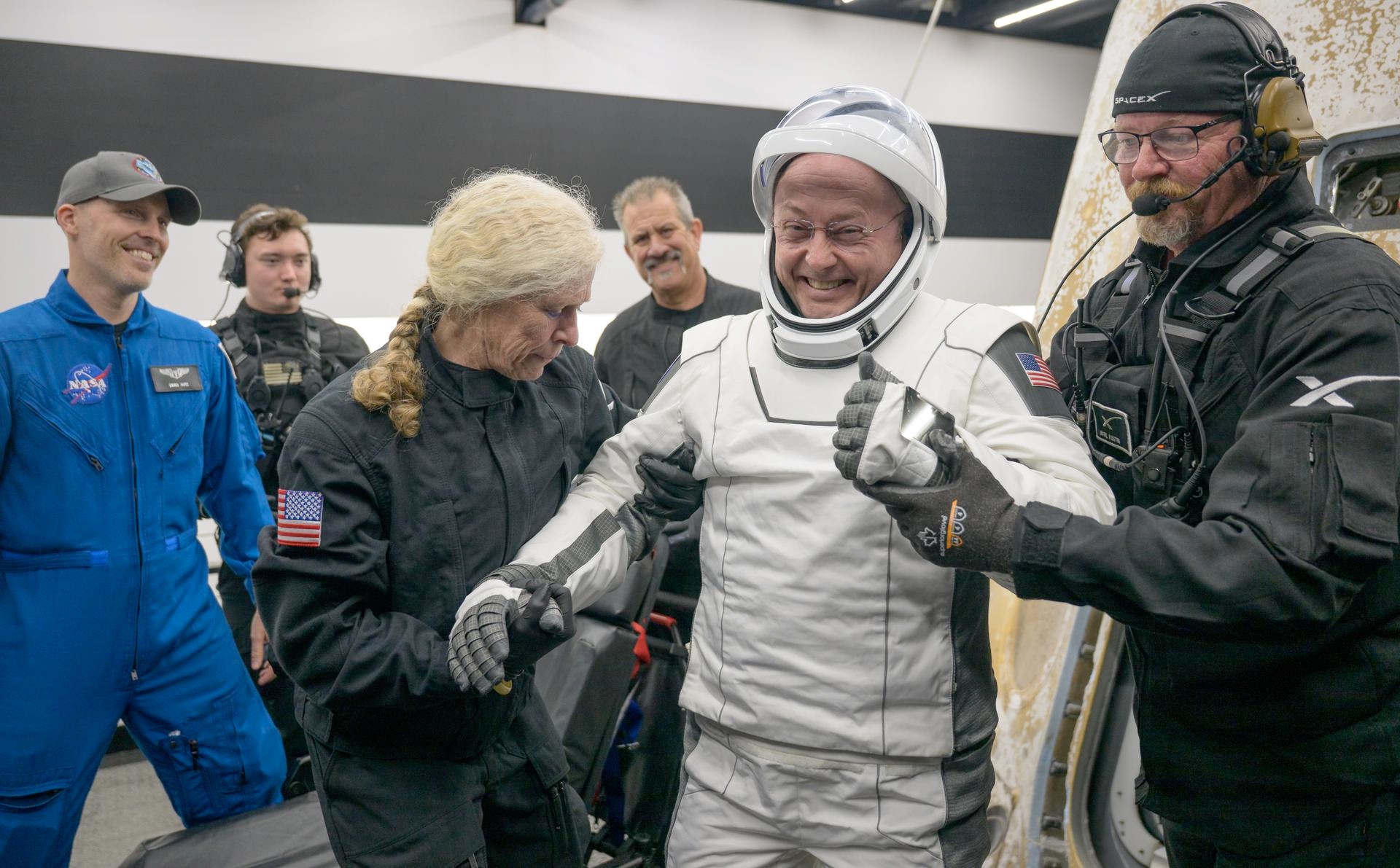

HOUSTON — NASA astronaut Mike Fincke said he was the crew member whose medical issue prompted the early return of the Crew-11 mission from the International Space Station last month.
NASA released a statement from Fincke on Feb. 25 in which he said he suffered a “medical event” on the station that led to NASA’s decision to bring him and three other astronauts back to Earth more than a month earlier than planned.
“On Jan. 7, while aboard the International Space Station, I experienced a medical event that required immediate attention from my incredible crewmates. Thanks to their quick response and the guidance of our NASA flight surgeons, my status quickly stabilized,” he said.
He did not disclose details about the medical event but said it required “advanced medical imaging not available on the space station.”
NASA announced Jan. 8 that it had decided to return Crew-11 home early, a day after reporting an incident involving a member of the crew. The agency declined at the time to identify the astronaut or the nature of the issue beyond describing it as a “serious medical condition,” although one that did not require immediate evacuation.
Citing medical privacy concerns, NASA provided no additional details. The Crew Dragon spacecraft that delivered Crew-11 to the station in August returned Jan. 15, with all four astronauts exiting the capsule normally.
At a Jan. 21 briefing, Fincke and the other Crew-11 members — NASA astronaut Zena Cardman, Japan Aerospace Exploration Agency astronaut Kimiya Yui and Roscosmos cosmonaut Oleg Platonov — again declined to discuss details of the medical incident. Fincke said an ultrasound device on the station, used for routine health assessments, “came in super handy” during the episode.
“We wanted to get the affected individual down to the ground so we could get them into modern imaging machines,” Ken Bowersox, NASA associate administrator for space operations, said during a speech at the ASCENDxTexas conference Feb. 25. “That’s as much for the health and well-being of the individual as it was to gather data.”
Fincke provided additional details in a social media post.
“Now that the full range of terrestrial imaging and diagnostic evaluations — capabilities available only here on Earth — have been completed, I’m grateful to share that the results are very reassuring and that I’m firmly on the path to a complete recovery,” he wrote.
“Space and microgravity continue to teach us — sometimes in surprising ways. NASA made this decision with calm judgment and with people at the center. That says everything about the culture I am proud to serve in,” he wrote, thanking his crewmates and ground teams for his safe return.
Fincke joined NASA’s astronaut corps in 1996 and has flown three long-duration missions to the station as well as the next-to-last space shuttle flight in 2011. He has spent 549 days in space and performed nine spacewalks. He had been preparing for his 10th spacewalk, alongside Cardman, scheduled for Jan. 8 when he experienced the medical incident that called off the spacewalk and led to his early return.
“Serving aboard the ISS remains one of the great privileges of my life,” he wrote on social media. “It is proof that nations can work together in discipline, trust and shared purpose. Microgravity still surprises us. That’s part of exploration.”










Related Posts

Stay Informed With the Latest & Most Important News
Previous Post
Next Post


Advertisement
-
 01Two Black Holes Observed Circling Each Other for the First Time
 -
 02From Polymerization-Enabled Folding and Assembly to Chemical Evolution: Key Processes for Emergence of Functional Polymers in the Origin of Life
 -
 03Astronomy 101: From the Sun and Moon to Wormholes and Warp Drive, Key Theories, Discoveries, and Facts about the Universe (The Adams 101 Series)
 -
 04True Anomaly hires former York Space executive as chief operating officer
 -
 05Φsat-2 begins science phase for AI Earth images
 -
 06Hurricane forecasters are losing 3 key satellites ahead of peak storm season − a meteorologist explains why it matters
 -
 07Binary star systems are complex astronomical objects − a new AI approach could pin down their properties quickly