
Now Reading: NASA astrophysics, commercial satellites launch on SpaceX rideshare mission
-
01
NASA astrophysics, commercial satellites launch on SpaceX rideshare mission

NASA astrophysics, commercial satellites launch on SpaceX rideshare mission

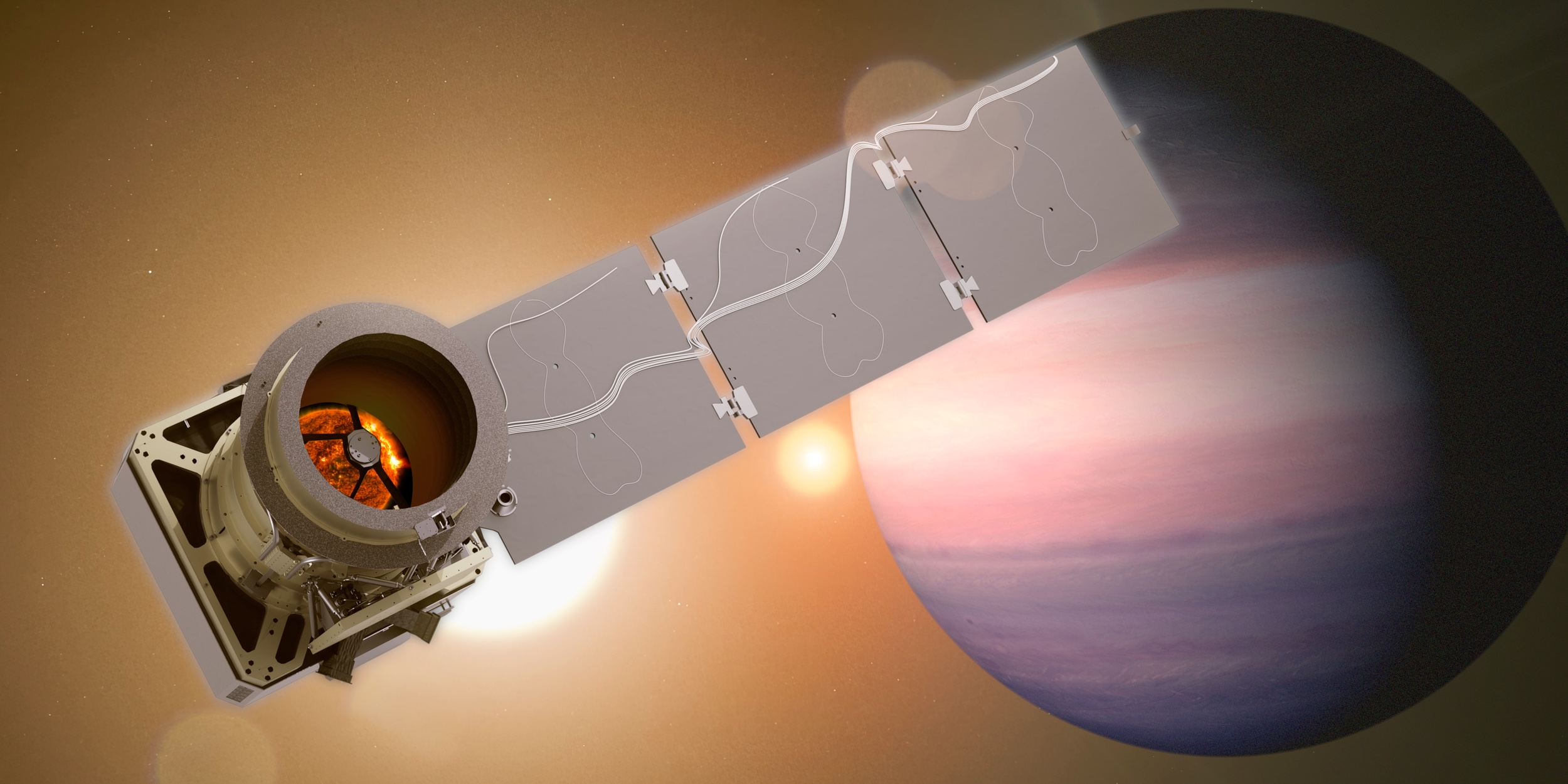

WASHINGTON — A SpaceX Falcon 9 launched a trio of NASA astrophysics small satellites along with dozens of commercial spacecraft on a rideshare mission Jan. 11.
The Falcon 9 lifted off from Vandenberg Space Force Base in California at 8:44 a.m. Eastern on a mission SpaceX dubbed “Twilight.” The 40 spacecraft aboard began deployment 61 minutes after liftoff, with deployments concluding more than 90 minutes later.
Twilight is part of SpaceX’s broader rideshare program but falls outside its two main mission lines: Transporter launches to sun-synchronous orbit and Bandwagon flights to mid-inclination orbits. On this mission, payloads were deployed into dusk-dawn sun-synchronous orbits.
The mission primarily carried commercial satellites, including 10 optical data relay network satellites for Kepler Communications and nine Lemur satellites for Spire. Other companies with payloads on the launch included Internet of Things company Plan-S, radio frequency intelligence company Hawkeye 360, and radar imaging companies Capella Space, Iceye and Umbra.
Also aboard were three NASA astrophysics missions, including two cubesats. One, the Star-Planet Activity Research CubeSat (SPARCS), is a 6U cubesat built by the University of Arizona to study 20 K- and M-class stars at ultraviolet wavelengths, measuring stellar flares and other activity that could affect the habitability of orbiting planets.
The other cubesat, the Black Hole Coded Aperture Telescope, or BlackCAT, is a 6U spacecraft developed at Penn State University. It will observe X-ray flares from supermassive black holes at the centers of active galaxies as well as gamma-ray bursts. Both SPARCS and BlackCAT were funded through NASA astrophysics research and analysis programs.
The third NASA mission, Pandora, is part of the agency’s Astrophysics Pioneers program for small satellite and balloon-based missions, with cost caps of $20 million. The 325-kilogram Pandora spacecraft carries a 45-centimeter telescope to study exoplanet atmospheres by observing planetary transits, when exopanets pass in front of their host stars.
Pandora, led by NASA’s Goddard Space Flight Center, is the second mission from the Pioneers program to launch. The first, the Payload for Ultrahigh Energy Observations, or PUEO, is a balloon mission launched over Antarctica in December to study high-energy particles as they interact with or reflect off Antarctic ice.
Pandora and PUEO are two of four mission concepts NASA selected in 2021 as the first Astrophysics Pioneers missions. The other two are Aspera, a spacecraft to study galaxy evolution planned for launch later this year on a Rocket Lab Electron, and StarBurst, a small satellite mission to observe the initial phases of gamma-ray bursts, projected to launch in 2027.
NASA has since selected additional Astrophysics Pioneers missions, including the Trans-Iron Galactic Element Recorder for the International Space Station (TIGERISS), an instrument to be mounted on the ISS, and Landolt, an “artificial star” small satellite designed to help calibrate stellar brightness measurements made by other telescopes.
At a NASA town hall during the 247th Meeting of the American Astronomical Society on Jan. 5, Shawn Domagal-Goldman, director of NASA’s astrophysics division, said the agency is working to select additional Pioneers missions this year.
“We are capable of supporting up to two Pioneers missions,” he said. He did not provide a timeline for the selections but said NASA is moving “as quickly as we can.”
He added that the agency may delay the next call for proposals under the Pioneers program. “What we’re thinking of doing is pushing back the call a little bit so that teams can respond to what we are about to potentially select,” he said, allowing proposers to pursue different mission concepts.










Related Posts
Stay Informed With the Latest & Most Important News
Previous Post
Next Post


Advertisement
-
 01Two Black Holes Observed Circling Each Other for the First Time
 -
 02From Polymerization-Enabled Folding and Assembly to Chemical Evolution: Key Processes for Emergence of Functional Polymers in the Origin of Life
 -
 03Astronomy 101: From the Sun and Moon to Wormholes and Warp Drive, Key Theories, Discoveries, and Facts about the Universe (The Adams 101 Series)
 -
 04True Anomaly hires former York Space executive as chief operating officer
 -
 05Φsat-2 begins science phase for AI Earth images
 -
 06Hurricane forecasters are losing 3 key satellites ahead of peak storm season − a meteorologist explains why it matters
 -
 07Binary star systems are complex astronomical objects − a new AI approach could pin down their properties quickly