
Now Reading: NASA evaluation lauds quality of PlanetiQ radio occultation data
-
01
NASA evaluation lauds quality of PlanetiQ radio occultation data


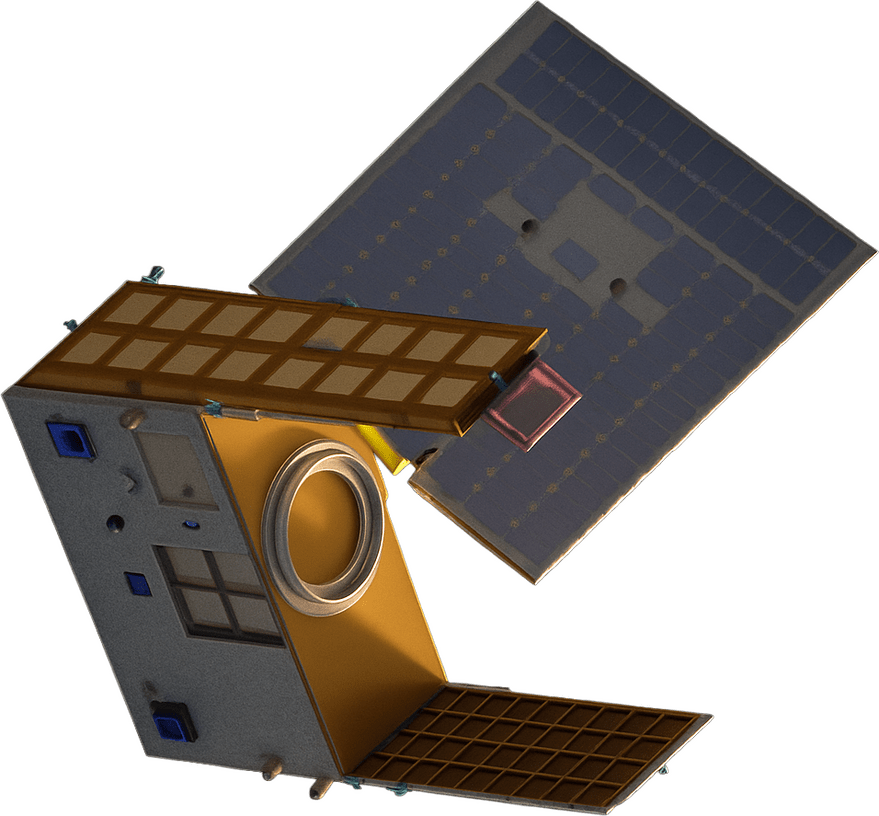

SAN FRANCISCO – An independent NASA evaluation confirmed the quality of radio occultation data provided by PlanetiQ.
The one-year evaluation, which compared PlanetiQ observations with data from the Constellation Observing System for Meteorology, Ionosphere and Climate-2 (COSMIC-2) and commercial constellations, found that PlanetiQ data products were “high quality, well documented, and broadly comparable to established benchmark missions for most science applications,” according to a NASA statement.
PlanetiQ announced the findings Jan. 27 at the American Meteorological Society annual meeting in Houston. The evaluation, performed by NASA’s Commercial Satellite Data Acquisition Program, has not yet been released.
NASA’s assessment of PlanetiQ datasets lauded the precision of PlanetiQ’s total electron content observations as “best-in-class,” citing high signal-to-noise ratio and deep penetration in the lower troposphere, according to the PlanetiQ news release.
“This NASA CSDA evaluation validates what we have long understood that the quality and operational value of our radio occultation data are best-in-class,” PlanetiQ CEO Ira Scharf said in a statement. “The investigator teams also found our products to be reliable” and well-documented.
Terrestrial and Space Weather
NASA researchers evaluated PlanetiQ’s lower atmosphere data, used in global numerical weather prediction models, and its ionosphere observations, key inputs for space-weather forecasts.
For space weather, PlanetiQ’s data filled gaps in coverage from COSMIC-2, a six-satellite constellation established by the National Oceanic and Atmospheric Administration (NOAA), the U.S. Air Force and Taiwan’s National Space Organization. The evaluation also determined that PlanetiQ data had a greater impact on ionospheric data-assimilation models than COSMIC-2 and other commercial data, according to the news release.
For terrestrial weather models, the NASA report noted that PlanetiQ’s observations reached far into the lower troposphere, “enabling detailed characterization of the planetary boundary layer and atmospheric ducting,” the news release said. “This capability is critically important in the Arctic, a contested region with significant national defense relevance.”
Focus on Technology
PlanetiQ was founded in 2015 by Chris McCormick and E. Robert Kursinski, pioneers in global navigation satellite system (GNSS) radio occultation science and technology. The company’s GNSS Navigation and Occultation Measurement Satellites, called GNOMES, carry Pyxis sensors that monitor atmospheric temperature, pressure, humidity and electron density by observing signals from the U.S. Global Positioning System, Russia’s Glonass, Europe’s Galileo and China’s Beidou satellites.
“We focus on the technology, our own research, what the user community needs to see and why,” McCormick, chairman of Golden, Colorado-based PlanetiQ, told SpaceNews. “Our data is selling itself because it does have impact.”
In September, PlanetiQ won a $24.3 million NOAA contract to deliver 7,000 daily GNSS radio occultation profiles. The U.S. Air Force, U.S. Navy and international weather agencies can obtain PlanetiQ observations for research or operational forecasts through the NOAA contract.










Related Posts

Stay Informed With the Latest & Most Important News
Previous Post
Next Post


Advertisement
-
 01Two Black Holes Observed Circling Each Other for the First Time
 -
 02From Polymerization-Enabled Folding and Assembly to Chemical Evolution: Key Processes for Emergence of Functional Polymers in the Origin of Life
 -
 03Astronomy 101: From the Sun and Moon to Wormholes and Warp Drive, Key Theories, Discoveries, and Facts about the Universe (The Adams 101 Series)
 -
 04True Anomaly hires former York Space executive as chief operating officer
 -
 05Φsat-2 begins science phase for AI Earth images
 -
 06Hurricane forecasters are losing 3 key satellites ahead of peak storm season − a meteorologist explains why it matters
 -
 07Binary star systems are complex astronomical objects − a new AI approach could pin down their properties quickly