
Now Reading: NASA exoplanet probe tracks interstellar comet 3I/ATLAS to gauge its spin
-
01
NASA exoplanet probe tracks interstellar comet 3I/ATLAS to gauge its spin


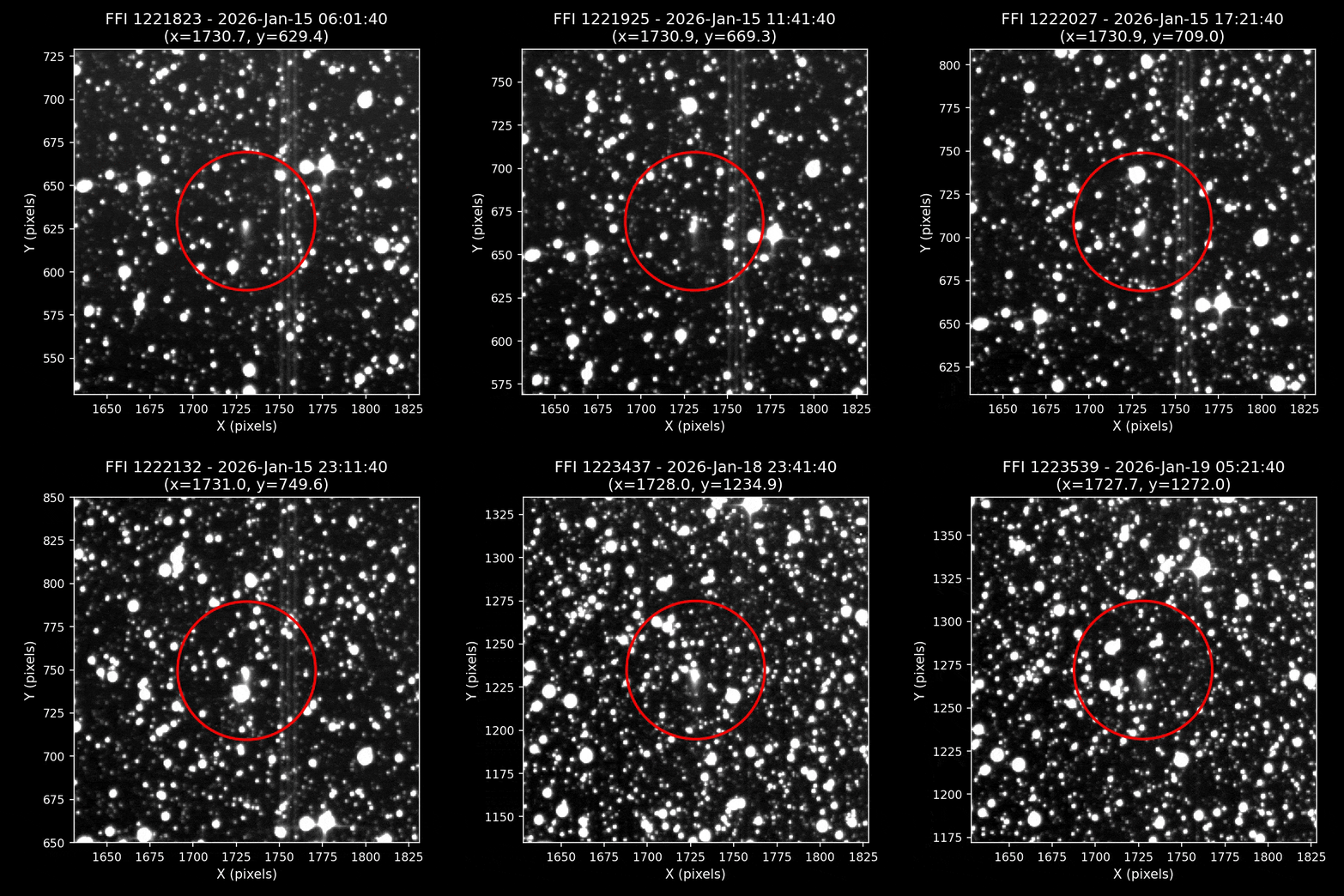
NASA’s planet-hunting TESS spacecraft recently caught a view of a very different kind of cosmic object: interstellar comet 3I/ATLAS.
During a special observation run from Jan. 15 to Jan. 22, the Transiting Exoplanet Survey Satellite (TESS) repeatedly observed comet 3I/ATLAS as it headed out of our solar system. With its wide field of view, TESS recorded the comet as a bright, fast-moving dot dragging a faint tail across a crowded starfield.
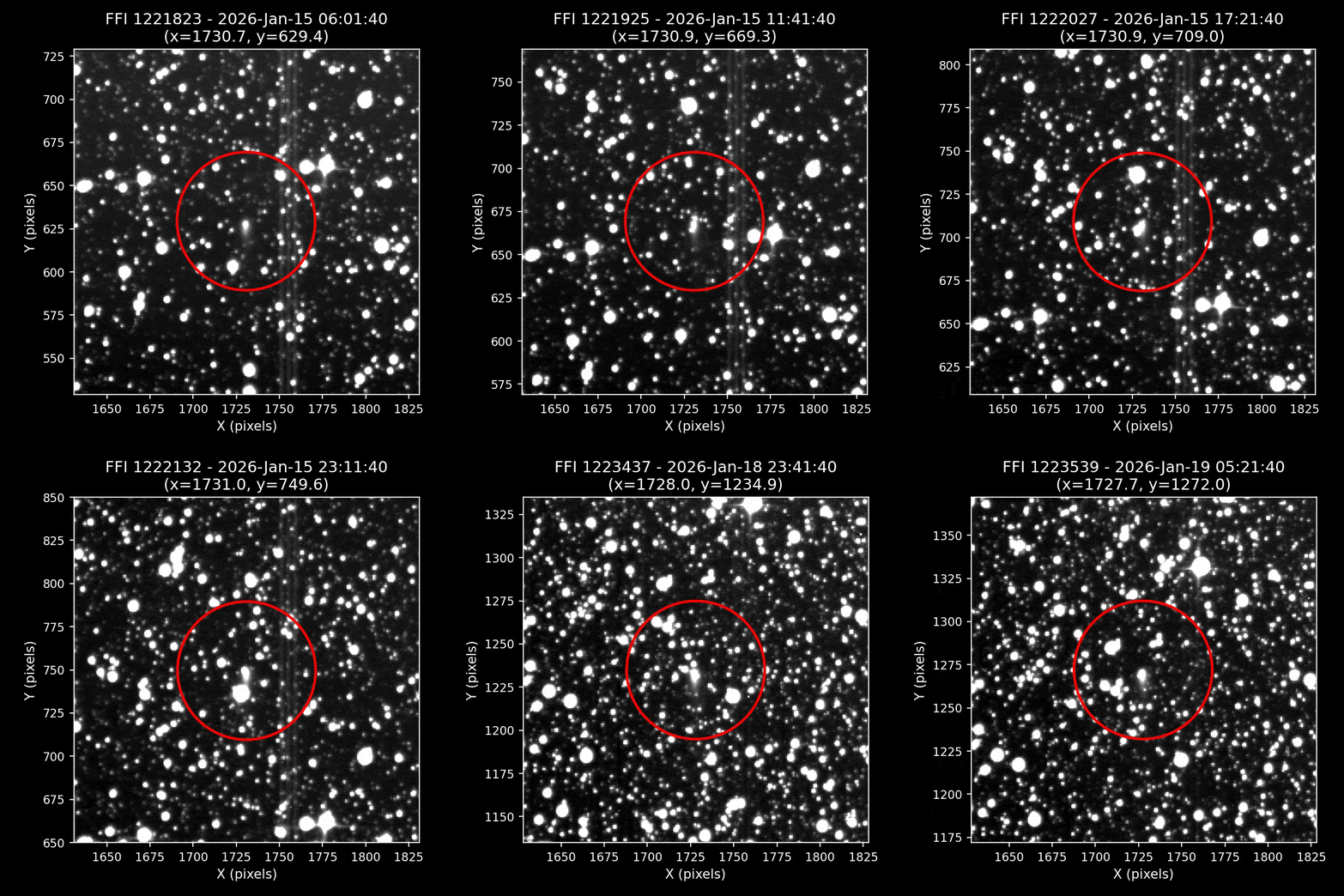
Scientists like Muthukrishna hope to use the dataset to study the comet’s activity and rotation, clues that reveal how vigorously it’s shedding dust and gas and how quickly the comet’s core spins.
TESS measurements put comet 3I/ATLAS’s brightness at about 11.5 in apparent magnitude, roughly 100 times fainter than what we can see with the naked eye, but accessible using telescopes.
NASA’s TESS mission was designed to find exoplanets via the transit method, in which a faraway star dims slightly when a planet in its system passes in front of it. But TESS’ wide field of view and consistent monitoring also make it useful for detecting and tracking closer objects, including comets and asteroids, for longer stretches of time.
This capability helped astronomers spot comet 3I/ATLAS before they even knew it was there. TESS happened to observe a comet in May 2025, two months before 3I/ATLAS was discovered. By looking back through all the data and compiling multiple observations, astronomers could filter out the interstellar visitor through the noise and track its movements. While unfortunately this doesn’t tell us where the comet originated, it does give us other key details.
The January TESS observations are now publicly available and can be found on the the Mikulski Archive for Space Telescopes. It’s within these precious hours that astronomers may find repeating patterns of brightness that reveal further secrets about our brief interstellar visitor.










Related Posts

Stay Informed With the Latest & Most Important News
Previous Post
Next Post

Advertisement
-
 01Two Black Holes Observed Circling Each Other for the First Time
 -
 02From Polymerization-Enabled Folding and Assembly to Chemical Evolution: Key Processes for Emergence of Functional Polymers in the Origin of Life
 -
 03Astronomy 101: From the Sun and Moon to Wormholes and Warp Drive, Key Theories, Discoveries, and Facts about the Universe (The Adams 101 Series)
 -
 04True Anomaly hires former York Space executive as chief operating officer
 -
 05Φsat-2 begins science phase for AI Earth images
 -
 06Hurricane forecasters are losing 3 key satellites ahead of peak storm season − a meteorologist explains why it matters
 -
 07Binary star systems are complex astronomical objects − a new AI approach could pin down their properties quickly