
Now Reading: NASA preparing for Artemis 2 rollback to fix upper stage problem
-
01
NASA preparing for Artemis 2 rollback to fix upper stage problem



Updated 12:15 p.m. Eastern with additional comments from Isaacman.
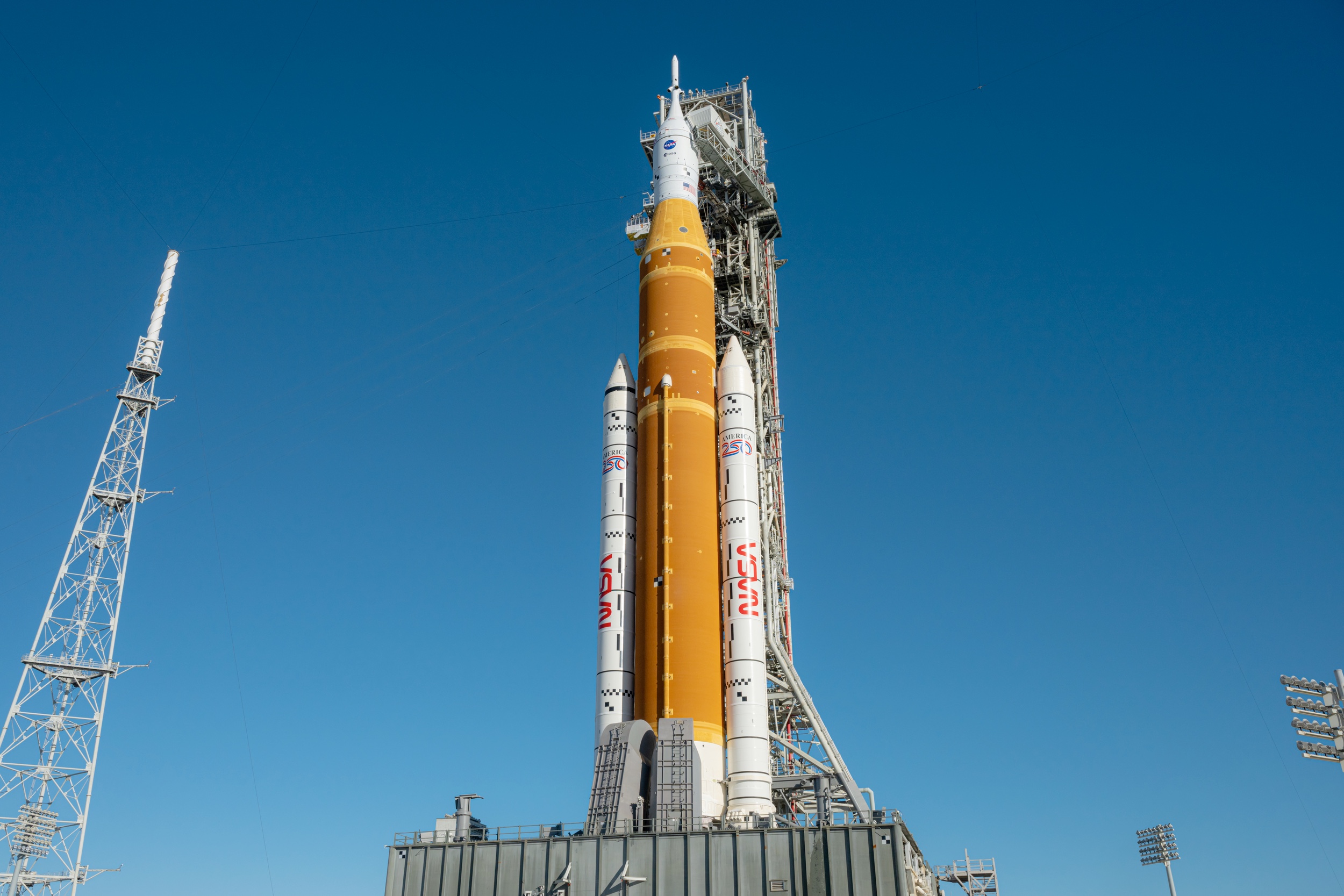
WASHINGTON — Just 24 hours after setting a March 6 launch date for the Artemis 2 mission, NASA announced Feb. 21 that a problem with the Space Launch System upper stage will delay the launch.
In a brief statement, NASA said it was preparing to roll the SLS back from Launch Complex 39B at the Kennedy Space Center to the Vehicle Assembly Building after engineers found that helium flow in the rocket’s upper stage had been interrupted.
Helium is used to pressurize tanks in the stage, formally known as the Interim Cryogenic Propulsion Stage. NASA had not reported any issues with helium flow or tank pressurization during a second wet dress rehearsal that concluded late Feb. 19.
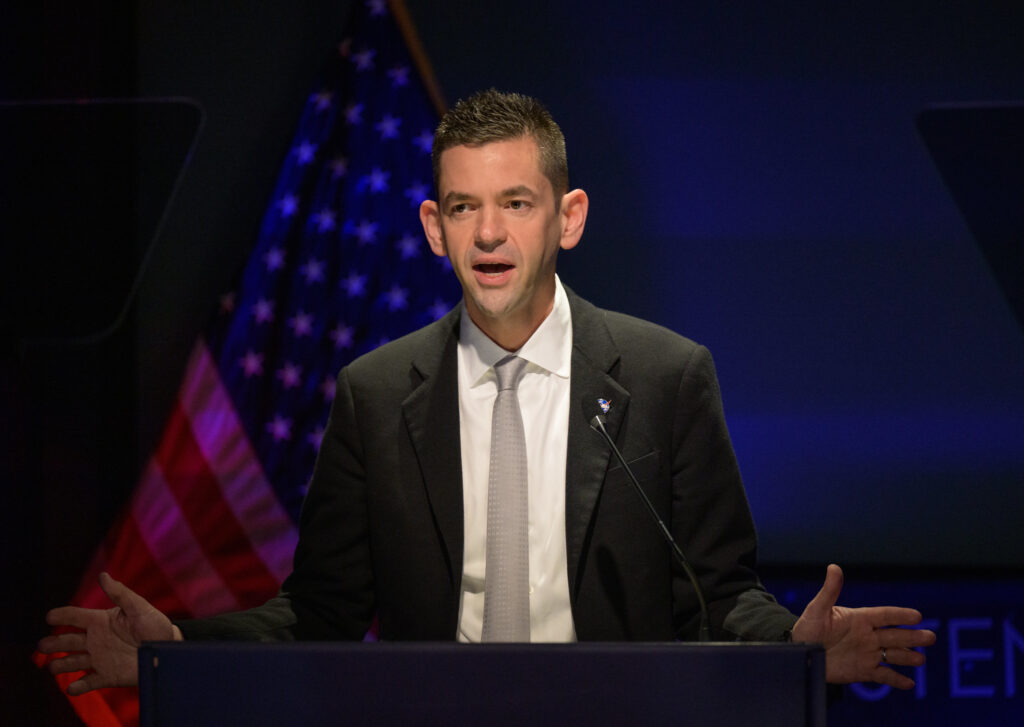
NASA initially said it had not yet made a final decision to roll the vehicle back to the Vehicle Assembly Building, or VAB, and was studying options to fix the problem at the pad as well as inside the VAB. However, in a social media post, NASA Administrator Jared Isaacman called a rollback “likely.”
In a subsequent post, Isaacman said that while several potential causes for the problem, also seen during Artemis 1, were being considered, NASA would proceed with a rollback. “Regardless of the potential fault, accessing and remediating any of these issues can only be performed in the VAB,” he stated.
While studying repair options, workers began preparing for a potential rollback. That includes disassembling temporary work platforms that had just been installed at the launch pad for tasks such as retesting the rocket’s flight termination system. That work could not wait until Feb. 22, the agency said, because of high winds forecast that day.
The announcement came a day after agency officials said at a briefing that they were working toward launching Artemis 2 as soon as March 6, the first day of the next launch period for the mission. That opportunity runs through March 11.
The upper stage problem and possible rollback “will almost assuredly impact the March launch window,” NASA said.
Isaacman stated that the rollback “will take the March launch window out of consideration.”
At the Feb. 20 briefing, NASA cautioned that work remained to prepare Artemis 2 for a March launch, including pad activities and a multiday flight readiness review.
“But assuming that happens, it puts us in a very good position to target March 6,” said Lori Glaze, acting associate administrator for exploration systems development.
“I’ve got a pretty high level of confidence in the configuration that we’re in right now,” added John Honeycutt, chair of NASA’s Artemis 2 mission management team. “It’s out there at the pad. It’s going to be there at the pad until we go fly.”
If NASA is unable to launch Artemis 2 in March, the next launch window runs from April 1 to 6. Another window opens April 30, although NASA has not disclosed additional launch opportunities beyond the end of April.
“I understand people are disappointed by this development. That disappointment is felt most by the team at NASA, who have been working tirelessly to prepare for this great endeavor,” Isaacman said, but noted there were “many setbacks” during the Apollo program before landing people on the moon in 1969.










Related Posts

Stay Informed With the Latest & Most Important News
Previous Post
Next Post




Advertisement
-
 01Two Black Holes Observed Circling Each Other for the First Time
 -
 02From Polymerization-Enabled Folding and Assembly to Chemical Evolution: Key Processes for Emergence of Functional Polymers in the Origin of Life
 -
 03Astronomy 101: From the Sun and Moon to Wormholes and Warp Drive, Key Theories, Discoveries, and Facts about the Universe (The Adams 101 Series)
 -
 04True Anomaly hires former York Space executive as chief operating officer
 -
 05Φsat-2 begins science phase for AI Earth images
 -
 06Hurricane forecasters are losing 3 key satellites ahead of peak storm season − a meteorologist explains why it matters
 -
 07Binary star systems are complex astronomical objects − a new AI approach could pin down their properties quickly