
Now Reading: NASA revises plans for future Artemis missions, cancels upgrades to SLS
-
01
NASA revises plans for future Artemis missions, cancels upgrades to SLS


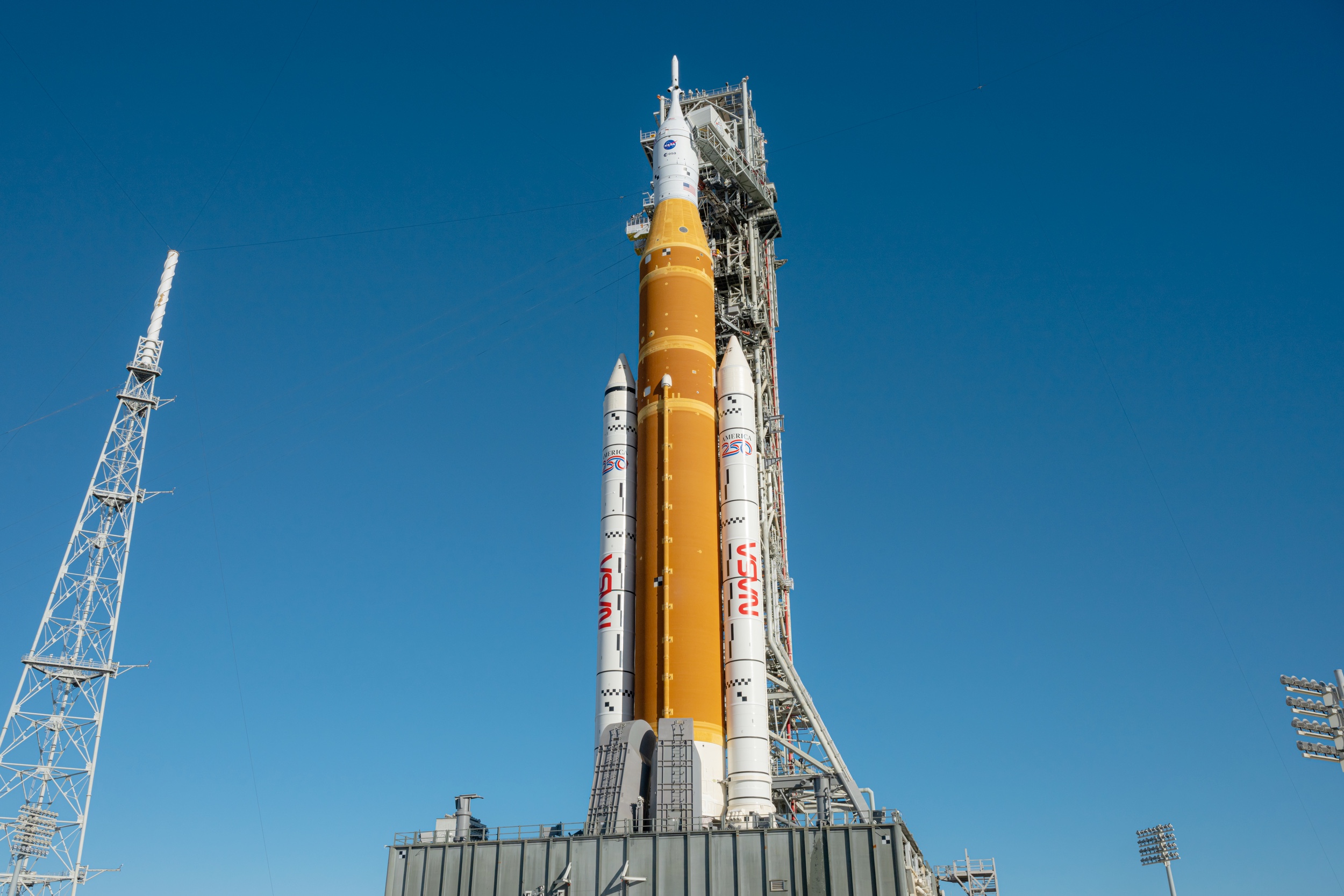

WASHINGTON — NASA announced major changes to its Artemis lunar architecture, adding a test flight of lunar landers in low Earth orbit while canceling planned upgrades to the Space Launch System.
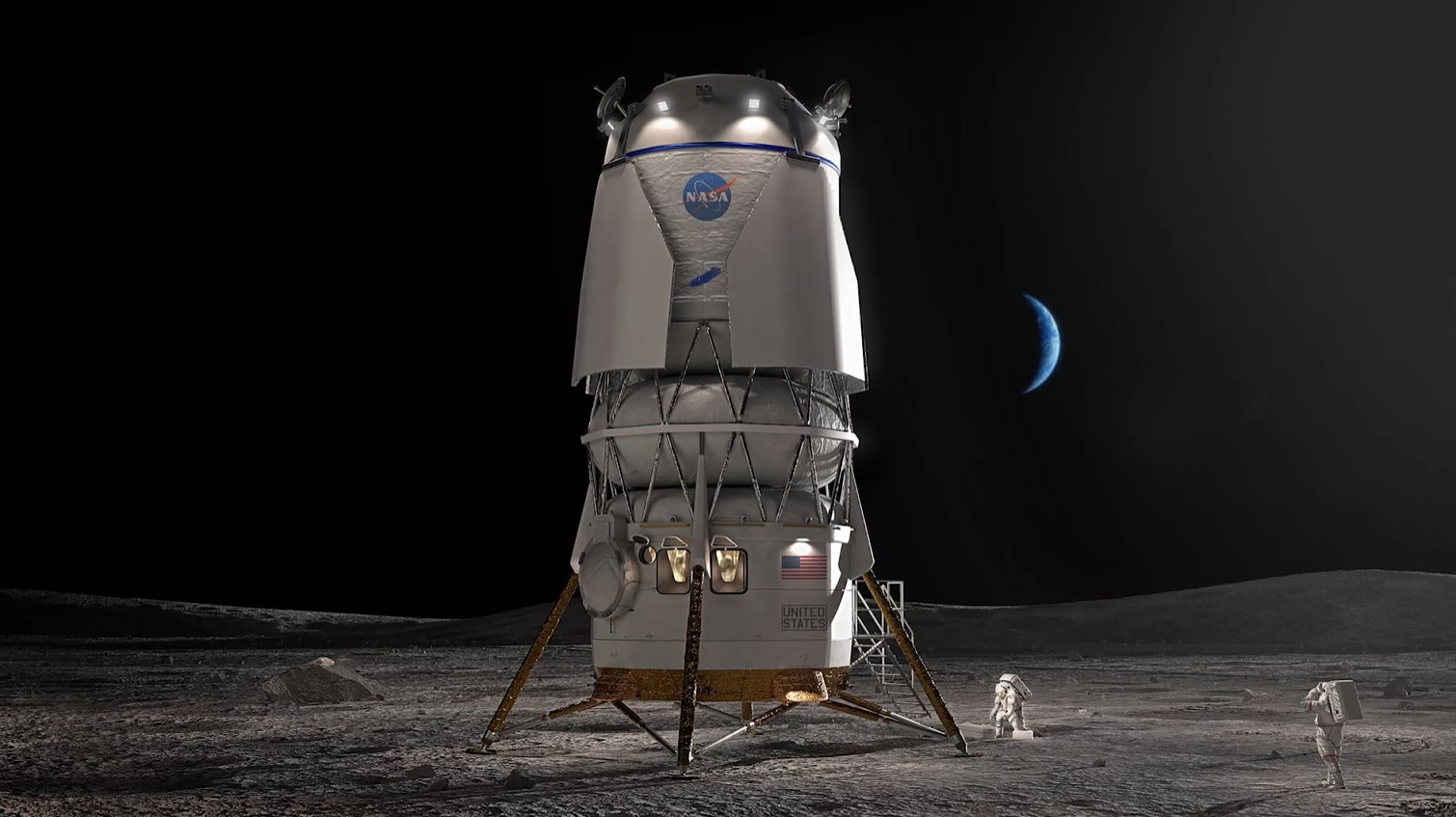
At a Feb. 27 briefing, NASA said it would change the schedule of upcoming Artemis missions to add a flight in 2027 where Orion will rendezvous and dock with lunar landers from Blue Origin and/or SpaceX while in low Earth orbit. The mission would also test a new spacesuit being developed by Axiom Space.
That new mission will be named Artemis 3, which had been reserved for the first crewed lunar landing attempt. Under the new plan, the first lunar landing would be attempted on Artemis 4 in 2028, with the possibility of an Artemis 5 in late 2028.
The new Artemis 3 would be analogous to Apollo 9, a mission in early 1969 that was the first test of the Lunar Module in space, including docking tests in low Earth orbit.
NASA Administrator Jared Isaacman said the new mission would allow NASA to move at a faster rate as it faces competition from China, which is planning its first crewed lunar lander for around 2030.
“NASA must standardize its approach, increase flight rate safely and execute on the President’s national space policy,” he said in a statement. “With credible competition from our greatest geopolitical adversary increasing by the day, we need to move faster, eliminate delays and achieve our objectives.”
“The entire sequence of Artemis flights needs to represent a step-by-step buildup of capability, with each step bringing us closer to our ability to perform the landing missions,” Amit Kshatriya, NASA associate administrator, said in a statement. “Each step needs to be big enough to make progress, but not so big that we take unnecessary risk given previous learnings.”
As part of those changes to increase flight rate, NASA said it was abandoning plans to upgrade the SLS after Artemis 3. The first three SLS launches use the Block 1 configuration, with the Interim Cryogenic Propulsion Stage (ICPS) as the upper stage. Future SLS launches were to use the Block 1B version, with the larger Exploration Upper Stage.
Instead, NASA said it will no longer develop the Block 1B, using instead a “near Block 1” configuration. The agency did not disclose details on the specific upper stage it will use; the ICPS is based on the upper stage for the Delta 4, which is no longer in production.
Maintaining the Block 1 configuration is intended to allow for a faster flight rate. Isaacman has publicly expressed frustration with the low flight rate of SLS — Artemis 2, the second SLS launch, will take place more than three years after Artemis 1 — that he believes may explain the issues such as hydrogen leaks seen during preparations for Artemis 2.
“Considering the issues observed during the lead-up to Artemis I, and the long duration between missions, we should not be surprised there are challenges entering the Artemis II campaign,” he said in one social media post Feb. 14.
“The flight rate is the lowest of any NASA-designed vehicle, and that should be a topic of discussion,” he said of SLS in another post Feb. 3.
The changes have been briefed with key members of Congress, according to industry sources. They also have the support of Boeing, the prime contractor for the SLS and who had been working on the Exploration Upper Stage.
“As NASA lays out an accelerated launch schedule, our workforce and supply chain are prepared to meet the increased production needs,” Steve Parker, head of Boeing’s Defense, Space and Security business unit, said in a statement.










Related Posts

Stay Informed With the Latest & Most Important News
Previous Post
Next Post



Advertisement
-
 01Two Black Holes Observed Circling Each Other for the First Time
 -
 02From Polymerization-Enabled Folding and Assembly to Chemical Evolution: Key Processes for Emergence of Functional Polymers in the Origin of Life
 -
 03Astronomy 101: From the Sun and Moon to Wormholes and Warp Drive, Key Theories, Discoveries, and Facts about the Universe (The Adams 101 Series)
 -
 04True Anomaly hires former York Space executive as chief operating officer
 -
 05Φsat-2 begins science phase for AI Earth images
 -
 06Hurricane forecasters are losing 3 key satellites ahead of peak storm season − a meteorologist explains why it matters
 -
 07Binary star systems are complex astronomical objects − a new AI approach could pin down their properties quickly