
Now Reading: NASA seeks to accelerate development of Habitable Worlds Observatory
-
01
NASA seeks to accelerate development of Habitable Worlds Observatory


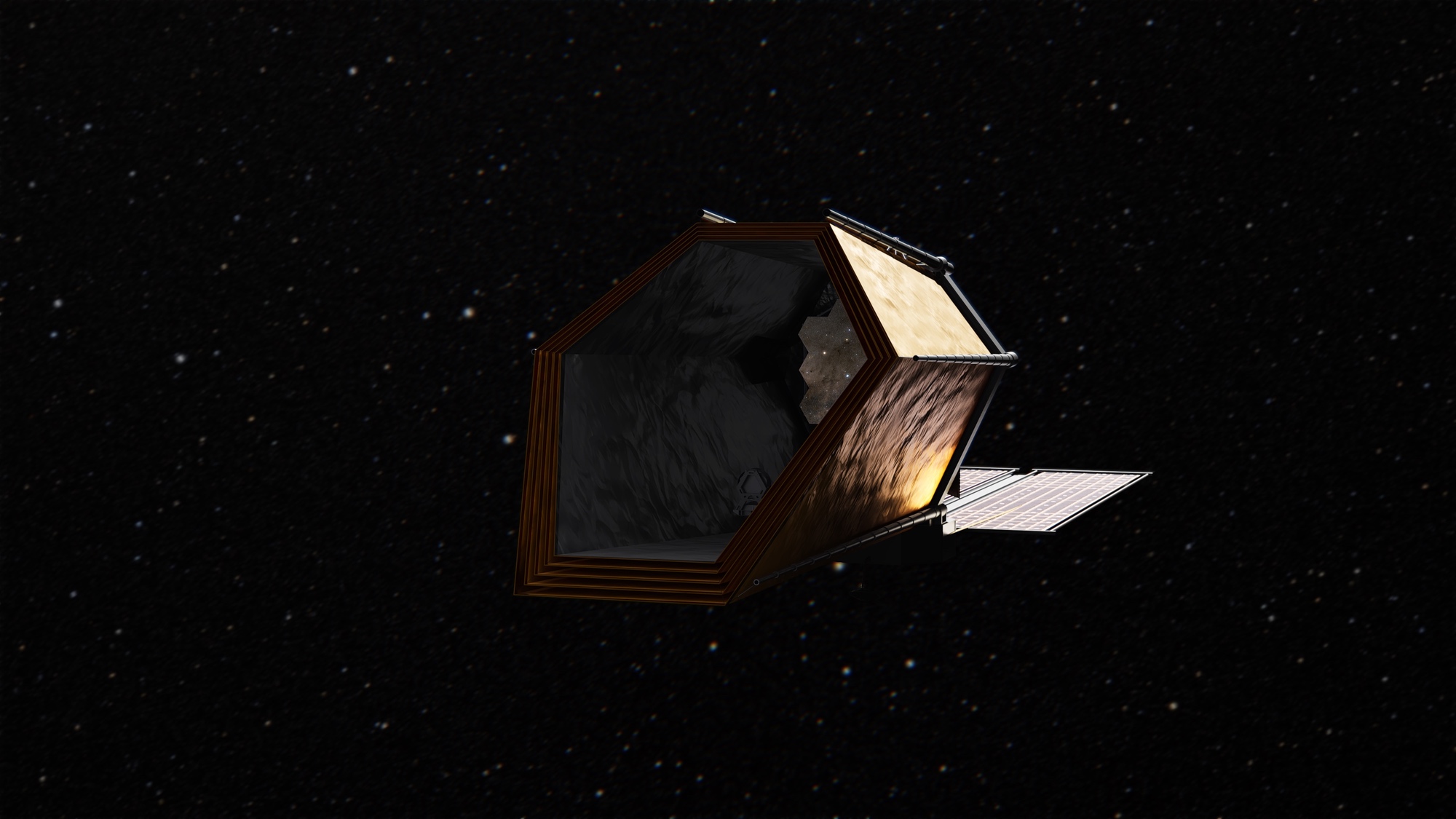
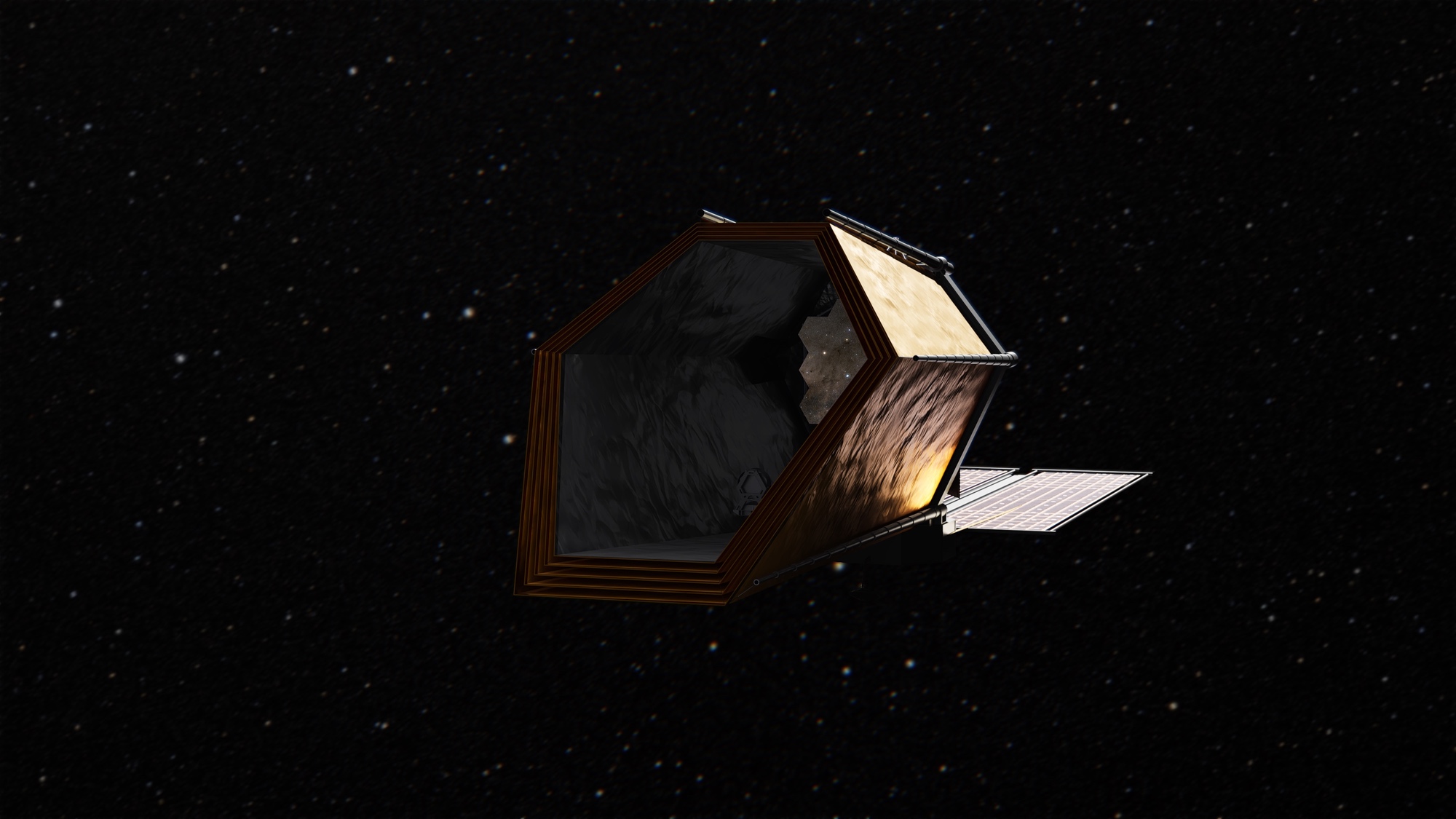
PHOENIX — NASA is ramping up work on one large space telescope while also laying the groundwork for future observatories.
The agency announced Jan. 5 that it awarded three-year, fixed-price contracts to seven companies to study technologies that could be used for the Habitable Worlds Observatory, or HWO, a large space telescope currently projected to launch sometime in the 2040s. NASA did not disclose the value of the contracts.
The selected companies are Astroscale U.S., BAE Systems Space and Mission Systems, Busek, L3Harris Technologies, Lockheed Martin, Northrop Grumman and Zecoat.
The companies will examine a range of technologies relevant to HWO, Scott Smith, interim project manager for the mission, said during a session at the 247th meeting of the American Astronomical Society here Jan. 6. They range from mirror coatings and stability to “microthruster” propulsion and servicing approaches.
The studies are part of broader NASA efforts to advance the design of HWO while it remains in a preliminary pre-formulation phase. That work includes evaluating different architectures for the telescope and refining key science objectives that will shape the final design.
“HWO will be the most powerful telescope that NASA has ever launched,” said Giada Arney, HWO project scientist. She said the observatory will be able to detect dimmer objects than any other space- or ground-based telescope, enabling science ranging from exoplanets to cosmology.
Few characteristics of HWO have been finalized at this stage, including the size of its primary mirror. The project is currently evaluating two concepts: one with a six-meter mirror and another with an eight-meter mirror.
Astronomers generally favor a larger aperture. “We can do compelling science with a six-meter, but there are scientific reasons for pushing toward an eight-meter,” Arney said. “Bigger apertures float everyone’s boats.”
Smith said the mirror size must be weighed against other design elements, such as detectors and instruments. “That is part of the trade between the two: where do we want to balance what could be serviced later, like the instruments, versus what can’t be, which would be the telescope,” he said. “That is not an easy decision.”
The industry contracts and related studies are intended to mature the design and critical technologies for HWO by the end of the decade, reducing the risk of cost and schedule overruns that have affected previous flagship missions such as the James Webb Space Telescope.
That effort is slated to receive a major funding boost. NASA’s fiscal year 2026 budget proposal requested just $3.3 million for HWO technology development as part of a plan that would have cut overall NASA astrophysics funding by two-thirds. However, the minibus appropriations bill released Jan. 5 would provide $150 million for HWO.
“We just found out that we’re finally going to get to accelerate our mission progress with real funding,” Arney said.
NASA Administrator Jared Isaacman also emphasized the need to move quickly. “The Habitable Worlds Observatory is exactly the kind of bold, forward-leaning science that only NASA can undertake,” he said in a statement. “We intend to move with urgency and expedite timelines to the greatest extent possible to bring these discoveries to the world.”
Probes and future flagships
The Habitable Worlds Observatory was the top-priority flagship mission in the most recent astrophysics decadal survey, known as Astro2020. The survey also recommended developing a class of smaller missions known as astrophysics probes, with a target cost of about $1 billion.
NASA selected two probe concepts — the Advanced X-ray Imaging Satellite, or AXIS, and the Probe far-Infrared Mission for Astrophysics, or PRIMA — for concept studies in October 2024. The agency’s fiscal year 2026 budget proposal, however, sought to cancel the probe program.
NASA is continuing work on the probes with greater confidence in funding. Shawn Domagal-Goldman, director of NASA’s astrophysics division, said Jan. 4 that the concept studies are due to NASA by the end of the month, a delay from late last year caused by the government shutdown. He said that would allow NASA to select one of the two missions for development by the end of the fiscal year.
Another Astro2020 recommendation is to mature technologies for large space telescopes that would follow HWO. Domagal-Goldman said that now that HWO has its own project office and dedicated funding line, NASA can redirect astrophysics technology funding that previously supported HWO toward future concepts.
That strategy will depend in part on the outcome of the probe selection. If AXIS is chosen, technology investments would focus on far-infrared observatories. If PRIMA is selected, funding would shift toward X-ray telescope technologies.
“I want the community to know that, whatever happens with the probe, both the X-ray and far-infrared communities have something to look forward to,” he said.
“That is a healthy scenario heading into Astro2030,” the next astrophysics decadal survey, he added. “There are decisions we can make this year to start the community moving forward on that path with the funding that we have in fiscal 2026.”










Related Posts

Stay Informed With the Latest & Most Important News
Previous Post
Next Post
Previous Post

Next Post




Advertisement
-
 01Two Black Holes Observed Circling Each Other for the First Time
 -
 02From Polymerization-Enabled Folding and Assembly to Chemical Evolution: Key Processes for Emergence of Functional Polymers in the Origin of Life
 -
 03Astronomy 101: From the Sun and Moon to Wormholes and Warp Drive, Key Theories, Discoveries, and Facts about the Universe (The Adams 101 Series)
 -
 04True Anomaly hires former York Space executive as chief operating officer
 -
 05Φsat-2 begins science phase for AI Earth images
 -
 06Hurricane forecasters are losing 3 key satellites ahead of peak storm season − a meteorologist explains why it matters
 -
 07Binary star systems are complex astronomical objects − a new AI approach could pin down their properties quickly