
Now Reading: NASA selects two Earth science missions for development
-
01
NASA selects two Earth science missions for development


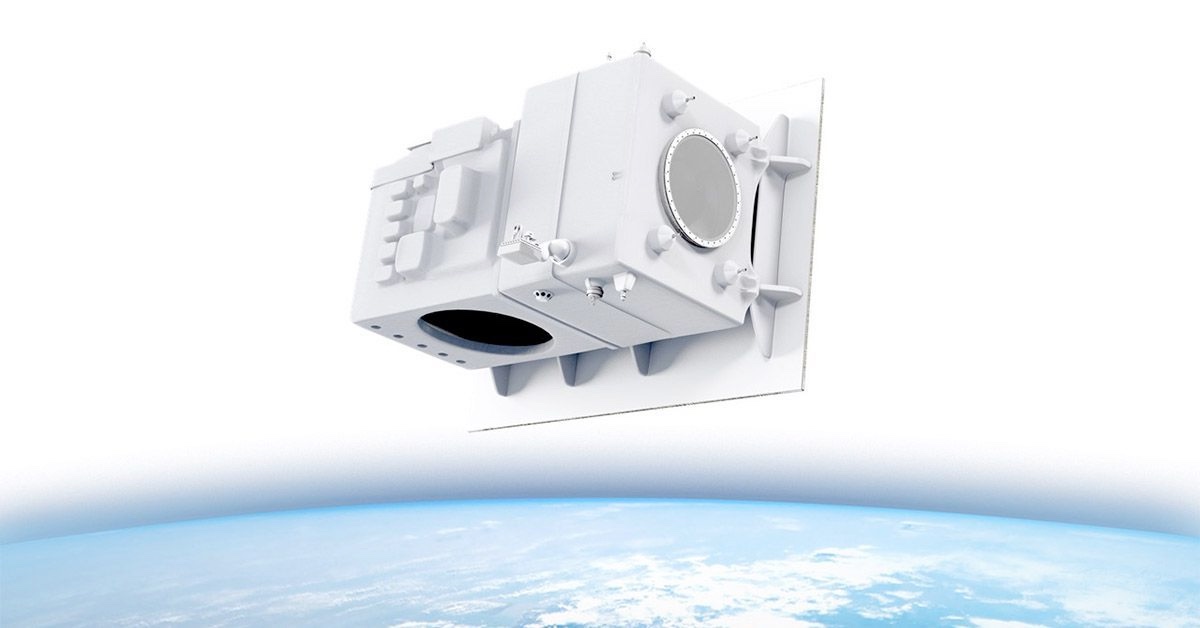

WASHINGTON — NASA has selected two Earth science missions for development, one focused on studying the atmosphere and the other on terrestrial ecosystems and ice.
The agency announced Feb. 5 that it chose the Stratosphere-Troposphere Response using Infrared Vertically resolved light Explorer, or STRIVE, and the Earth Dynamics Geodetic Explorer, or EDGE, as the first Earth System Explorer missions. Each is scheduled to launch no earlier than 2030.
STRIVE, led by Lyatt Jaeglé of the University of Washington, will provide daily measurements of atmospheric temperature, composition and aerosol properties from the upper troposphere to the mesosphere. It will collect data using two instruments, an infrared imaging spectrometer and a near-infrared multidirectional radiometer, hosted on a Northrop Grumman LEOStar-2 satellite bus.
EDGE, led by Helen Amanda Fricker of the University of California San Diego, will fly the first global satellite imaging laser altimeter system. The instrument will provide three-dimensional measurements of terrestrial ecosystems, such as forests, and map surface features on glaciers and other icy terrain. EDGE will use a spacecraft bus provided by Lanteris Space Systems.
STRIVE and EDGE were among four finalists selected by NASA in 2024 for one-year concept studies. The other two finalists were ODYSEA, a mission to study ocean surface currents and winds, and Carbon-I, a mission to measure greenhouse gases to better understand natural and human-caused emissions.
NASA said in its fiscal year 2026 budget proposal last May that it would select only one Earth System Explorer mission, citing reduced budgets. Congress, however, largely rejected the proposed cuts to NASA science programs in a minibus spending bill passed last month.
The missions are the first in NASA’s Earth System Explorer program, created in response to recommendations from the 2018 Earth science decadal survey. The decadal called for a line of competitively selected Earth science missions with higher cost caps than Earth Venture small satellites but lower costs than directed missions, focusing on measurements across seven science areas.
When NASA announced the four finalists for the first Earth System Explorer call in 2024, it said that one of those seven areas, greenhouse gas measurements, would be prioritized. “As we continue to confront our changing climate and its impacts on humans and our environment, the need for data and scientific research could not be greater,” Nicky Fox, NASA associate administrator for science, said at the time.
EDGE does not have the capability to study greenhouse gases, while STRIVE focuses on ozone and trace gases, including the ability to track global pollution and improve climate modeling. In announcing the final selections, Fox instead emphasized the missions’ relevance to human space exploration.
“By understanding Earth’s surface topography, ecosystems and atmosphere, while also enabling longer-range weather forecasting, these missions will help us better study the extreme environments beyond our home planet to ensure the safety of astronauts and spacecraft as we return to the Moon with the Artemis campaign and journey onward to Mars and beyond,” she stated.
STRIVE and EDGE will now proceed toward a confirmation review in 2027. If approved for full development, each mission will have a cost cap of $355 million, excluding launch costs. That represents an increase from the $310 million cap in place when NASA selected the four finalists in 2024.










Related Posts
Stay Informed With the Latest & Most Important News
Previous Post
Next Post


Advertisement
-
 01Two Black Holes Observed Circling Each Other for the First Time
 -
 02From Polymerization-Enabled Folding and Assembly to Chemical Evolution: Key Processes for Emergence of Functional Polymers in the Origin of Life
 -
 03Astronomy 101: From the Sun and Moon to Wormholes and Warp Drive, Key Theories, Discoveries, and Facts about the Universe (The Adams 101 Series)
 -
 04True Anomaly hires former York Space executive as chief operating officer
 -
 05Φsat-2 begins science phase for AI Earth images
 -
 06Hurricane forecasters are losing 3 key satellites ahead of peak storm season − a meteorologist explains why it matters
 -
 07Binary star systems are complex astronomical objects − a new AI approach could pin down their properties quickly