
Now Reading: NASA Software Raises Bar for Aircraft Icing Research
-
01
NASA Software Raises Bar for Aircraft Icing Research


4 min read
Preparations for Next Moonwalk Simulations Underway (and Underwater)
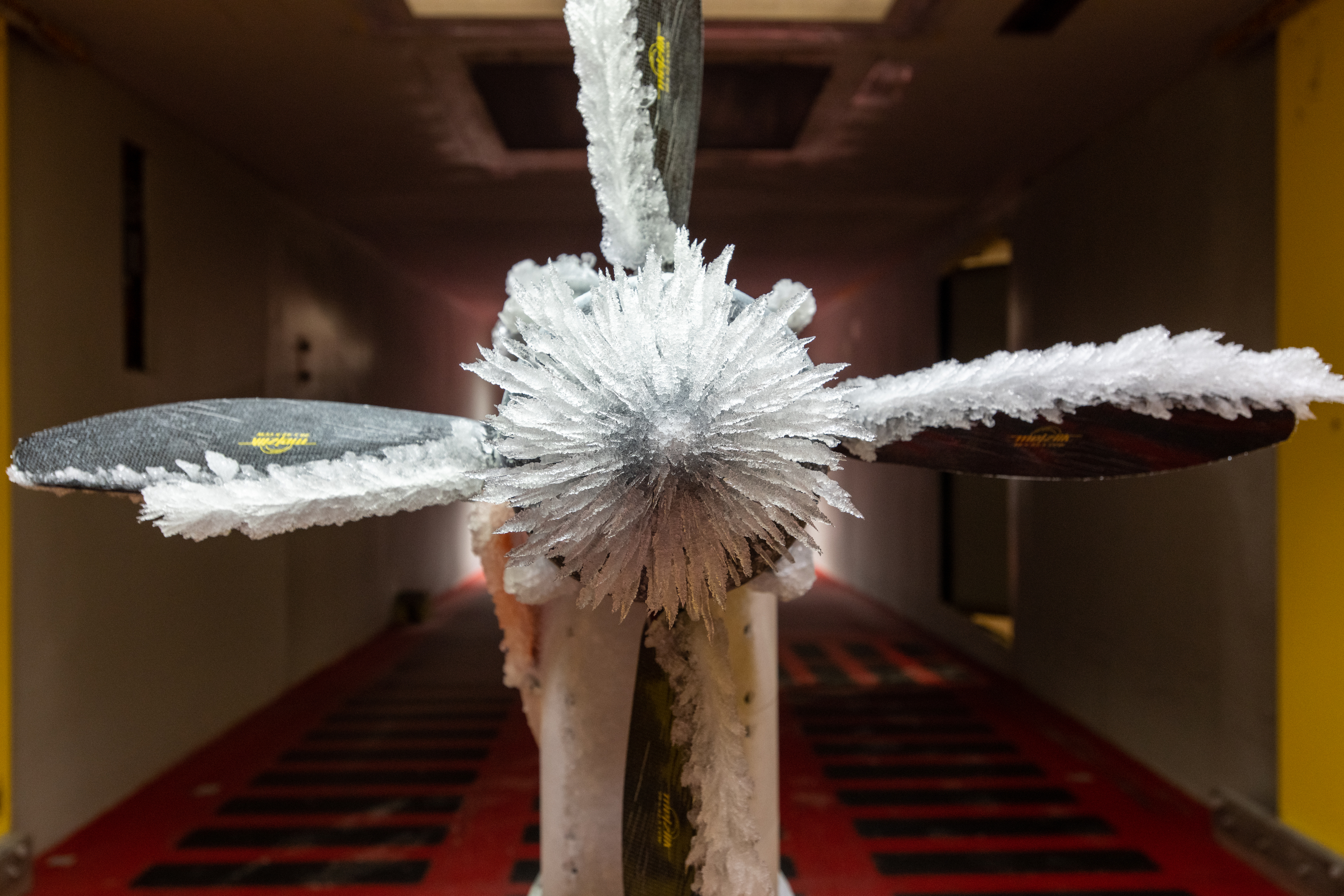
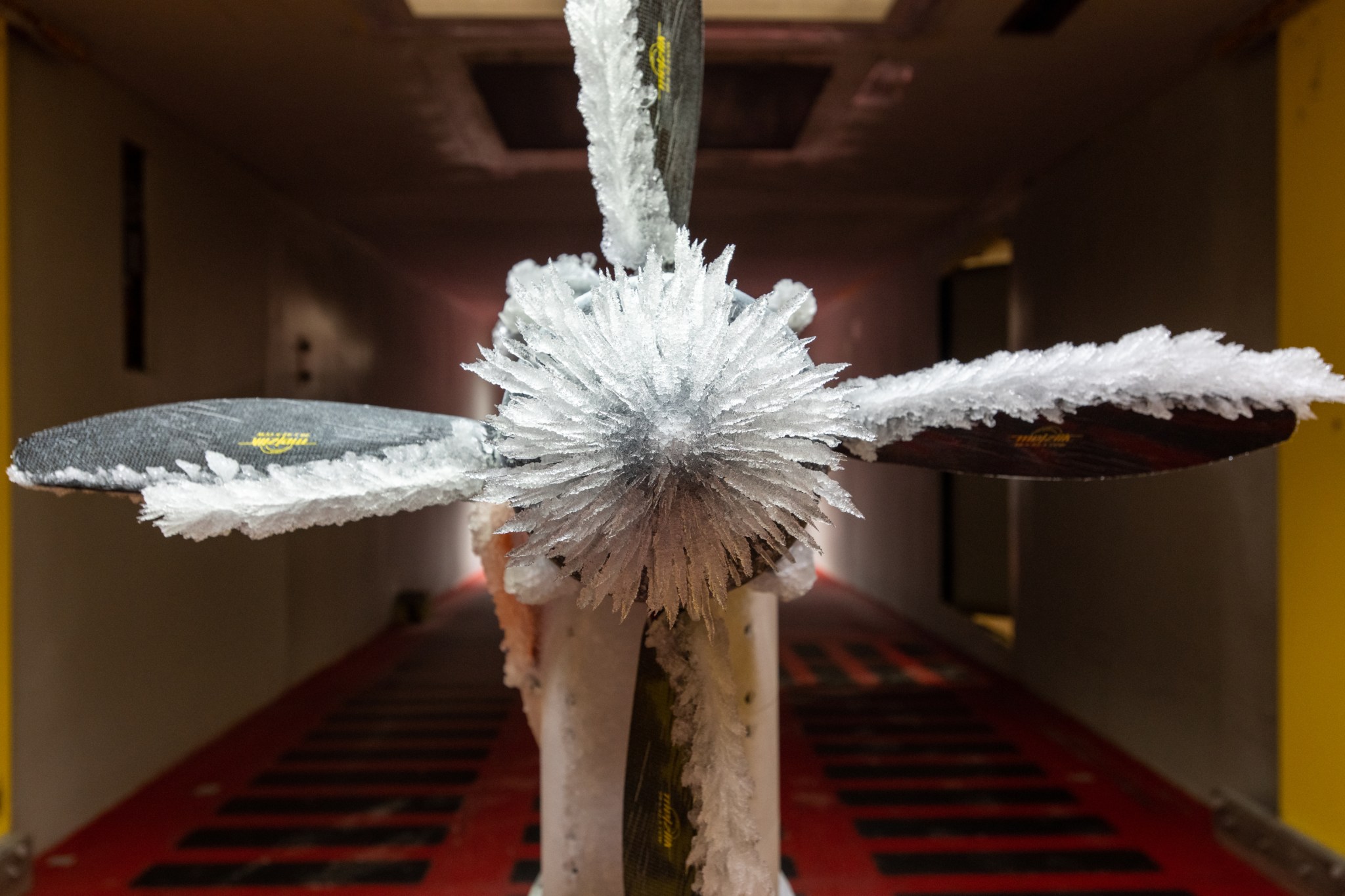
When flying in certain weather conditions, tiny freezing water droplets floating in the air can pose a risk to aircraft. If not taken into consideration, these water droplets can accumulate on an aircraft as ice and pose a safety risk.
But NASA software tools such as Glenn Icing Computational Environment (GlennICE) are working to keep passengers and pilots safe.
NASA developed GlennICE, a new NASA software code, to transform the way we explore, understand, and prevent ice buildup on aircraft wings and engines, as well as control surfaces like rudders and elevators.
Owing to decades of world-class NASA research, engineers nationwide can now use GlennICE to design aircraft in such a way that ice buildup will either occur rarely or pose very little risk.
Named for NASA’s Glenn Research Center in Cleveland, GlennICE is part of NASA’s work to provide the aviation industry with computational tools, including design software, to improve aircraft safety and enable innovation. For icing research and modeling, NASA computer codes have become the industry standard over the past several decades. And GlennICE builds on this work, performing highly advanced digital modeling of water and ice particles in just about any atmospheric condition you can imagine.
With updated capabilities and a streamlined user experience, GlennICE will enable users to advance the state of the art – particularly researchers working on complex, unusual future aircraft designs.
“The legacy codes are well formulated to handle simulations of traditional tube-and-wing shaped aircraft,” said Christopher Porter, lead for GlennICE’s development. “But now, we have new vehicles with new designs that present icing research challenges. This requires a more advanced tool, and that’s where GlennICE comes in.”
So far, dozens of industry partners as well as other government agencies have started using GlennICE, which is available on NASA’s software catalog.
Ice buildup: not cool
Though based on legacy NASA codes such as LEWICE 3D, GlennICE is a whole different ballgame. The new toolkit can be tailored to unique situations and is compatible with other software tools. In other words, it is more configurable, and much less time consuming for researchers to set up and use.
This streamlined process, along with its more-advanced ability to model icing, allows GlennICE to easily tackle 21st-century concepts such as supersonic planes, advanced air mobility drones and other aircraft, unconventionally shaped wings, open-rotor turbofan designs, or new configurations for conventional aircraft such as radar domes.
But how does this simulation process work?
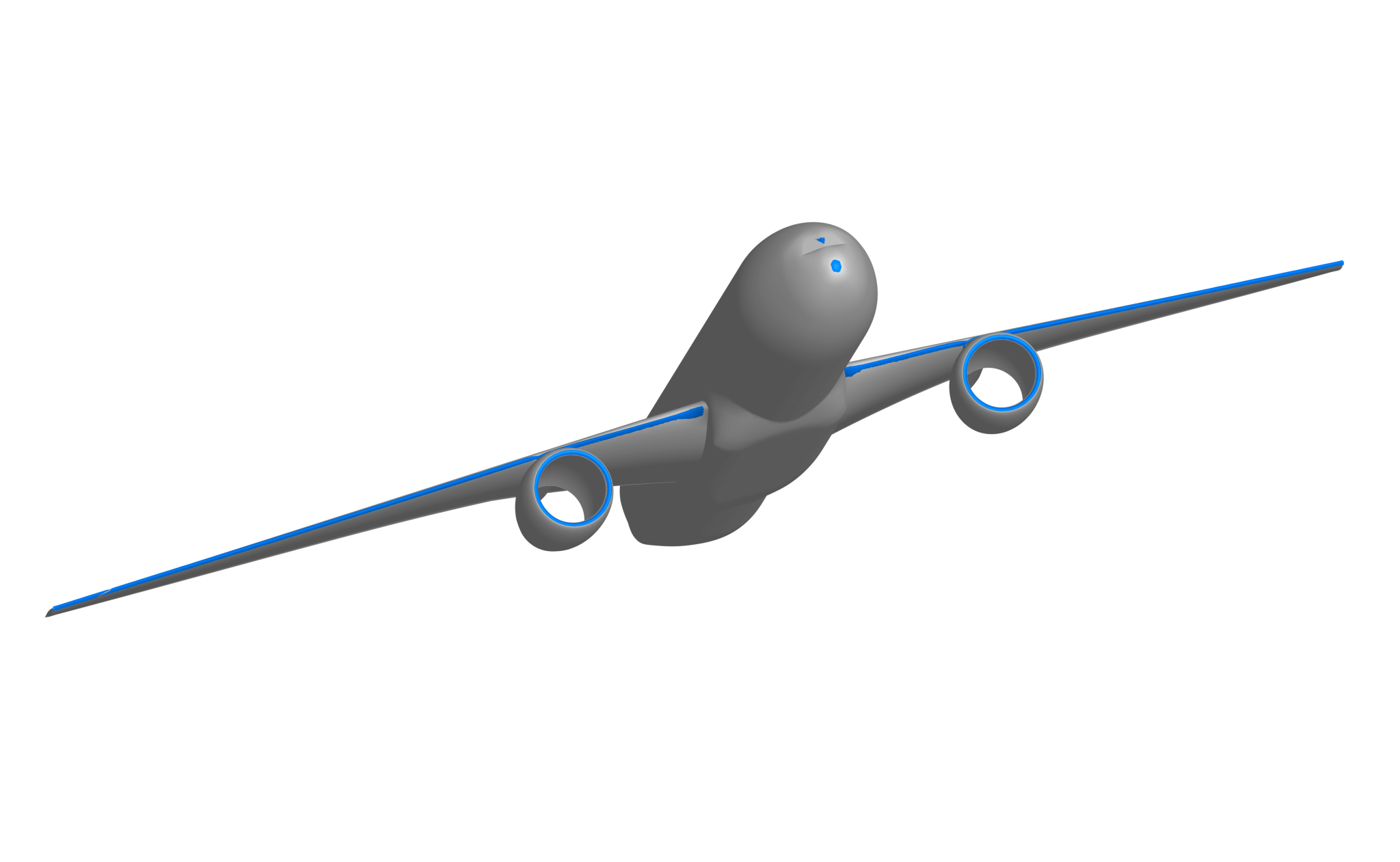
“Imagine an aircraft flying through a cloud,” Porter said. “Some of those water and ice droplets hit the aircraft and some of them don’t. GlennICE simulates these droplets and exactly where they will end up, both on the aircraft and not.”
When these water droplets hit the aircraft, they attach, freeze, and start to gather even more droplets that do the same. The software simulates exactly where this will occur, and what shape the ice will take over time.
“We’re not just dealing with the airplane, but the physics of the air and water as well,” Porter said.
Because it’s designed for simulating droplets, researchers have expressed interest in using GlennICE to simulate other conditions involving sand and ash. These substances, when ingested by aircraft engines, can pose separate risks that aeronautical engineers work to prevent.
World-class research
Icing research is fundamental to aviation safety, and NASA fulfils a key role in ensuring pilots and passengers fly more safely and ice-free. The agency’s wind tunnels, for instance, have world-class icing research capabilities not commonly found in aeronautics research.
Paired with wind tunnel testing, GlennICE offers a holistic set of capabilities to researchers. While wind tunnels can verify and validate data with real-world models and conditions, tools like GlennICE can fill gaps in research not easily achieved with wind tunnels.
“Some environments we need to test in are impractical with wind tunnels because of the tunnel size required and complex physics involved,” Porter said. “But with GlennICE, we can do these tests digitally. For example, we can model all the icing conditions noted in new regulations.”
The GlennICE development falls under NASA’s Transformative Aeronautics Concept and Advanced Air Vehicles programs. Those programs supported GlennICE to further NASA’s work on computational tool development for aerospace design. More about the history of icing research at NASA is available on the agency’s website.
About the Author

John Gould
Share
Details
Related Terms
Explore More















Related Posts
Stay Informed With the Latest & Most Important News
Previous Post
Next Post

Advertisement
-
 01Two Black Holes Observed Circling Each Other for the First Time
 -
 02From Polymerization-Enabled Folding and Assembly to Chemical Evolution: Key Processes for Emergence of Functional Polymers in the Origin of Life
 -
 03Astronomy 101: From the Sun and Moon to Wormholes and Warp Drive, Key Theories, Discoveries, and Facts about the Universe (The Adams 101 Series)
 -
 04True Anomaly hires former York Space executive as chief operating officer
 -
 05Φsat-2 begins science phase for AI Earth images
 -
 06Hurricane forecasters are losing 3 key satellites ahead of peak storm season − a meteorologist explains why it matters
 -
 07Binary star systems are complex astronomical objects − a new AI approach could pin down their properties quickly