
Now Reading: NASA targeting March 6 for Artemis 2 launch
-
01
NASA targeting March 6 for Artemis 2 launch


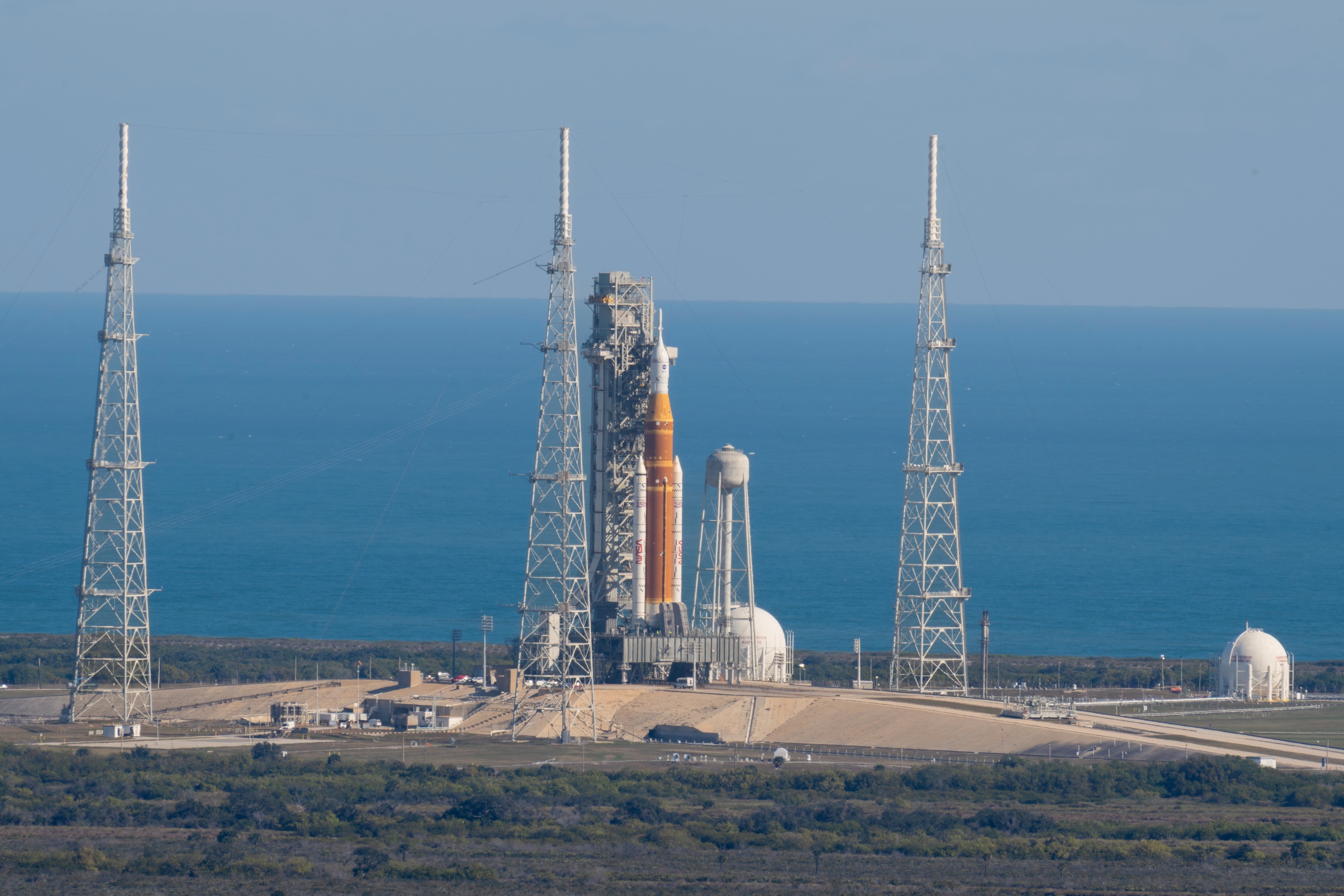

WASHINGTON — NASA is targeting a March 6 launch for Artemis 2 after completing a countdown test with few problems.
At a Feb. 20 briefing, NASA officials said the outcome of a second wet dress rehearsal (WDR), completed the previous day, gave them confidence to proceed toward a launch attempt, while cautioning that significant work and reviews remain.
“Following that successful wet dress yesterday, we’re now targeting March 6 as our earliest launch attempt,” said Lori Glaze, acting associate administrator for exploration systems development at NASA.
March 6 is the first day of the next launch period for Artemis 2, which runs through early March 11. Glaze noted the launch date depends on completing “a lot of pending work,” including data reviews from WDR and pad activities such as retesting the vehicle’s flight termination system. A flight readiness review is also scheduled for late next week.
However, she and other officials expressed confidence in the date based on the WDR results. Only a few minor issues were observed during the test.
Most notably, the hydrogen leaks seen during the first WDR did not reappear. The leak rate, measured as hydrogen gas concentrations at the interface between ground equipment and the Space Launch System core stage, peaked at 1.6%, well below allowable limits.
Leak rates were at times much lower, including 0.4% during “fast fill” fueling of liquid hydrogen into the core stage. “That is almost unheard of,” said Charlie Blackwell-Thompson, Artemis launch director.
After the first WDR, technicians replaced seals in fittings on two liquid hydrogen fuel lines. Blackwell-Thompson said there was no evidence of flaws in the seals beyond minor scratches on the smaller of the two. She said it was unlikely those scratches caused the leak rates observed during the first fueling test but noted that moisture was seen when the larger seal was removed.
“When you have cryogenic temperatures going through there, you can have some freezing, and that can cause an issue,” she said.
The situation was similar to Artemis 1 in 2022. “On Artemis 1, we did the same thing. We changed the seals at the pad and we were successful,” said John Honeycutt, chair of the Artemis 2 mission management team. “Over the last three weeks we changed the seals at the pad and we were successful.”
He added that he did not believe further vehicle changes were needed before launch. “I’ve got a pretty high level of confidence in the configuration that we’re in right now,” he said. “It’s out there at the pad. It’s going to be there at the pad until we go fly.”
Blackwell-Thompson said she “felt great” after completing the second WDR. “Last night was a big step in us earning our right to fly,” she said.
The launch team completed all objectives of the WDR, something NASA was unable to do during the first WDR or during similar tests ahead of Artemis 1. “That gives me great confidence going into the launch countdown,” she said.
The second WDR also demonstrated improved performance by the launch teams. Honeycutt said Artemis 2 commander Reid Wiseman sat with the mission management team during the test.
“He’s been either directly tracking or indirectly tracking what this team’s doing to improve. He saw that and he noted it to me after we finished the test,” he said.
“We needed to do more to get ready,” Honeycutt said. “I feel like at this point we have demonstrated a significant amount of improvement, to where I am almost happy.”










Related Posts
Stay Informed With the Latest & Most Important News




Advertisement
-
 01Two Black Holes Observed Circling Each Other for the First Time
 -
 02From Polymerization-Enabled Folding and Assembly to Chemical Evolution: Key Processes for Emergence of Functional Polymers in the Origin of Life
 -
 03Astronomy 101: From the Sun and Moon to Wormholes and Warp Drive, Key Theories, Discoveries, and Facts about the Universe (The Adams 101 Series)
 -
 04True Anomaly hires former York Space executive as chief operating officer
 -
 05Φsat-2 begins science phase for AI Earth images
 -
 06Hurricane forecasters are losing 3 key satellites ahead of peak storm season − a meteorologist explains why it matters
 -
 07Binary star systems are complex astronomical objects − a new AI approach could pin down their properties quickly