
Now Reading: NASA will fuel up its Artemis 2 moon rocket for the 2nd time on Feb. 19. Will it leak again?
-
01
NASA will fuel up its Artemis 2 moon rocket for the 2nd time on Feb. 19. Will it leak again?

NASA will fuel up its Artemis 2 moon rocket for the 2nd time on Feb. 19. Will it leak again?

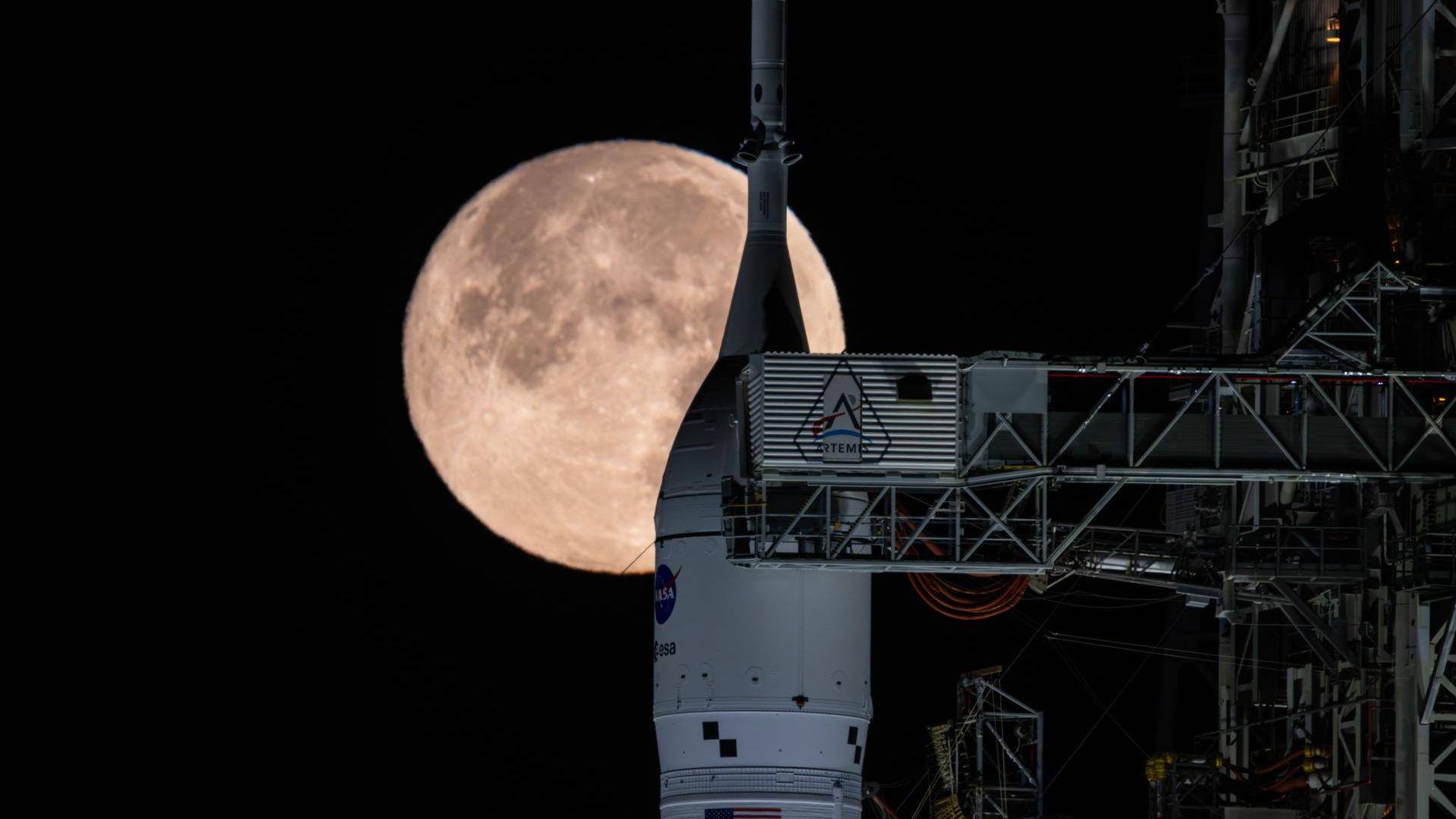
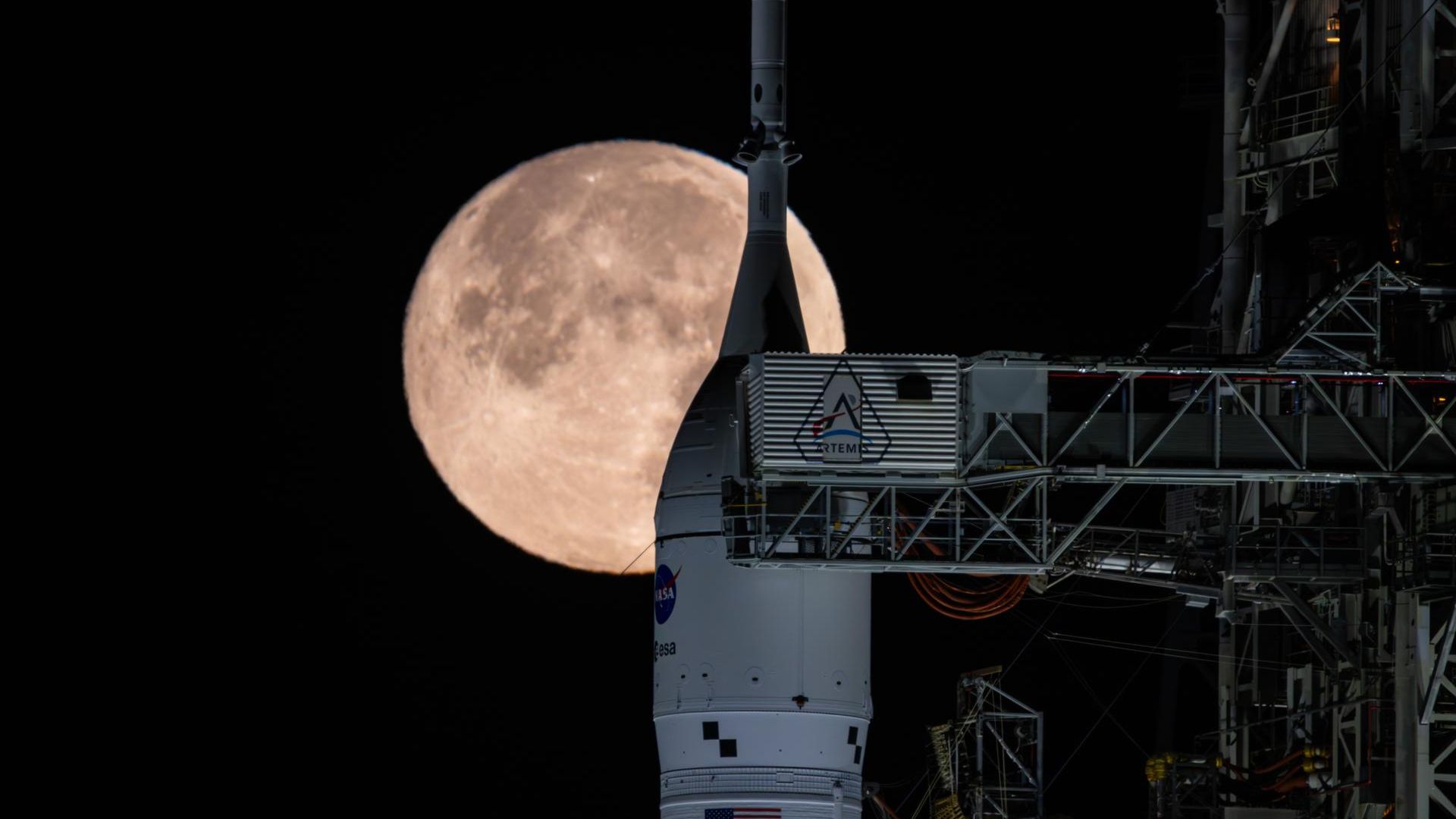
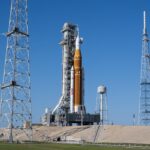
NASA will take another crack at fueling up its huge Artemis 2 moon rocket this week.
The agency plans to load more than 700,000 gallons (2.65 million liters) of liquid hydrogen (LH2) and liquid oxygen (LOX) into Artemis 2’s Space Launch System (SLS) rocket on Thursday (Feb. 19), wrapping up a crucial two-day-long test called a wet dress rehearsal.
The LH2 leak occurred at an interface with the tail service mast umbilical (TSMU), a service line that connects the SLS with its mobile launch tower.
This was far from unprecedented. Artemis 1’s test campaign was plagued by leaks in this area as well, which helped push the uncrewed mission’s launch from spring 2022 to November of that year. All ended well, however: Artemis 1 successfully sent an Orion capsule to lunar orbit and back to Earth.
Artemis 2 teams replaced two seals in the aftermath of the first wet dress. Then, on Feb. 12, they partially filled SLS’ tanks with LH2 in a “confidence test” designed to assess the efficacy of that fix. A problem with ground support equipment restricted the flow of LH2 during that test, but the team nonetheless was “able to gain confidence in several key objectives,” NASA wrote in an update on Feb. 13.
Artemis 2 team members soon tied the ground-support issue to a filter, which they replaced over this past weekend. They now feel ready to conduct another wet dress rehearsal, which will run through the key operations leading up to launch.
The wet dress will officially begin today (Feb. 17) at 6:40 p.m. EST (2340 GMT), when team members arrive at their stations at the Launch Control Center at NASA’s Kennedy Space Center (KSC) in Florida. They’ll work toward a simulated launch time of 8:30 p.m. EST on Thursday (Feb. 17; 0130 GMT on Feb. 18).
“During the rehearsal, the team will execute a detailed countdown sequence. Operators will conduct two runs of the last 10 minutes of the countdown, known as terminal count. They will pause at T-1 minute and 30 seconds for up to three minutes, then resume until T-33 seconds before launch and pause again,” NASA officials wrote in an update on Monday (Feb. 16).
“After that, they will recycle the clock back to T-10 minutes and conduct a second terminal countdown to just inside of T-30 seconds before ending the sequence,” they added. “This process simulates real-world conditions, including scenarios where a launch might be scrubbed due to technical or weather issues.”
If all goes well, Artemis 2 could launch from KSC as early as March 6. There are a few other dates available next month as well — March 7-9 and March 11. (The agency had also eyed March 3 as an option, but that’s no longer in play, according to Monday’s update.)
Artemis 2 will send four astronauts — NASA’s Reid Wiseman, Victor Glover and Christina Koch and Jeremy Hansen of the Canadian Space Agency — on a 10-day trip around the moon and back to Earth.
The mission is designed to prove out the crew-carrying capabilities of SLS and Orion and pave the way for moon-landing missions, beginning with Artemis 3, which could launch as soon as 2028.










Related Posts


Stay Informed With the Latest & Most Important News
Previous Post
Next Post

Advertisement
-
 01Two Black Holes Observed Circling Each Other for the First Time
 -
 02From Polymerization-Enabled Folding and Assembly to Chemical Evolution: Key Processes for Emergence of Functional Polymers in the Origin of Life
 -
 03Astronomy 101: From the Sun and Moon to Wormholes and Warp Drive, Key Theories, Discoveries, and Facts about the Universe (The Adams 101 Series)
 -
 04True Anomaly hires former York Space executive as chief operating officer
 -
 05Φsat-2 begins science phase for AI Earth images
 -
 06Hurricane forecasters are losing 3 key satellites ahead of peak storm season − a meteorologist explains why it matters
 -
 07Binary star systems are complex astronomical objects − a new AI approach could pin down their properties quickly