
Now Reading: NASA’s Artemis II Mission Launches with Successful Moon-Bound Burn
-
01
NASA’s Artemis II Mission Launches with Successful Moon-Bound Burn


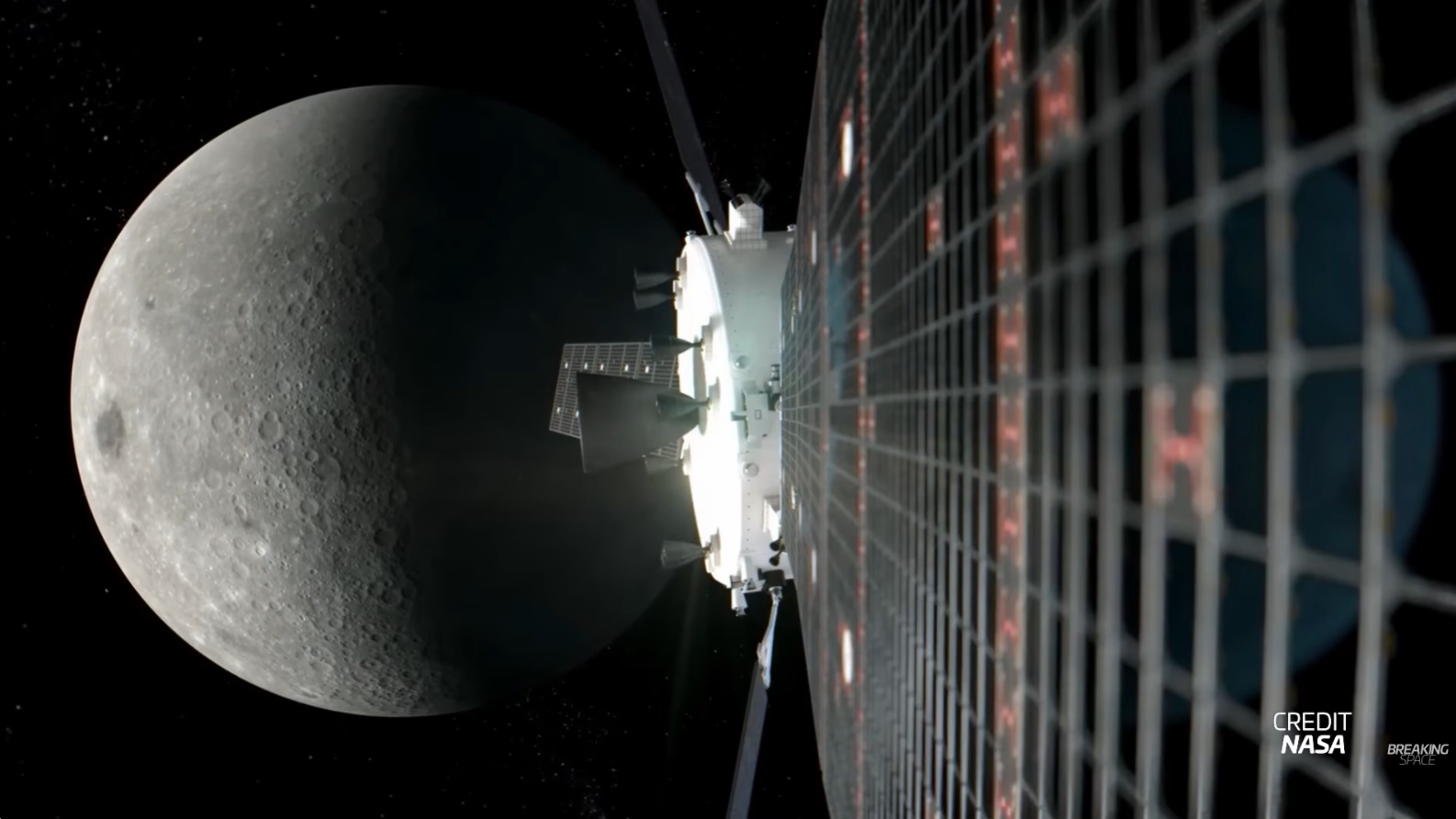

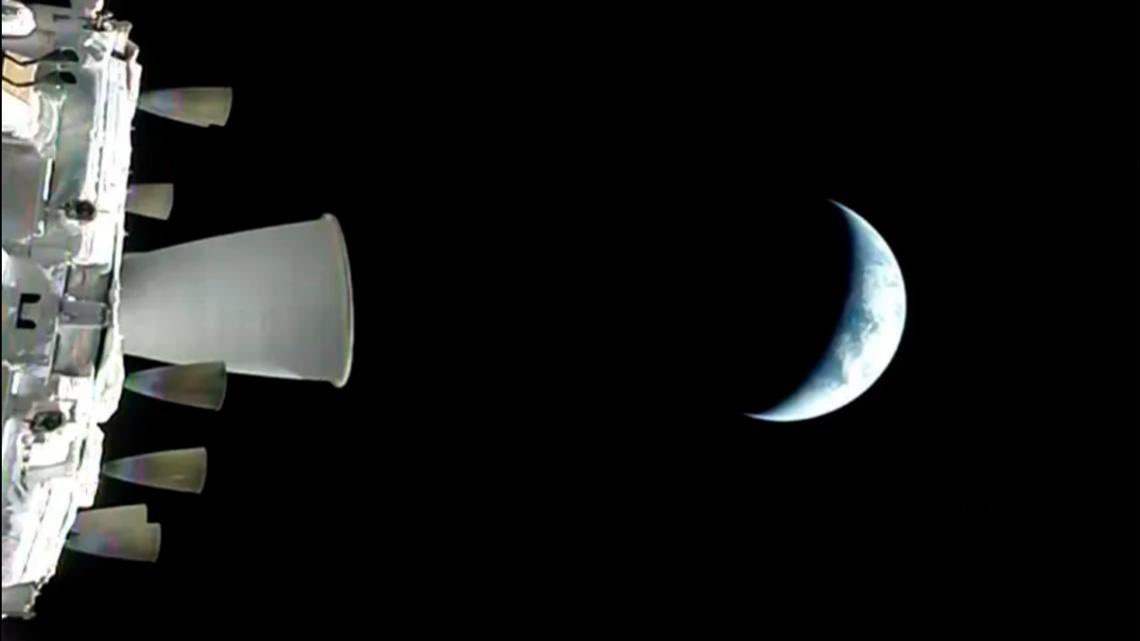
In a groundbreaking achievement that has been over five decades in the making, NASA’s Orion spacecraft named Integrity has successfully executed its trans-lunar injection (TLI) burn, officially embarking on its journey to the Moon. This significant maneuver, which lasted approximately six minutes, used the European Service Module’s AJ10 engine to propel the four-member crew—comprising NASA astronauts Reid Wiseman (commander), Victor Glover (pilot), and Christina Koch (mission specialist) along with Canadian Space Agency astronaut Jeremy Hansen—toward a trajectory that will take them farther from Earth than any humans have ventured since the Apollo missions.
The AJ10 engine has historical significance, as it’s a refurbished Orbital Maneuvering Engine previously used in Space Shuttle Atlantis during nine of its missions. The successful burn followed comprehensive system checks and a thorough review by the mission management team, marking an important point of no return for the Artemis II mission’s crewed segment. Now bound for a lunar flyby, Orion is committed to its course.
Before this pivotal burn, the crew faced an unexpected challenge with Orion’s Universal Waste Management System—the spacecraft’s toilet—which malfunctioned shortly after entering orbit. With support from Mission Control in Houston, the crew, guided predominantly by Koch, effectively troubleshot the issue and restored the unit to functionality, eliminating the need for backup waste collection methods and allowing the crew to proceed with determination.
Celebrating the successful fix, a jubilant tweet from mission personnel declared, “BREAKING: THE TOILET IS FIXED” alongside enthusiasm for their ambitious journey. The crew’s first rest opportunity after a smooth launch from Kennedy Space Center’s Launch Complex 39B on April 1, 2026, came in the form of a four-hour nap.
As part of the mission’s ongoing traditions, the astronauts received wake-up calls accompanied by music over the communications loop, a ritual that will continue throughout their voyage. They subsequently monitored a brief 43-second burn to elevate their spacecraft’s lowest orbit point, ensuring that it would remain safely above the atmosphere and allowing for a rapid return if necessary.
Even while still within Earth’s orbit, the astronauts set records by traveling farther from the planet than any humans since the Apollo program, reaching distances about 175 times greater than that of the International Space Station—now, with the TLI burn behind them, they’re en route to a staggering 1,000 times farther out.
In preparation for the challenges of microgravity, the astronauts used Orion’s flywheel exercise machine for both aerobic and resistance workouts, alleviating potential muscle and bone loss during their time in space.
Back at Kennedy Space Center, teams began assessing the Mobile Launcher that supported the Space Launch System (SLS) rocket. NASA Administrator Jared Isaacman shared images showing minor scorching on the platform due to the twin five-segment solid rocket boosters’ powerful liftoff—a common occurrence. Fortunately, the elevator doors remained partially intact, signaling progress compared to prior launches that resulted in extensive damage.
NASA also provided enhanced video footage of the launch via remote cameras, enriching the public’s view beyond the standard coverage.
In the coming days, Orion is expected to enter the Moon’s gravitational influence, with a flyby slated for Monday, where the crew will experience a close-up view of the lunar surface. This moment will mark a record-breaking distance from Earth, surpassing that of Apollo 13. The mission will allow the crew to capture imagery through the capsule windows, and trajectory adjustments may occur as necessary to ensure an accurate return path.
As the mission progresses, the team anticipates conducting a manual piloting exercise and additional correction burns if required as they prepare for re-entry. Planned splashdown in the Pacific Ocean is scheduled for roughly nine days after launch, with the crew set to be retrieved by the U.S. Navy recovery ship shortly thereafter.
With the critical TLI burn completed and operational hurdles cleared, Artemis II has embarked on a path towards humanity’s first crewed lunar encounter of the 21st century—a mission that promises to mark a significant chapter in the history of human exploration.










Related Posts

Stay Informed With the Latest & Most Important News
Previous Post
Next Post
Previous Post
Next Post

Advertisement
-
 01Two Black Holes Observed Circling Each Other for the First Time
 -
 02From Polymerization-Enabled Folding and Assembly to Chemical Evolution: Key Processes for Emergence of Functional Polymers in the Origin of Life
 -
 03Astronomy 101: From the Sun and Moon to Wormholes and Warp Drive, Key Theories, Discoveries, and Facts about the Universe (The Adams 101 Series)
 -
 04True Anomaly hires former York Space executive as chief operating officer
 -
 05Φsat-2 begins science phase for AI Earth images
 -
 06Hurricane forecasters are losing 3 key satellites ahead of peak storm season − a meteorologist explains why it matters
 -
 07Binary star systems are complex astronomical objects − a new AI approach could pin down their properties quickly