
Now Reading: NASA’s Artemis II mission set to return humans to the Moon’s vicinity for first time in over 50 years
-
01
NASA’s Artemis II mission set to return humans to the Moon’s vicinity for first time in over 50 years

NASA’s Artemis II mission set to return humans to the Moon’s vicinity for first time in over 50 years

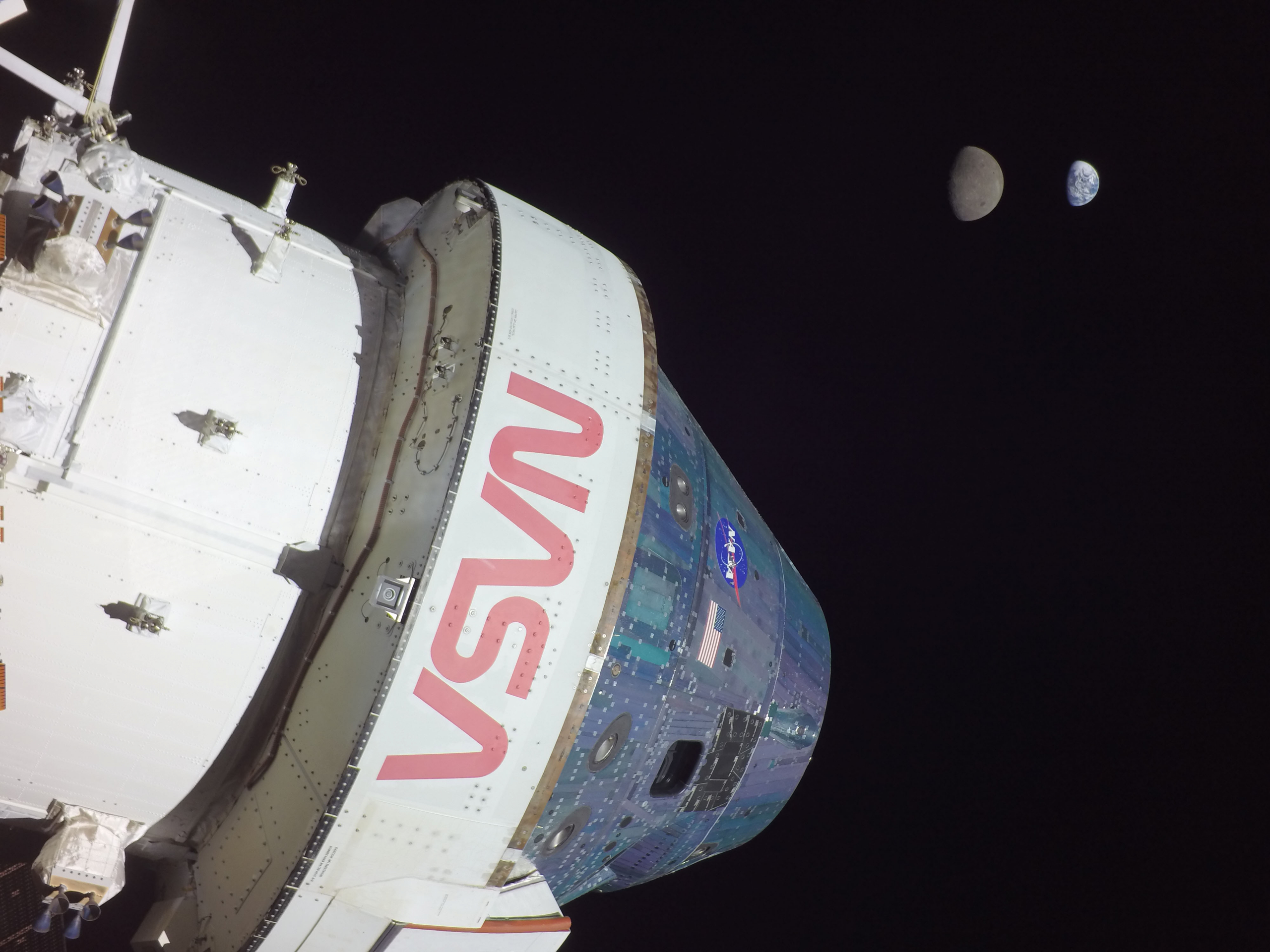

NASA is preparing for the Artemis II mission, set to launch from Florida in the coming weeks. This landmark mission marks the first time humans will return to the vicinity of the Moon since 1972, with a four-member crew destined to travel farther than any previous human spaceflight.
During the ten-day expedition, the crew aboard the Orion spacecraft, named Integrity, will engage in various scientific experiments and technology demonstrations designed to advance NASA’s understanding of deep space travel. These activities will include tests on human physiological responses in space, communications assessments, and geological studies of the lunar far side. The astronauts will also have the chance to manually operate the Orion spacecraft.
One of the mission’s primary goals is to execute a proximity operation demonstration shortly after the spacecraft’s separation from its launch vehicle. This involves simulating a docking scenario with the Interim Cryogenic Propulsion Stage, vital for future missions, including the planned Artemis III lunar landing. On day six, the crew will further hone their piloting skills with an additional manual flying exercise.
The initial day of the mission will focus on testing Integrity’s life support systems and using onboard fitness equipment. Regular exercise will be essential during long-duration missions to mitigate health risks associated with microgravity, including bone density loss.
After orbiting Earth for approximately 24 hours, the crew will initiate a trans-lunar injection burn, setting them on a course to the Moon. Critical early mission tests will ensure the spacecraft’s readiness for its return journey from lunar orbit.
On the third day, the crew is expected to conduct a cardiopulmonary resuscitation (CPR) demonstration and evaluate their spacesuits. They will also test Orion’s communication capabilities with the Deep Space Network to verify contact from beyond the traditional limits of low Earth orbit.
Among the scientific investigations onboard, the Artemis Research for Crew Health and Readiness (ARCHeR) device will monitor the astronauts’ activity and sleep patterns throughout the mission, sending data back to scientists on Earth. Another experiment, known as A Virtual Astronaut Tissue Analog Response (AVATAR), utilizes organ chips derived from the astronauts’ cells to study the impact of space conditions on human tissues.
Artemis II will build upon previous astronaut health research gathered from missions to the International Space Station. The crew will collect various biological samples, including saliva, blood, and urine, while also assessing ocular and neurological health responses and examining motion sickness factors.
Additionally, the mission includes studies on lunar geology, enabling the crew to become the first humans to explore certain areas of the Moon’s far side in five decades. They will be guided in real-time by geologists on Earth, using photographs and visual data to document their findings.
As preparations intensify, the Artemis II crew entered quarantine last week to minimize the risk of illness prior to launch. The specific launch date will be determined following a scheduled wet dress rehearsal later this month.
The crew was officially announced on April 3, 2023, and includes NASA astronauts Reid Wiseman—who will command the mission—Victor Glover, Christina Koch, and Canadian astronaut Jeremy Hansen. Notably, this mission will feature the first woman, first person of color, and first non-American to venture to the Moon, marking a significant milestone in space exploration. The backup crew consists of NASA astronaut Andre Douglas and Canadian astronaut Jenni Gibbons, ready to step in if required.










Related Posts

Stay Informed With the Latest & Most Important News
Previous Post
Next Post

Advertisement
-
 01Two Black Holes Observed Circling Each Other for the First Time
 -
 02From Polymerization-Enabled Folding and Assembly to Chemical Evolution: Key Processes for Emergence of Functional Polymers in the Origin of Life
 -
 03Astronomy 101: From the Sun and Moon to Wormholes and Warp Drive, Key Theories, Discoveries, and Facts about the Universe (The Adams 101 Series)
 -
 04True Anomaly hires former York Space executive as chief operating officer
 -
 05Φsat-2 begins science phase for AI Earth images
 -
 06Hurricane forecasters are losing 3 key satellites ahead of peak storm season − a meteorologist explains why it matters
 -
 07Binary star systems are complex astronomical objects − a new AI approach could pin down their properties quickly