
Now Reading: NASA’s Orion spacecraft completes historic Artemis II mission with successful Moon flyby and return to Earth
-
01
NASA’s Orion spacecraft completes historic Artemis II mission with successful Moon flyby and return to Earth

NASA’s Orion spacecraft completes historic Artemis II mission with successful Moon flyby and return to Earth

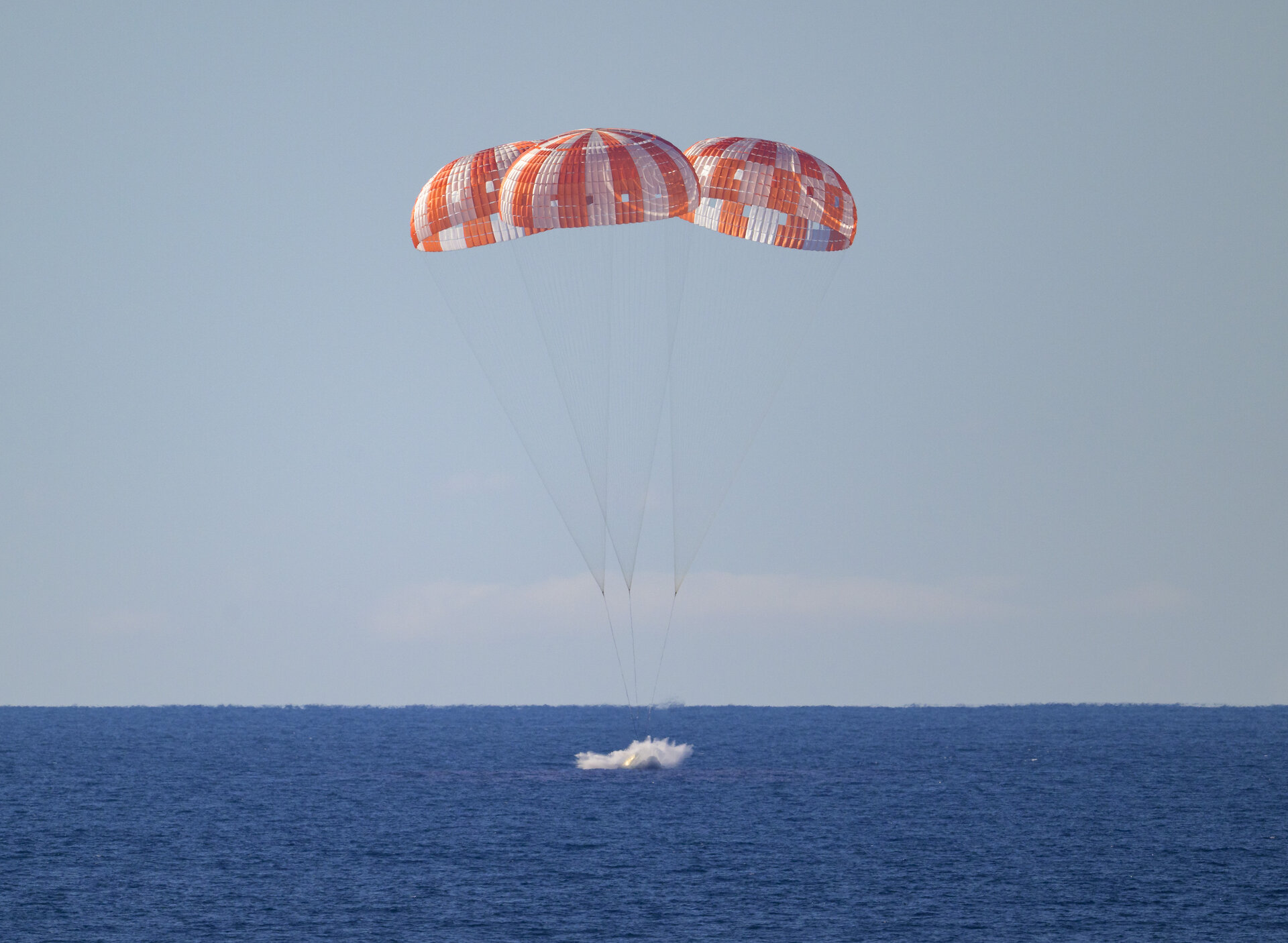

NASA’s Orion spacecraft successfully returned to Earth on April 10, 2026, at 17:07 local time, concluding the historic Artemis II mission. This marked the first crewed journey around the Moon since NASA’s Apollo 17 mission in 1972. The spacecraft was equipped with the European Service Module, which played a vital role in powering the mission.
The European Service Module was instrumental in supporting the four astronauts during their voyage, providing essential life-sustaining elements such as air and water, alongside generating electricity through its solar panels. This sophisticated module, primarily developed by European industry under the leadership of the European Space Agency (ESA), was assembled by Airbus Defence and Space in Bremen, Germany. A collaborative effort involving contributions from 13 European nations, the European Service Module showcased the strength and expertise of the European aerospace sector.
ESA Director General Josef Aschbacher praised the mission as a testament to European capabilities in international space exploration. He expressed gratitude towards the industrial partners throughout Europe, highlighting the remarkable teamwork, engineering precision, and trust that facilitated this venture. He specifically acknowledged Airbus Defence and Space for its critical role in orchestrating the complex, collaborative project.
The Artemis II mission began on April 2, 2026, with the launch of NASA’s Space Launch System rocket from Kennedy Space Center in Florida. Minutes after liftoff, the European Service Module activated its solar arrays to begin supplying power to the Orion spacecraft. Following its ascent, Orion separated from the rocket’s upper stage, allowing the crew to take control and perform operational maneuvers with the aid of the Service Module’s engines.
On the second day of the mission, after a series of safety checks, mission control authorized a translunar injection—a crucial maneuver that set Orion on a free-return trajectory around the Moon. The execution of this burn was remarkably precise, negating the need for two planned trajectory corrections during the approach to the Moon.
Daniel Neuenschwander, ESA’s Director for Human and Robotic Exploration, commended the European Service Module’s performance, noting that its accuracy demonstrated the extensive expertise behind the mission. He credited the success to the dedicated efforts of engineers who built the hardware and the specialists in mission control who provided support from both Europe and the United States.
On April 6, 2026, the Orion spacecraft completed a flyby of the Moon, surpassing the distance record set by Apollo 13. After this crucial aspect of the mission, the crew executed three additional trajectory corrections during their return trip to Earth. The mission culminated on April 11, when the Orion Crew Module separated from the European Service Module and re-entered the Earth’s atmosphere, culminating in a safe splashdown. The European Service Module was designed to burn up upon re-entry, completing its mission without any hazards.










Related Posts


Stay Informed With the Latest & Most Important News
Previous Post
Next Post


Advertisement
-
 01Two Black Holes Observed Circling Each Other for the First Time
 -
 02From Polymerization-Enabled Folding and Assembly to Chemical Evolution: Key Processes for Emergence of Functional Polymers in the Origin of Life
 -
 03Astronomy 101: From the Sun and Moon to Wormholes and Warp Drive, Key Theories, Discoveries, and Facts about the Universe (The Adams 101 Series)
 -
 04True Anomaly hires former York Space executive as chief operating officer
 -
 05Φsat-2 begins science phase for AI Earth images
 -
 06Hurricane forecasters are losing 3 key satellites ahead of peak storm season − a meteorologist explains why it matters
 -
 07Binary star systems are complex astronomical objects − a new AI approach could pin down their properties quickly