
Now Reading: New satellite images unveil the stunning landscapes of China’s Badain Jaran Desert
-
01
New satellite images unveil the stunning landscapes of China’s Badain Jaran Desert

New satellite images unveil the stunning landscapes of China’s Badain Jaran Desert

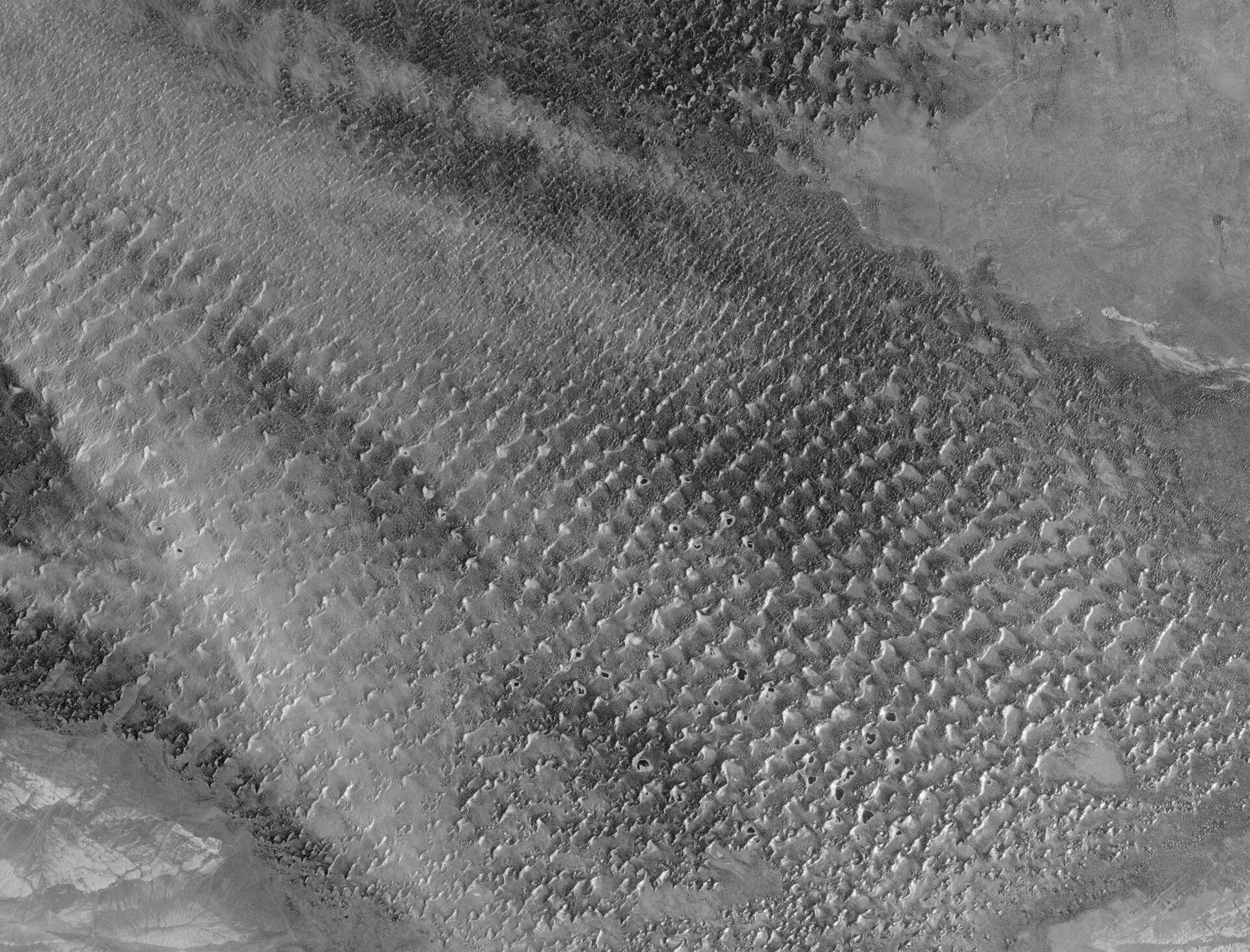

A new radar image from the Copernicus Sentinel-1 satellite showcases the breathtaking Badain Jaran Desert, located in northwestern China. Spanning approximately 49,000 square kilometers, this desert ranks as the third largest in the country and is part of the expansive Gobi Desert, situated on the Alxa Plateau at an elevation of around 1,200 meters.
The Badain Jaran Desert is characterized by its striking natural features, which include diverse landforms shaped by wind erosion, lush oases, and remarkable towering sand dunes, including some of the tallest in the world. Notably, one of these megadunes reaches an astonishing height of 460 meters, surpassing the height of the Empire State Building. While many dunes in the region shift with the wind, these towering structures generally remain stationary, featuring a robust core that often gets blanketed in snow during winter months.
This desert is also a rare location for the phenomenon known as “singing sand dunes.” As strong desert winds move the top layer of sand, it can create a distinctive sound, sometimes described as a loud hum or musical note. This acoustic effect is most pronounced in the dry, sweltering summer months when the winds are strongest and the slopes of the dunes are steep.
Furthermore, the Badain Jaran Desert is home to over 100 lakes, identifiable in the satellite image as dark spots scattered across the sandy landscape. These lakes, which range from freshwater to highly saline, contribute to the desert’s name, meaning “mysterious lakes” in Mongolian. The origin of these lakes remains a matter of scientific debate, though they’re thought to be sustained by underground springs.
The varied landscapes of the Badain Jaran Desert support a rich biodiversity, contrasting with its arid environment. Despite being primarily a sandy desert, the region is teeming with a wide array of plant and animal life. The desert’s lakes further enhance this biodiversity, providing a habitat conducive to a high number of aquatic species, making Badain Jaran a unique ecological treasure.










Related Posts


Stay Informed With the Latest & Most Important News
Previous Post
Next Post




Advertisement
-
 01Two Black Holes Observed Circling Each Other for the First Time
 -
 02From Polymerization-Enabled Folding and Assembly to Chemical Evolution: Key Processes for Emergence of Functional Polymers in the Origin of Life
 -
 03Astronomy 101: From the Sun and Moon to Wormholes and Warp Drive, Key Theories, Discoveries, and Facts about the Universe (The Adams 101 Series)
 -
 04True Anomaly hires former York Space executive as chief operating officer
 -
 05Φsat-2 begins science phase for AI Earth images
 -
 06Hurricane forecasters are losing 3 key satellites ahead of peak storm season − a meteorologist explains why it matters
 -
 07Binary star systems are complex astronomical objects − a new AI approach could pin down their properties quickly