
Now Reading: New Volunteer Data from 143 Observatories Unveils the 2024 Total Solar Eclipse
-
01
New Volunteer Data from 143 Observatories Unveils the 2024 Total Solar Eclipse


2 min read
New Volunteer Data from 143 Observatories Unveils the 2024 Total Solar Eclipse
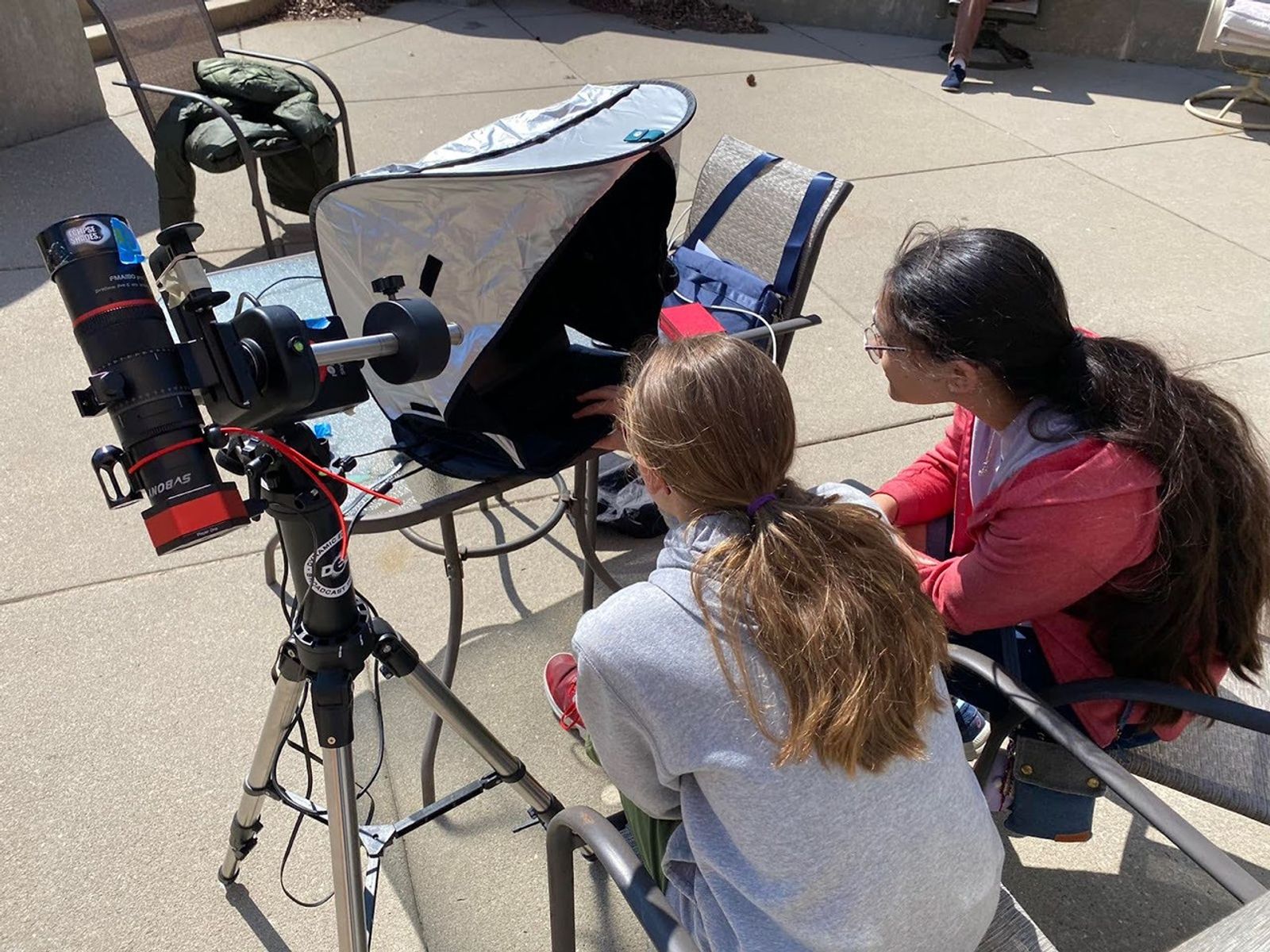
On April 8, 2024, volunteers participating in NASA’s Eclipse Megamovie citizen science project all around the United States hurried to photograph the solar eclipse with the latest, greatest equipment, capturing groundbreaking images of the Sun’s corona.
Now, the Eclipse Megamovie team has released the remarkable new dataset that resulted from this effort — the first-ever, white-light eclipse dataset with calibration frames, spanning more than a cumulative hour and a half of observations of the solar corona. This data, which includes 52,469 total photographs uploaded by project volunteers, is now live: https://eclipsemegamovie.org/database. The data include contributions from 143 unique, mobile, volunteer-led “observatories” – people with cameras charged with taking precise images of the eclipse, taking extra steps to allow the painstaking calibration required to reveal how the corona evolves from one person’s view to the next. Researchers around the world can now use these observations to identify solar jets leaving the Sun’s surface and study how solar plumes grow and develop. The public can also peruse and download all of this data, which is highly accessible and searchable by observatory name and location.
“Thank you for all you do and have done for us,” said Eclipse Megamovie volunteer Jessi McKenna. “Everyone in the group has been amazingly supportive of each other. And those who are running things are always so obviously appreciative of everyone who has contributed to the project.”
The files include data at three different levels of processing, from raw (level 1) data to calibrated (level 3) data, in a format called FITS, or Flexible Image Transport System. It is the standard astronomical data format used by NASA and the International Astronomical Union. Of the 143 unique observatories involved, 28 observatories had clear skies, sufficient calibration frames, and enough unique exposure times to create calibrated level 3 images.
The Eclipse Megamovie team at Sonoma State University and the University of California, Berkeley and collaborators at NASA’s Goddard Space Flight Center began working together long before the eclipse to construct this database, together with EdEon STEM (Science, Technology, Engineering, & Mathematics) Learning programmer Troy Wilson. But crucially, Eclipse Megamovie 2024 was made possible because of hundreds of volunteers who journeyed into the path of the April 8, 2024 total solar eclipse with their cameras, patience, and curiosity.
Share
Details
Related Terms
Explore More











Leave a reply
You must be logged in to post a comment.
Related Posts

Stay Informed With the Latest & Most Important News
Previous Post
Next Post




Advertisement
-
 01Two Black Holes Observed Circling Each Other for the First Time
 -
 02From Polymerization-Enabled Folding and Assembly to Chemical Evolution: Key Processes for Emergence of Functional Polymers in the Origin of Life
 -
 03Astronomy 101: From the Sun and Moon to Wormholes and Warp Drive, Key Theories, Discoveries, and Facts about the Universe (The Adams 101 Series)
 -
 04True Anomaly hires former York Space executive as chief operating officer
 -
 05Φsat-2 begins science phase for AI Earth images
 -
 06Hurricane forecasters are losing 3 key satellites ahead of peak storm season − a meteorologist explains why it matters
 -
 07Binary star systems are complex astronomical objects − a new AI approach could pin down their properties quickly