
Now Reading: Pandemic-driven changes reveal new insights into global methane fluctuations and climate impact
-
01
Pandemic-driven changes reveal new insights into global methane fluctuations and climate impact

Pandemic-driven changes reveal new insights into global methane fluctuations and climate impact

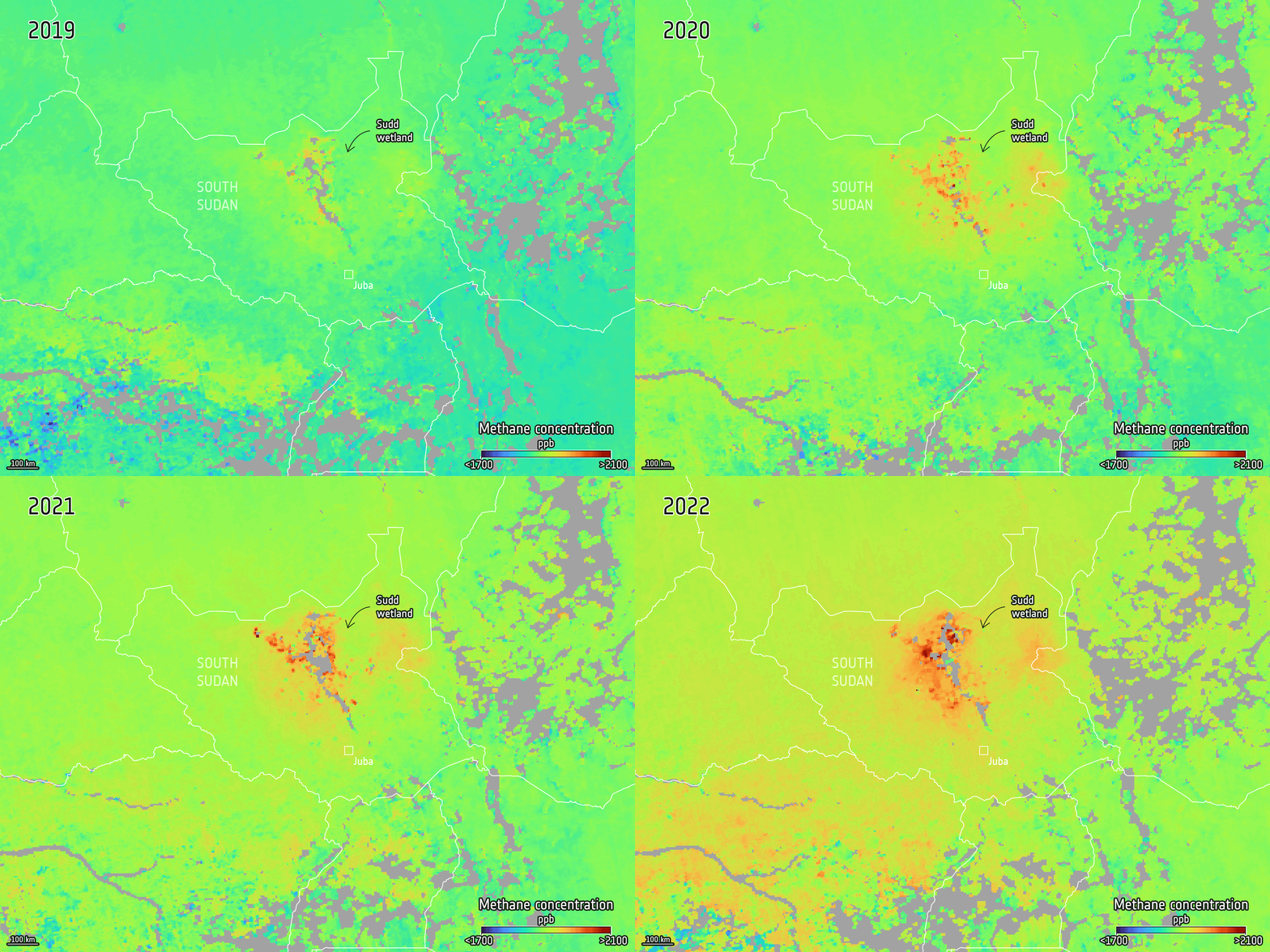

During the Covid-19 pandemic, a notable reduction in vehicles on the road and flights in the air led to a temporary improvement in air quality, with lower levels of pollutants like nitrogen dioxide. However, an unexpected rise in methane levels was observed during this period, followed by a subsequent decline. New research has shed light on this phenomenon, revealing the intricate interplay between human activities, atmospheric chemistry, and methane emissions.
Methane, the second-most significant greenhouse gas contributing to climate change after carbon dioxide, is particularly concerning due to its potency; a single tonne of methane has the capacity to trap heat in the atmosphere up to 30 times more effectively than carbon dioxide over a century. Between 2020 and 2022, global methane concentrations peaked at the highest rate on record, reaching 16.2 parts per billion per year before falling to 8.6 ppb annually by 2023. A recent study published in the journal Science provides insights into the reasons behind these fluctuations.
The study highlights a temporary decline in the atmosphere’s ability to break down methane, coinciding with a rise in natural emissions from wetlands during unusual climatic conditions. Philippe Ciais, the study’s lead author from France’s Laboratory for Climate and Environmental Sciences, noted that their research used satellite images, ground observations, atmospheric chemistry data, and advanced computational models to reconstruct the global methane budget from 2019 to 2023. The findings indicate that a significant shift in atmospheric chemistry was a key factor in the spike of methane levels.
A critical element in this investigation was the role of hydroxyl radicals, often referred to as the atmosphere’s “detergents,” which normally help eliminate methane. However, during 2020 and 2021, the global concentration of hydroxyl radicals decreased after human activities slowed significantly. These radicals are produced through reactions involving sunlight, ozone, water vapor, and various gases. The drop in emissions of these gases during lockdowns limited hydroxyl radicals’ formation, leading to a reduced capability of the atmosphere to cleanse itself of methane. This decrease in oxidizing agents was responsible for about 80% of the fluctuations in methane growth during this period.
At once, climate factors influenced emissions from wetlands. The prolonged La Niña phase observed from 2020 to 2023 brought wetter conditions across many tropical regions, creating ideal circumstances for methane-producing microbes to thrive in flooded soils. The most noticeable increases occurred in tropical Africa and Southeast Asia, while Arctic wetlands also contributed to elevated methane emissions as temperatures rose. In contrast, South American wetlands experienced a notable drop in emissions in 2023, attributed to drought conditions linked to an extreme El Niño event.
The study’s findings suggest that the increase in methane concentrations was primarily due to biological sources rather than fossil fuel emissions and wildfires, as isotopic analysis pointed to wetlands, inland waters, and agricultural practices as the main contributors. This highlights potential shortcomings in current methane emission models that have inadequately accounted for wetland emissions, particularly during the pandemic.
Representatives of the research team emphasize the necessity for improved monitoring of flooded ecosystems and better representation of soil and water processes within emissions models, as well as a deeper integration of atmospheric chemistry and climate variability. The study not only clarifies the reasons behind the rapid increase and subsequent slowdown of methane levels but also underscores the importance of satellite data in tracking greenhouse gases and understanding the atmospheric processes that affect them.
The implications are clear: future trends in methane concentrations will hinge not only on human efforts to manage emissions but also on air quality regulations and climate-induced changes in the global methane cycle.










Related Posts


Stay Informed With the Latest & Most Important News
Previous Post
Next Post



Advertisement
-
 01Two Black Holes Observed Circling Each Other for the First Time
 -
 02From Polymerization-Enabled Folding and Assembly to Chemical Evolution: Key Processes for Emergence of Functional Polymers in the Origin of Life
 -
 03Astronomy 101: From the Sun and Moon to Wormholes and Warp Drive, Key Theories, Discoveries, and Facts about the Universe (The Adams 101 Series)
 -
 04True Anomaly hires former York Space executive as chief operating officer
 -
 05Φsat-2 begins science phase for AI Earth images
 -
 06Hurricane forecasters are losing 3 key satellites ahead of peak storm season − a meteorologist explains why it matters
 -
 07Binary star systems are complex astronomical objects − a new AI approach could pin down their properties quickly