
Now Reading: ‘People knew that they could come to us to figure out how to get things done.’
-
01
‘People knew that they could come to us to figure out how to get things done.’


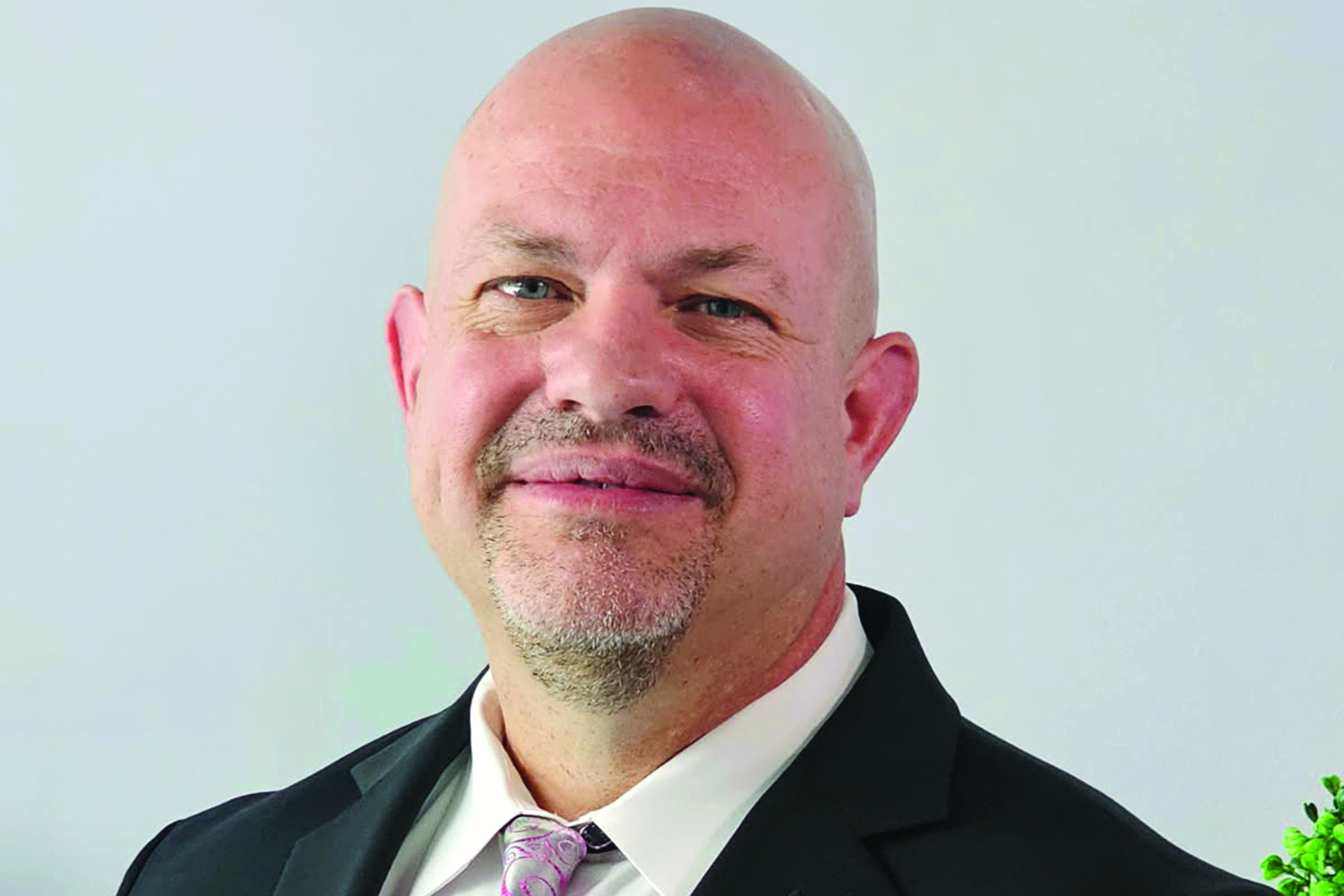

In 2025, more than 322,000 civil servants left jobs voluntarily or were dismissed out of a workforce of roughly 2.4 million. The 13% drop in staffing is the largest single-year decline since the end of World War II. In total, more than 5,000 people who were part of the federal space workforce left their positions. Senior executives with decades of experience retired alongside younger staffers whose posts were eliminated or who sought opportunities in the private sector or academia. This is one of eight conversations with some of the remarkable people who recently left the federal workforce.
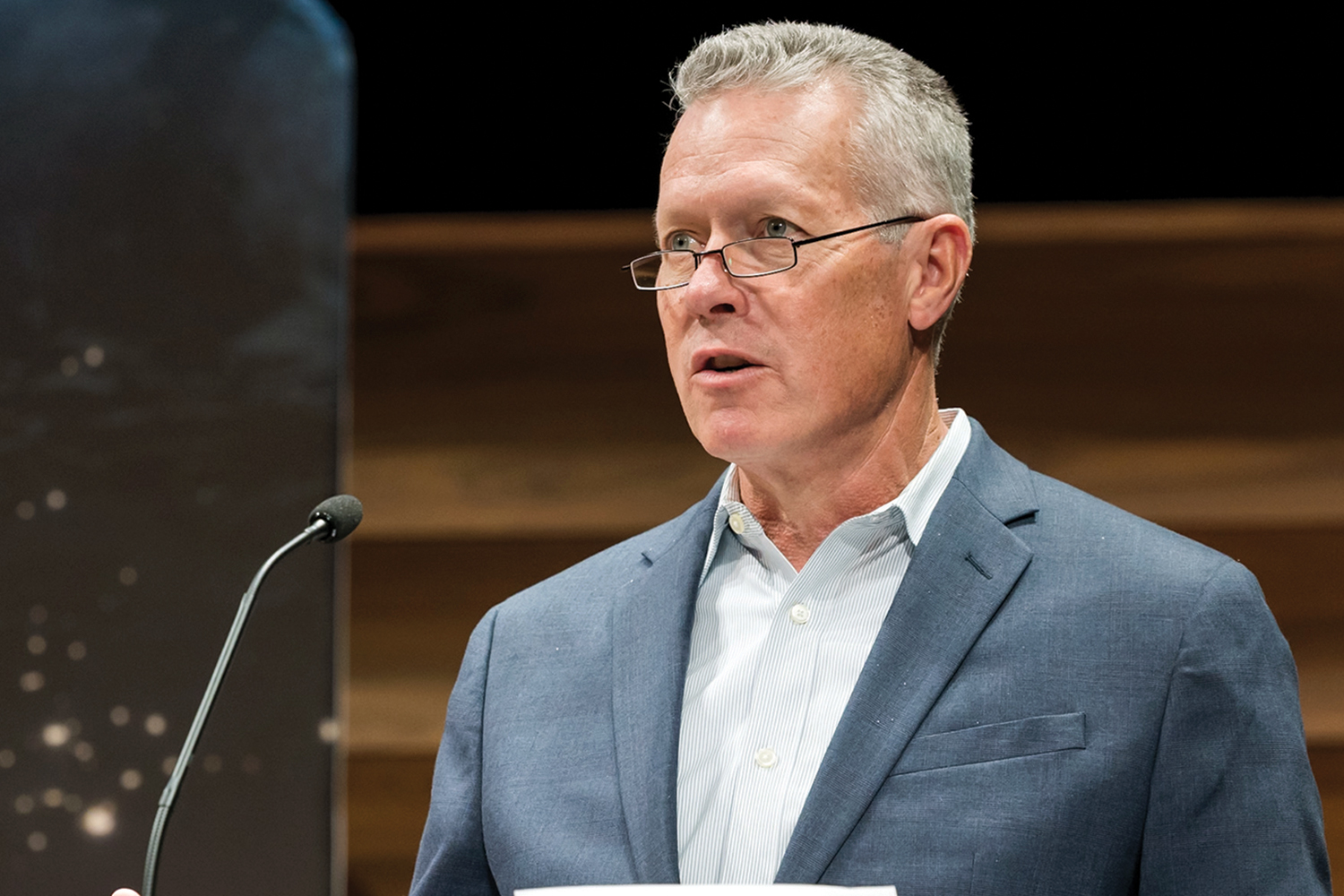
Shawn Phillips
Last position: Air Force Research Laboratory Rocket Propulsion Division chief
After 27 years at Edwards Air Force Base, where he oversaw research, development and testing at the 168-square-kilometer Air Force Research Laboratory’s Rocket Lab, Shawn Phillips is moving into consulting. It’s a dramatic but welcome change for the PhD chemist and nanomaterials expert who spent the bulk of his professional career in civil service.
Starting as a bench-level scientist at the Rocket Lab, Phillips moved into management, first leading a group investigating materials for solid rocket motors and then liquid rocket engines. For the last 10 years, Phillips ran the Rocket Propulsion Lab, managing 250 to 500 people, amid heightened pressure to overhaul solid rocket motors and liquid rocket engines.
During Phillips’ time there, AFRL Rocket Lab military personnel, engineers, scientists and technicians developed systems ranging from tiny thrusters for in-space propulsion to rocket engines providing 300,000 kilograms of thrust. They also opened their doors to share expertise and testing facilities with government and commercial partners.
How did you begin working for the government?
When I finished my PhD, I went to work at DuPont chemical company on the East Coast. I was engaged when my [now] wife, who was in graduate school, said, “I’m going back to California. I hope you want to come with me.”
I didn’t know about civil service at the time, in the 1990s. I contacted my old advisor and said, “I’m looking for a position in California.” He said there was a spot at the Edwards Air Force Base Rocket Lab. I thought I’d be there for six months. I stayed for 27 years and loved every minute of it.
What was your mission?
The mission changed in about 2017. We saw the drive to be more capability-focused as opposed to research-focused. We had $10.2 billion of facilities at the Rocket Lab and all these subject-matter experts. We created a program to bring in companies, let them use our facilities and leverage our subject-matter experts to explain DoD needs. We had 40 to 60 companies working with us through public-private partnerships.
Another big focus was testing for the Sentinel [intercontinental ballistic missile] program. It was a huge, multi-year effort to be positioned right for Sentinel testing.
In public-private partnerships, were you providing funding or primarily access to facilities and expertise?
It was facilities and expertise. We saw that over time the dollars were going to start to shrink. But we could offer access to a half-billion-dollar rocket test stand for pennies on the dollar and our subject-matter expertise. It was less contractual and more collaborative.
You also spent a lot of time talking to industry.
I’m not a person who likes to talk on the phone all the time. But every Friday, I had dozens of calls with vice presidents, presidents and CEOs of companies to make sure that we were working in a collaborative environment. If I had to work through the night on Thursday, I did to make sure Friday was open. It’s so important to have dialogue in these partnerships. It was a tireless thing, but also very rewarding.
Were these calls focused on understanding industry needs and explaining AFRL’s needs?
You nailed it. That’s the mindset that the leaders of our Space Force and Air Force are stressing. We need to work more on leveraging industry collaboration. It’s not easy. Sometimes you take a backseat to the company. Sometimes you’re taking a leadership role. You have to understand a company’s dynamics, what they need to grow and be successful, and vice versa. It led to a natural transition to consulting.
What led to your retirement?
I was working 60 to 80 hours a week. I don’t sleep a lot. The stress was becoming so severe that it affected one of my heart valves. I talked with my family and decided it was time.
On a Thursday night, I sent out a message on LinkedIn saying that I decided to go into consulting. Over the next few hours I counted 28 calls from people that wanted me to consult. It’s not that I have some incredible knowledge. There are people way smarter than me, but I think it was the trust in the relationship. I’m going to be there to help guide them and learn from them too.
How do you view the changes taking place in the federal workforce?
Right now, our nation needs a lot of help to compete with foreign adversaries. If you take this workforce that was in the DoD and you transition them over to consulting or to the contractors, you can almost think of it as a tech transfer. That’s the positive way I’ve been looking at it. There are rough parts for people, don’t get me wrong. For me, it was a very positive thing.
What challenges did you face at the Rocket Lab?
Leading this organization became more stressful at the end because we are in a global conflict. The U.S. is not supreme in all areas. We’re at a point where asymmetric threats can come up rather cheaply and throw off a whole system. We also know that with the pace the Chinese government is moving, they’re ahead of us in certain areas and equal competitors in others.
Also in the past, strategic or tactical missile systems were needed. Either space launch was on the upswing or solid rocket motors. In the last two or three years, both sides are pulsing forward at incredible speeds.
Tell me about highlights of your career.
When I arrived, the Rocket Lab was thought of as a place that was done, ready for base relocation and closing. My first goal was making sure the Rocket Lab was not going to close. We knew that the nation would need test capability for large rocket motors, rocket stands and everything else. Those public-private partnerships helped the site become a recognized leader in propulsion for the nation.
Through a team effort we developed hypersonic boosters for the Air Force. The technology came out of the lab. But my biggest highlight was relying on the passion of our people to get the job done.
Gen. Jason Bartolomei, the AFRL commander, came out to visit just before I retired. He said, “You guys are strategically scrappy.” People knew that they could come to us to figure out how to get things done.
An abridged version of this interview first appeared in the February 2026 issue of SpaceNews Magazine.










Related Posts

Stay Informed With the Latest & Most Important News
Previous Post
Next Post


Advertisement
-
 01Two Black Holes Observed Circling Each Other for the First Time
 -
 02From Polymerization-Enabled Folding and Assembly to Chemical Evolution: Key Processes for Emergence of Functional Polymers in the Origin of Life
 -
 03Astronomy 101: From the Sun and Moon to Wormholes and Warp Drive, Key Theories, Discoveries, and Facts about the Universe (The Adams 101 Series)
 -
 04True Anomaly hires former York Space executive as chief operating officer
 -
 05Φsat-2 begins science phase for AI Earth images
 -
 06Hurricane forecasters are losing 3 key satellites ahead of peak storm season − a meteorologist explains why it matters
 -
 07Binary star systems are complex astronomical objects − a new AI approach could pin down their properties quickly