
Now Reading: Phantom Space buys thermal specialist to support orbital data center push
-
01
Phantom Space buys thermal specialist to support orbital data center push


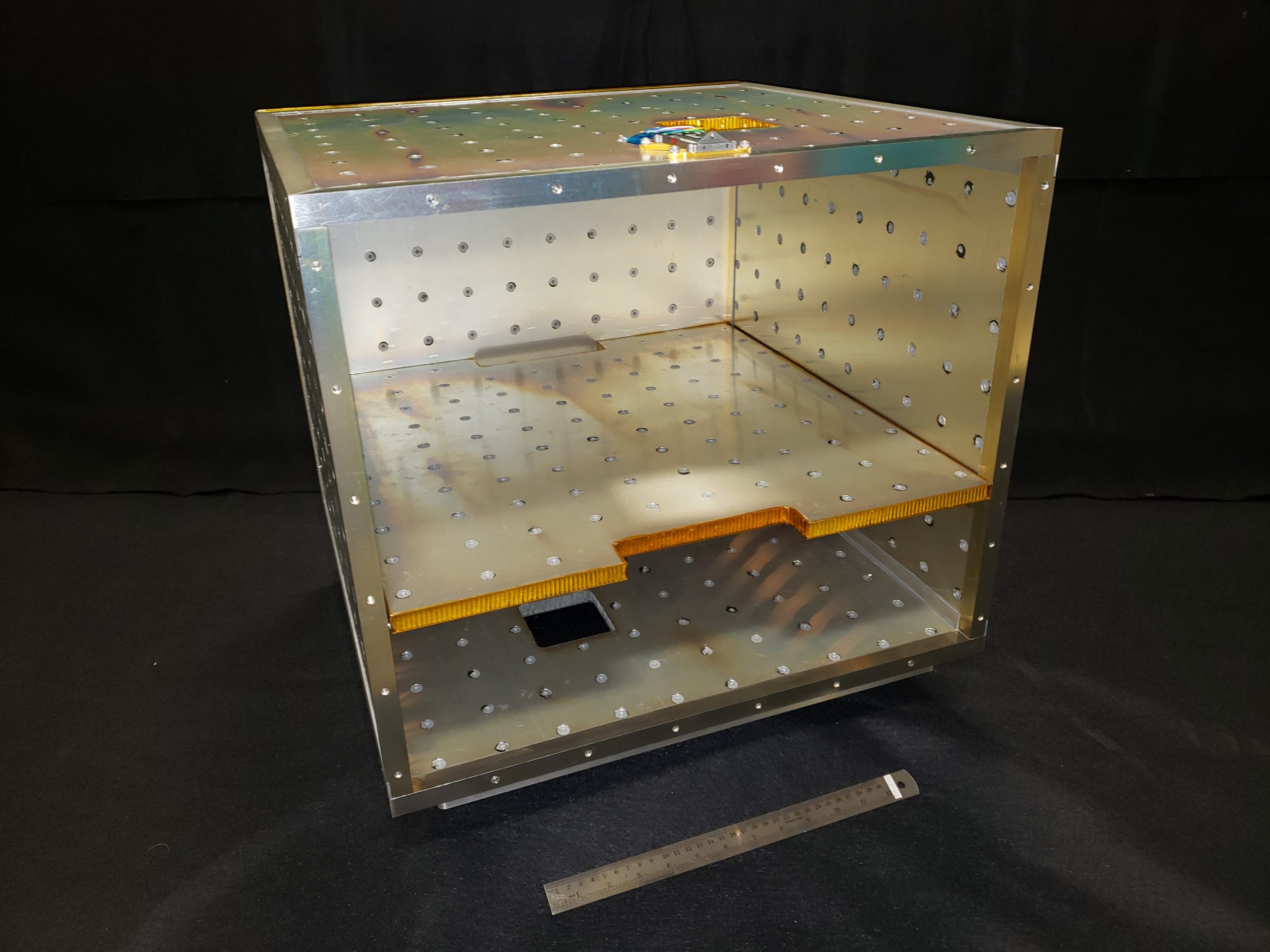

TAMPA, Fla. — Phantom Space has acquired satellite thermal hardware provider Thermal Management Technologies (TMT) to bolster development of its planned Phantom Cloud orbital data center constellation.
The Tucson, Arizona-based satellite and rocket company said April 2 that bringing TMT in-house adds expertise in managing heat, which is a critical challenge for high-performance satellites designed to process data in orbit.
Financial terms were not disclosed.
The deal extends Phantom’s vertical integration strategy, following its February purchase of legacy Vector Launch assets to support development of Daytona, a small, two-stage launch vehicle.
TMT, established in 2008, operates 539 square meters of office and laboratory space in North Logan, Utah, and supplies a range of thermal control systems for aerospace and defense missions. Its products include radiators and other components that regulate spacecraft temperatures, which are especially important for performing intensive computing tasks where excess heat from onboard processors must be dissipated efficiently in the vacuum of space.
Designs under development from SpaceX and others typically emphasize large radiators alongside power generation and computing hardware to sustain high-performance workloads in orbit.
While SpaceX is targeting large-scale orbital computing platforms to support artificial intelligence workloads, Phantom Cloud appears positioned more narrowly as a data-backhaul and edge-processing network that moves, processes and distributes data between satellites and users.
“Just as cloud computing transformed the internet economy, Phantom Cloud will unlock a new generation of data-driven applications in space,” Phantom Space cofounder and CEO Jim Cantrell said in a news release.
“TMT’s technology is a critical piece of the puzzle for our constellation. They have deep expertise in satellite thermal components, and we see immense potential in their technology to improve the performance and reliability of our orbital infrastructure.”
The company said Phantom Cloud is part of a broader effort to build an integrated space infrastructure spanning launch, satellites and in-orbit data services. It ultimately aims to support an ecosystem that includes a “Space App Store,” connecting satellite operators, developers and customers to process and monetize data directly in space.
Data push
Phantom outlined plans for the data-backhaul network in 2024, when it announced that Assured Space Access would design and build radio-frequency communications payloads for a proposed 66-satellite Phantom Cloud constellation.
The company has said it is targeting a first rocket launch and initial Phantom Cloud deployment in the second half of 2027.
The launch timeline has slipped from earlier projections. After raising seed funding in 2021, Phantom had aimed to perform its first orbital launch in the first quarter of 2023.
The company also announced plans that year to build and launch a 72-satellite constellation for Ingenu, which provides technology for connecting Internet of Things (IoT) devices, but there have been no recent public updates.
Development journey
Phantom, which had raised about $37 million as of March 2024, has pursued a mix of vertical integration and partnerships as it builds out its ecosystem.
In addition to acquiring StratSpace in 2021 to expand its satellite and engineering services, the company has announced collaborations spanning AI-enabled satellite processing, quantum-secure communications infrastructure and satellite development for subsurface imaging applications.
TMT will operate as a subsidiary of Phantom under the deal, and its founder Scott Schick will remain with the company as general manager.
Cantrell said in the news release that he had known Schick for more than 40 years, and they had previously worked together at the Space Dynamics Laboratory.
Schick said in a statement that joining Phantom brings together “complementary strengths that will expand one another’s technical capabilities, enhance long-term stability, and accelerate the development of new hardware.”










Related Posts
Stay Informed With the Latest & Most Important News
Previous Post
Next Post



Advertisement
-
 01Two Black Holes Observed Circling Each Other for the First Time
 -
 02From Polymerization-Enabled Folding and Assembly to Chemical Evolution: Key Processes for Emergence of Functional Polymers in the Origin of Life
 -
 03Astronomy 101: From the Sun and Moon to Wormholes and Warp Drive, Key Theories, Discoveries, and Facts about the Universe (The Adams 101 Series)
 -
 04True Anomaly hires former York Space executive as chief operating officer
 -
 05Φsat-2 begins science phase for AI Earth images
 -
 06Hurricane forecasters are losing 3 key satellites ahead of peak storm season − a meteorologist explains why it matters
 -
 07Binary star systems are complex astronomical objects − a new AI approach could pin down their properties quickly