
Now Reading: PLD Space Advances Development of Miura 5 Rocket Aiming for 2026 Launch
-
01
PLD Space Advances Development of Miura 5 Rocket Aiming for 2026 Launch


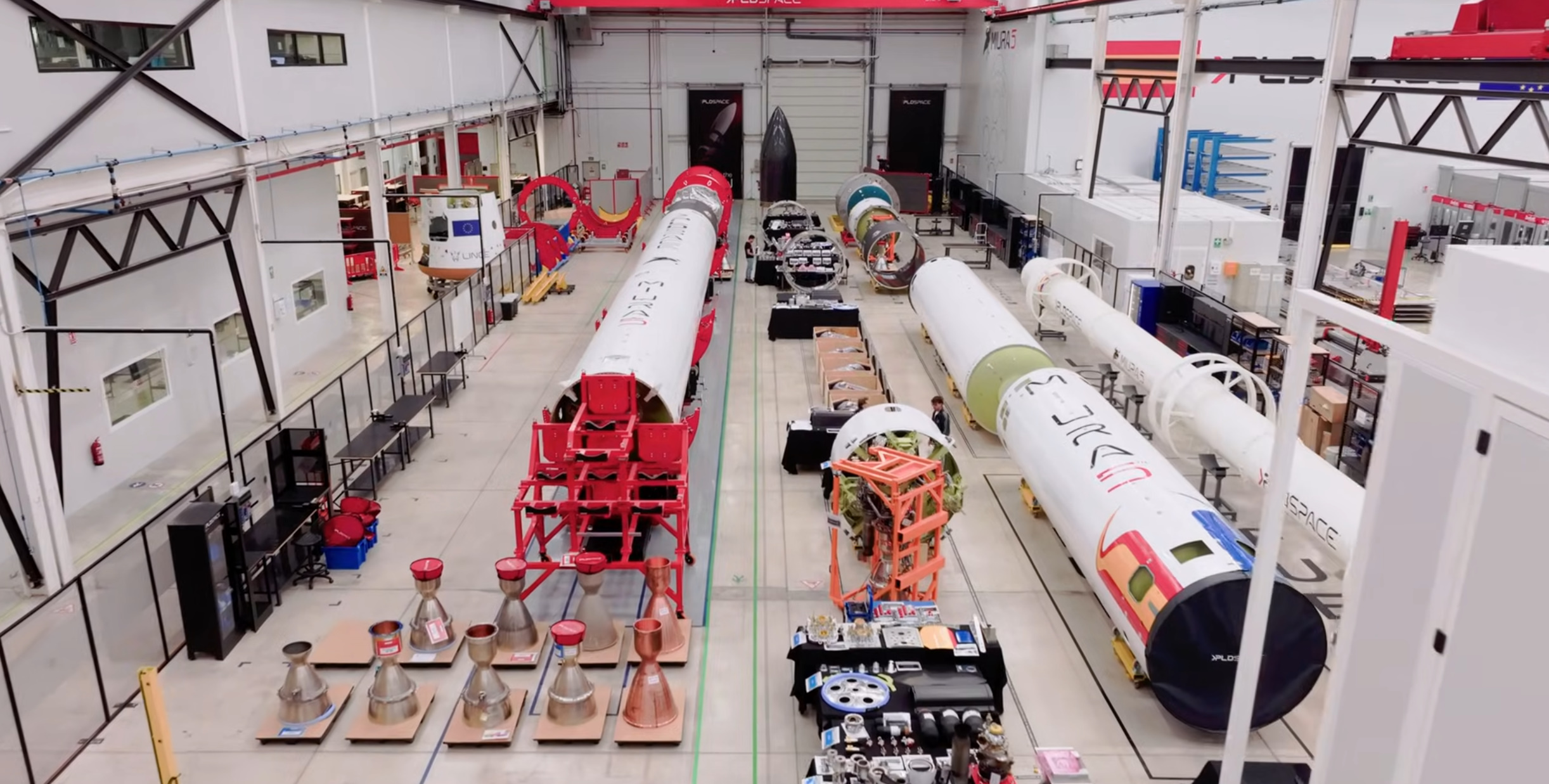

PLD Space, an innovative private aerospace firm based in Spain, has shared a promising update on the development of its Miura 5 orbital launch vehicle. The company is progressing steadily and remains on track for its first demonstration flight, anticipated in 2026 at the Guiana Space Centre in Kourou, French Guiana.
Miura 5 is a two-stage rocket powered by kerosene, designed for partial reusability and capable of carrying payloads of up to 540 kilograms into low Earth orbit. Giovanni Luca Carollo, the Miura 5 Program Manager, emphasized the significant advancements being made in areas such as manufacturing, integration, testing, and launch infrastructure. “Our team is fully engaged in our journey towards achieving flight readiness,” he stated in the company’s latest update.
Noteworthy developments include the rapid manufacturing and integration of two qualification models for the rocket’s first stage, named QM1 and QM2. The QM1 model has already undergone extensive qualification testing. Carollo noted that both tanks designed for this stage have been thoroughly tested for their durability, not only for a single launch but also for reusability after returning from space. The fuel tank, in particular, has successfully withstood over 150 various tests to ensure its reliability during the mission.
These qualification models will serve as the foundation for upcoming wet dress rehearsals, which are critical for validating essential systems and feed lines prior to flight. Meanwhile, the QM2 model is advancing through similar structural evaluations, with PLD Space indicating plans to repeat tests on both tanks before assembling the flight-ready version of the rocket.
The latest update highlights important advancements in propulsion as well, with successful hot-fire testing of the T5C engines, both at sea level and in vacuum conditions. PLD Space reported, “We effectively tested the T5C and T5C vacuum engine under nominal conditions, gathering crucial data.” This testing campaign validated the design choices made thus far and facilitated final adjustments to enhance the flight version of the engine.
Manufacturing processes have shown significant progress as well, setting the stage for the planned cadence of future flights. The company reported noteworthy achievements at its propulsion manufacturing facility in the last quarter of 2025, noting that qualification components for the turbo pump assembly, combustion chambers, and other critical elements have been produced, all aimed at establishing a reliable manufacturing process.
In addition, PLD Space has launched a new version of its flight software and is in the process of integrating the Guidance and Navigation Control (GNC) systems into real hardware to enable robust testing. Carollo added that they’re advancing in the validation of GNC algorithms across all mission phases, including comprehensive simulation analyses for various flight scenarios.
The update also addressed preparations for the second stage of the Miura 5 and ongoing production of its flight-model structures. On the infrastructure front, the company is making strides with essential ground support equipment being manufactured in Spain and set for on-site testing, alongside civil works at the Kourou launch complex.
These developments reflect PLD Space’s dedication to swift and reliable progress, positioning the Miura 5 as a significant contender in Europe’s pursuit of independent space access. With key components ready and subsystems validated, the company is laying a strong foundation for its target flight in 2026.










Related Posts


Stay Informed With the Latest & Most Important News
Previous Post
Next Post



Advertisement
-
 01Two Black Holes Observed Circling Each Other for the First Time
 -
 02From Polymerization-Enabled Folding and Assembly to Chemical Evolution: Key Processes for Emergence of Functional Polymers in the Origin of Life
 -
 03Astronomy 101: From the Sun and Moon to Wormholes and Warp Drive, Key Theories, Discoveries, and Facts about the Universe (The Adams 101 Series)
 -
 04True Anomaly hires former York Space executive as chief operating officer
 -
 05Φsat-2 begins science phase for AI Earth images
 -
 06Hurricane forecasters are losing 3 key satellites ahead of peak storm season − a meteorologist explains why it matters
 -
 07Binary star systems are complex astronomical objects − a new AI approach could pin down their properties quickly