
Now Reading: PLD Space secures $35 million European Investment Bank loan for MIURA 5 launcher
-
01
PLD Space secures $35 million European Investment Bank loan for MIURA 5 launcher

PLD Space secures $35 million European Investment Bank loan for MIURA 5 launcher

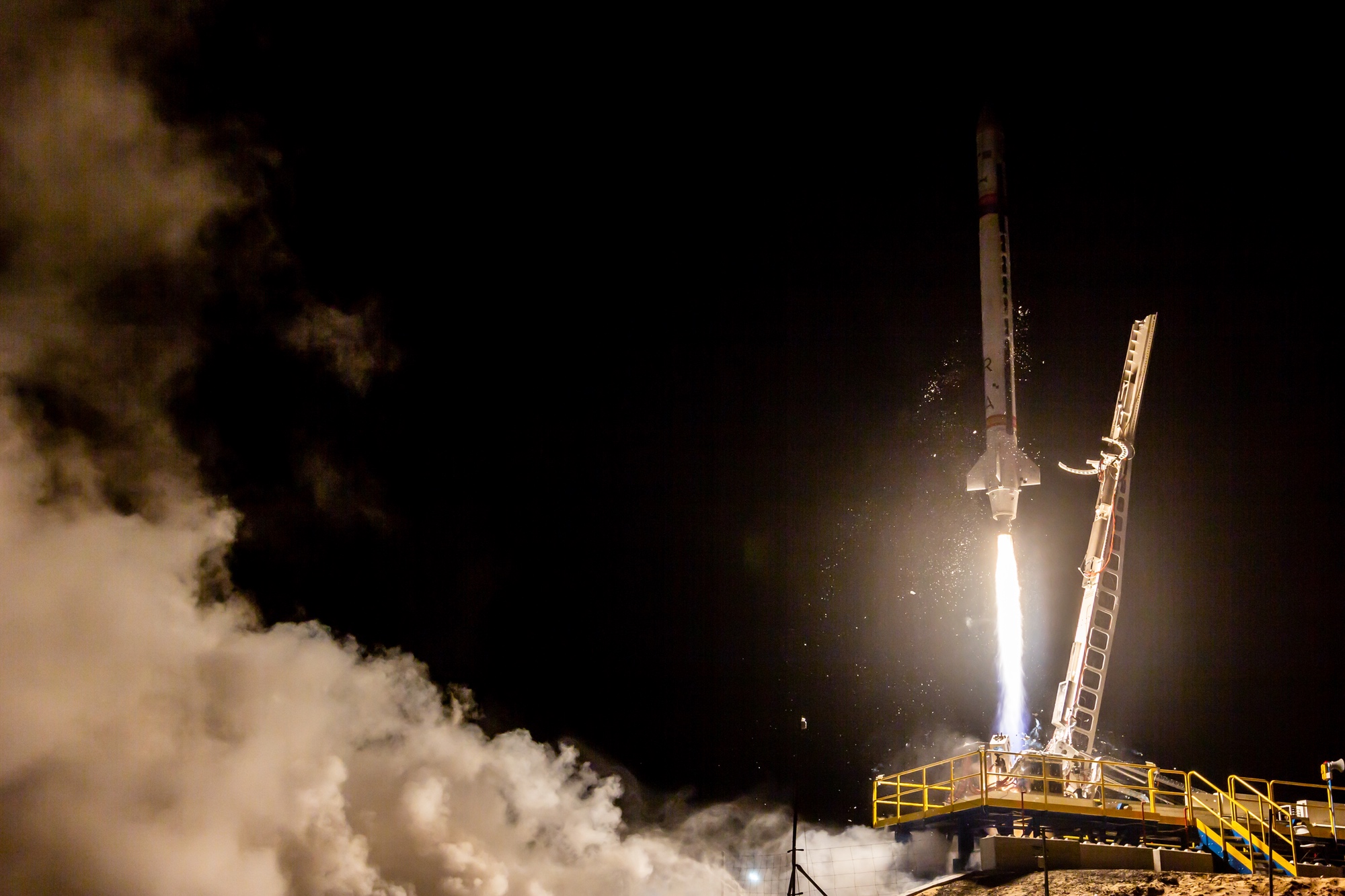
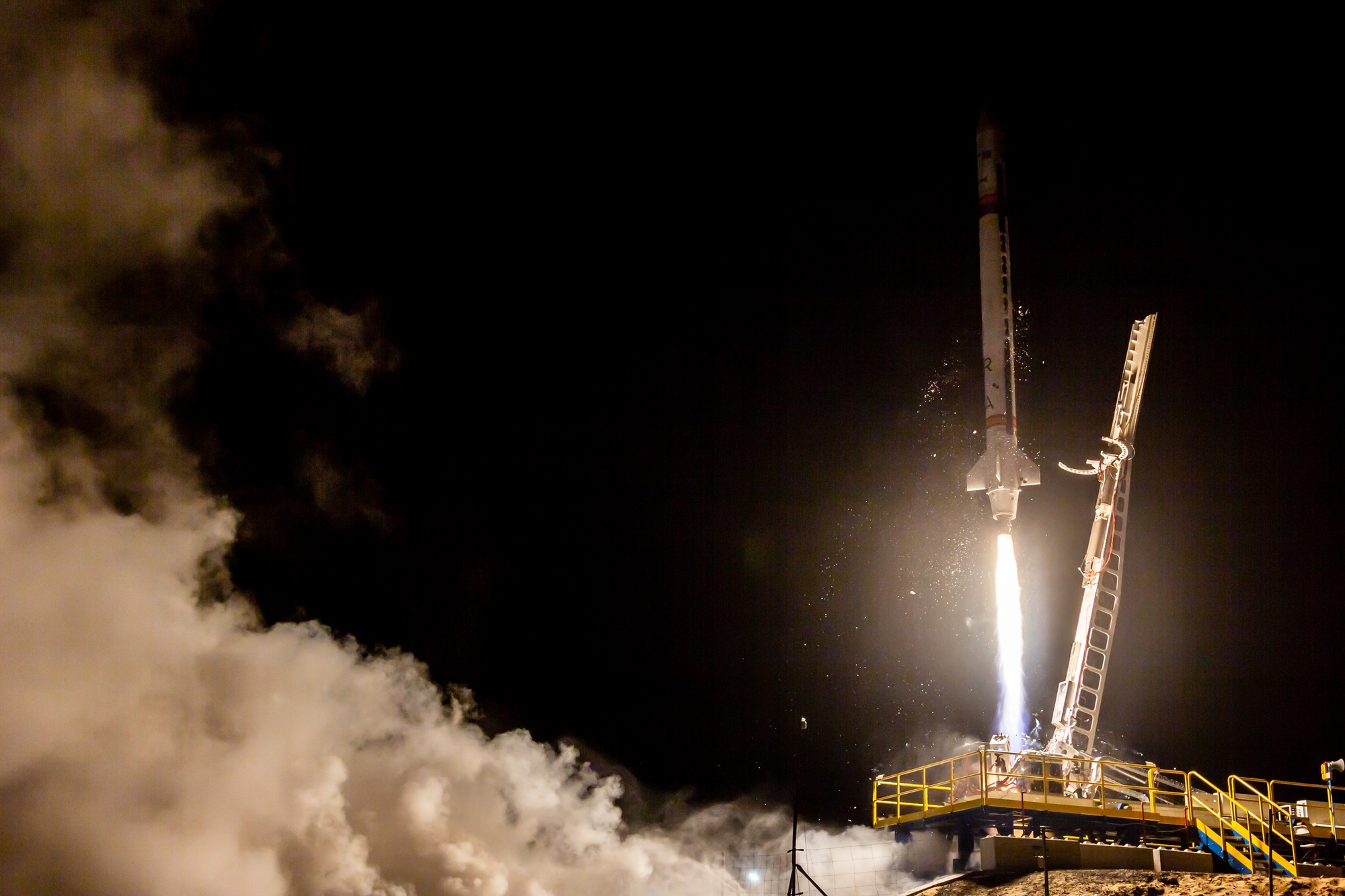
MILAN – PLD Space signed a 30 million euro ($35 million) venture debt loan with the European Investment Bank (EIB) on April 7, a move to support the final development stage of MIURA 5, PLD’s lightweight rocket.
Miura 5, which is designed to deploy roughly 540 kilograms to 1 ton of payload to low Earth orbit, is planned to test fly for the first time in 2026.
This loan is the EIB’s first direct investment in small launchers.
“Europe needs strong, independent launch capabilities to secure its autonomous access to space,” Robert de Groot, EIB’s vice president, said in a release. “The EIB is proud to support PLD Space in scaling its launch services to reach globally competitive price levels,” he added.
As part of ESA’s European Launcher Challenge (ELC) program, PLD received 169 million euros from the Spanish government at the latest ESA ministerial. It also closed a Series C round in March worth 180 million euros to continue work on MIURA 5, bringing the company’s total funding secured in the past six months to 379 million euros.
MIURA 1, a one-stage suborbital technology demonstrator for the future MIURA 5 orbital rocket, flew successfully in October 2023. MIURA 5 has not flown yet and is in its demonstration phase, with no commercial contracts. The roadmap, detailed at the 2026 Munich Space Summit by Francesc Casas, PLD’s public affairs manager, is to use “the first six to eight first launchers for gaining flight heritage and become fully operational.” With the first two demo flights planned for 2026 and 2027, the company hopes to start commercial operations in 2027r.
PLD plans to use the new financing to “expand the industrial and launch infrastructure,” Ezequiel Sanchez, PLD’s executive president, said in the press release. “We are grateful to the EIB for its trust and support; this backing reinvoices our long-term vision.”
PLD has often discussed how MIURA 5 in its current form (expendable, two-stage, small-lift rocket) is a stepping stone toward a reusable, higher-cadence, heavier model.
“We believe in reusability not only because it allows us to decrease the cost of every launch, but because it will allow us to increase cadence,” Casas specified at the Munich Space Summit. “It is true that performance will not be the same as an expendable launcher, but if we start developing the technology from now, it will be easier in the future to upgrade the capacity. We have run the numbers and, if we start reusing not from flight one but from flight 15 to 20, then the economics makes sense.”
European Commissioner for Defence and Space Andrius Kubilius also praised the announcement: “Today we make an important step forward in Europe’s position in the global launch market with this 30 million [euro] investment.”
He added that “as space becomes increasingly strategic, access is no longer a luxury — it is essential to our security, our economy and our future. That is why the European Union is committed to ensuring independent and reliable access to space.”










Related Posts

Stay Informed With the Latest & Most Important News




Advertisement
-
 01Two Black Holes Observed Circling Each Other for the First Time
 -
 02From Polymerization-Enabled Folding and Assembly to Chemical Evolution: Key Processes for Emergence of Functional Polymers in the Origin of Life
 -
 03Astronomy 101: From the Sun and Moon to Wormholes and Warp Drive, Key Theories, Discoveries, and Facts about the Universe (The Adams 101 Series)
 -
 04True Anomaly hires former York Space executive as chief operating officer
 -
 05Φsat-2 begins science phase for AI Earth images
 -
 06Hurricane forecasters are losing 3 key satellites ahead of peak storm season − a meteorologist explains why it matters
 -
 07Binary star systems are complex astronomical objects − a new AI approach could pin down their properties quickly