
Now Reading: Precision in Orbit: Heraeus Catalysts Safeguard Satellite Control
-
01
Precision in Orbit: Heraeus Catalysts Safeguard Satellite Control


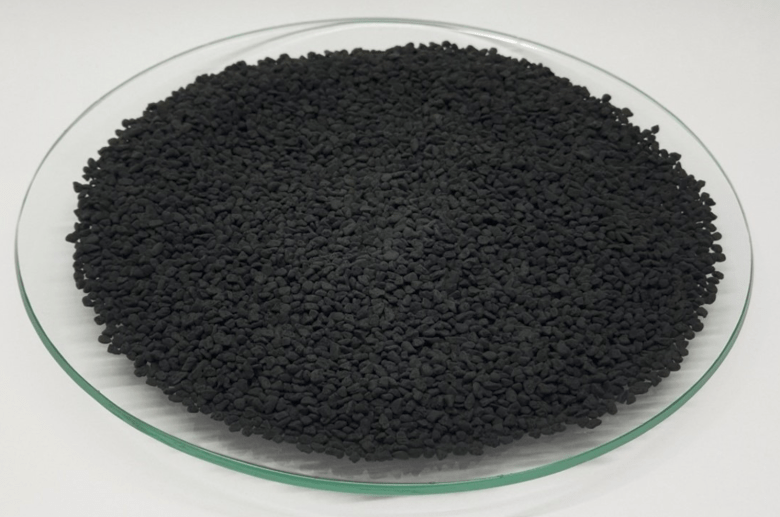
When a satellite travels through orbit at up to 17,500 mph, a fraction of a second can determine whether a course correction is successful, as even minor trajectory deviations can compromise mission objectives. Reliable impulse generation is therefore fundamental to satellite control. This task is typically performed by control nozzles known as hydrazine thrusters, where a catalytic reaction converts chemical energy directly into motion.
At the heart of these systems is the catalyst: a highly specialized material that decomposes hydrazine within milliseconds, withstands extreme temperatures, and continues to function reliably after thousands of ignition cycles. For decades, Heraeus Precious Metals has been supplying this key component to the international space industry.
Chemical Precision in a Vacuum – Hydrazine Decomposition
Hydrazine (N₂H₄) has been used as a monopropellant in satellite propulsion systems since the early 1960s and remains the industry standard today. As a Mono- or single-component propellant, it does not require a second component, such as an oxidizer, to react. When it comes into contact with the catalyst, liquid hydrazine decomposes exothermically into hot gases—primarily nitrogen, hydrogen, and ammonia. These gases expand through a nozzle to generate thrust.
The process occurs in two phases: first, decomposition is initiated catalytically on the surface of the active material; later, at temperatures above 250 °C, thermal decomposition additionally contributes to the process. The key challenge is maintaining a stable, reproducible, and safe reaction, particularly during cold starts or rapid pulsed operation, as required for altitude control.
As the catalyst governs ignition stability, temperature rise and pressure behavior within the reaction, it is a cornerstone for reaching the required mission performance.
The Industry Standard: H-KC12GA Catalyst
With H-KC12GA, Heraeus has established a catalyst that serves as the benchmark for hydrazine thrusters. The material is based on Iridium supported on a particularly suitable aluminum oxide carrier. This combination provides exceptional mechanical stability even under cold-start conditions. At the same time, the finely dispersed Ir on high-surface-area support guarantees high catalytic efficiency.

Thanks to these properties, catalytic activity is preserved even after thousands of firings—an essential factor, as satellites perform repeated fine course corrections throughout their operational lifetimes. Since the early 1990s, H-KC12GA has been used in numerous European, US and other international programs and it is continuously being further developed to meet evolving mission requirements.
Proven in Orbit: Applications with Ariane

On the European market, Heraeus has a longstanding partnership with Ariane Group GmbH, whose hydrazine propulsion systems count on this technology. The smaller thrusters in the 1N to 20N range are used for precise altitude and orbit control of small and medium-sized satellites. These thrusters feature a two-stage redundant valve system, an electrical catalyst bed heating system, and a thermal insulation that ensures reliable ignition even at low start-up temperatures. Several hundred units of these thrusters are currently in successful operation.
For launcher roll control, for controlled deorbit, and for lander applications larger thrusters in a range of 200N and above are produced.
All thrusters rely on the flight proven catalyst of Heraeus; even after a cumulative burn-time exceeding 50 hours, the performance remained constant—thanks to the high thermal resilience and uniform activity of the Heraeus catalyst.
“Our hydrazine thrusters must ignite reliably under extreme conditions—even after thousands of operational cycles and at low temperatures. Heraeus catalysts have proven to be extremely robust and reproducible,” explains Ulrich Gotzig, Emeritus Expert, ArianeGroup GmbH. “This is a key contribution to the high availability and safety of our satellite systems.”
Scientifically Validated: NASA Test Confirms Performance
In 2012, the reliability of Heraeus’ H-KC12GA catalysts was confirmed independently. As part of NASA’s Soil Moisture Active Passive (SMAP) mission, the Jet Propulsion Laboratory (JPL) tested MONARC-5 thrusters equipped with Heraeus catalysts. The goal was to compare their performance with the long-established Shell 405 material.
The 57-day lifetime test included more than 37,000 firings, 15 cold starts, and a total hydrazine throughput of 132 lbm. The results showed thrust degradation of only 6% over twice the mission duration, stable specific impulses between 191 and 236 s, and no safety-relevant pressure spikes.
JPL’s conclusion was unequivocal:
“The MONARC 5 thrusters with Heraeus catalyst meet the propulsion requirements of the SMAP project.”
This confirmed the systems to be fully flight-proven—a milestone in the international recognition of Heraeus technology under mission-relevant conditions.[1]
High-Quality Catalysts from Heraeus: Production for Space Applications
The requirements for spaceflight catalysts are extreme: high activity at low temperatures, resistance to temperatures above 1,000 °C, resilience against mechanical destruction caused by vibration in the chamber. To ensure these standards in the long term, Heraeus has established a new production and development laboratory for space catalysts at its Hanau site.
Here, research, pilot manufacturing, and series production are integrated both spatially and technologically. This setup enables efficient qualification, reproducibility, and continuous improvement of catalyst designs.

With the expansion of its space catalyst laboratory in Hanau, Heraeus is contributing to further development of future propulsion systems in close collaboration with its customers—ranging from established hydrazine-based systems to new green propellant technologies. This targeted investment strengthens Heraeus’ role in advancing space catalysis worldwide while reinforcing Germany’s technological capabilities in the space sector.
As one of the few suppliers with a European development and manufacturing base, Heraeus delivers catalysts developed and qualified in accordance with ECSS standards relevant to ESA missions. This provides customers with planning reliability and long-term technological continuity within the space industry.
Heraeus as a Catalyst Manufacturer: Precious Metal Expertise Since 1660
Founded in 1660, Heraeus brings centuries of experience in the processing and application of precious metals. This long-standing expertise forms the foundation of Heraeus’ role as a specialized manufacturer of high-performance heterogeneous catalysts for demanding applications—including space propulsion.
Heraeus develops and produces catalysts using all precious metals as active components, supported by direct access to precious metal precursors manufactured in-house. This vertical integration enables a wide range of tailored manufacturing routes. Building on the vast experience with impregnation, adsorption and precipitation methods to deposit PM on carrier materials, Heraeus has established efficient and reliable processes to optimize the composition and properties of heterogeneous catalysts for challenging applications.
Key parameters such as precursor selection, metal concentration, solvent composition, and process conditions are precisely controlled. In particular, the variation of calcination temperatures allows the fixation of precious metal particles on the carrier surface and defines the long-term durability of the catalyst under extreme thermal loads.
This deep understanding of catalyst chemistry, materials science, and manufacturing processes enables Heraeus to design catalysts that deliver stable, reproducible performance at temperatures exceeding 1,000 °C—an essential prerequisite for reliable satellite propulsion.
The Role of Iridium in the Future of Space Catalysts
Iridium remains a cornerstone material in catalytic monopropellant propulsion systems and is expected to retain this role as mission requirements continue to intensify. As a platinum group metal, iridium combines high catalytic activity with outstanding resistance to chemical and mechanical stress. Its melting point of over 2,400 °C and strong resistance to oxidation and corrosion make it uniquely suited for the extreme environments encountered within hydrazine thruster catalyst beds.
In monopropellant systems ignition reliability under cold start conditions and stable operation are critical. Highly dispersed iridium supported on high purity alumina enables rapid and reliable hydrazine decomposition. Its high chemical stability prevents sintering and performance loss over long mission durations, making it the material of choice for monopropellant thrusters with thousands of firing cycles.
As mission requirements evolve, durability requirements are becoming even more demanding. Emerging propellants and green propulsion technologies often impose even higher thermal loads and more aggressive chemical environments. In this context, iridium-based systems continue to serve as a benchmark for catalytic robustness and thermal stability.
For space programs characterized by long qualification timelines and extended operational lifetimes, continuity of material supply is as critical as catalytic performance. Alongside its catalyst design and manufacturing expertise, Heraeus’ long-standing capabilities in precious metal sourcing, trading, and supply management ensure secure access to this critical material throughout the entire program lifecycle. This integrated approach provides customers with planning reliability and supply-chain security—key prerequisites for safe, precise, and space-ready propulsion systems
Sustainability and New Propellants
Hydrazine has defined monopropellant propulsion for decades due to its reliable ignition characteristics and well-established flight heritage. However, increasing regulatory constraints and operational safety requirements are accelerating the search for alternative propellants. Within the European Union, hydrazine is subject to stringent handling regulations under REACH due to its toxicity classification, resulting in complex fueling procedures and elevated ground-handling costs.
With the expansion of commercial constellations and increasing launch cadence these operational factors are becoming economically significant. Consequently, the industry is actively advancing so-called “green” monopropellants, including highly concentrated hydrogen peroxide (HTP), ammonium dinitramide (ADN)- based systems and hydroxylammonium nitrate (HAN)- based propellants such as those demonstrated in NASA’s ASCENT mission.
While these alternatives offer reduced toxicity and, in some cases higher specific impulse compared to hydrazine, they introduce new catalytic challenges. The basic difference is that hydrazine and HTP decompose, and HAN and ADN combust with subsequent higher temperatures that pose significant demands on catalyst and chamber materials.
| Propellant Type | Ignition System | Max Reaction Temperature | Specific Impulse | Preheat |
| HTP (H2O2) | Catalytic decomposition | 930 oC | Isp: 150-180 s | Preheating not required |
| HAN-based (Hydroxylammonium Nitrate) | Preheating, Catalytic decomposition and combustion | 1810 oC | Isp: 225-245 s | 250 oC |
| ADN-based (Ammonium Dinitramide) | Preheating, Catalytic decomposition and combustion | 1630 oC | Isp: 215-235 s | 250 oC |
Green Propellant Properties
Among emerging green monopropellants, highly concentrated hydrogen peroxide (HTP) represents a particularly attractive option due to its comparatively simple decomposition chemistry and reduced toxicity profile. Leveraging decades of expertise in precious metal processing and catalyst design, Heraeus has developed patented platinum-based catalysts specifically optimized for the catalytic decomposition of HTP. Platinum has been identified in multiple studies as one of the most active precious metals for this application, combining high intrinsic activity with strong resistance to oxidative degradation.
In collaboration with propulsion partners, monopropellant hot-fire campaigns conducted with 87-98% H2O2 confirmed the superior activity and operational robustness of these platinum-based systems under realistic thruster conditions. Multiple hot firing sequences showed no noticeable catalyst aging, and decomposition performance remained stable even after exposure to several kilograms of highly concentrated peroxide. These results underline the suitability of platinum-based catalysts for sustained HTP operation and position them as a commercially available solution for next generation green monopropellant systems.
Building on its longstanding expertise in precious metal processing and catalyst design, Heraeus currently offers commercial catalyst solutions for HTP decomposition while continuing to evaluate material systems for other emerging propellant chemistries. This focused approach ensures that new propulsion concepts benefit from both validated performance and industrial-scale reliability.
Strategic Importance for the Space Industry
As the number of commercial satellite constellations, Earth observation platforms, and interplanetary missions continues to grow, propulsion systems are facing increasing demands in terms of precision, durability, and long-term reliability. Furthermore, this development requires propulsion systems to show cost savings. Monopropellant thrusters remain the backbone technology for orbital control and station-keeping, where predictable ignition and sustained catalytic performance are mission critical.
Whether for ESA satellites, NASA programs, Earth observation missions, or commercial communications platforms, Heraeus catalysts are key components of modern hydrazine propulsion systems. They ensure fast ignition, high cycle endurance, and stable performance over extended operational lifetimes in orbit.
With the proven H-KC12GA catalyst, investment in the new Hanau laboratory, and the development of sustainable alternatives, Heraeus positions itself as a leading partner for the propulsion systems of the future—precise, reliable, and ready for the next generation of green spaceflight.
About the authors
Ilaria Longobardo is a Sales Manager at Heraeus Precious Metals, specializing in precious metal-based catalyst systems for space and chemical applications. She has been working at Heraeus since 2017 and holds a M.Sc. in Business Administration. Her work focuses on heterogeneous catalysis, aiming at expanding the product portfolio, and building new relationships with key customers.
Kathy Bynum is the US Sales Manager for Heraeus Precious Metals since 2023. She has 35 years experience in catalysis which includes both R&D and Sales focusing on chemical, emissions and space catalyst applications. She holds a BS in Chemical Engineering and an MBA.
Florian Harth is a Project Manager on Heraeus Precious Metals’ innovation team for heterogeneous catalysts. One of his core responsibilities since joining Heraeus in 2023 has been the further development of the space catalyst portfolio. He has 10 years of experience in academic and industrial catalysis R&D and holds a PhD in chemistry.
For more information.
—–
[1]www.heraeus-precious-metals.com/en/products-solutions/category/heterogeneous-catalysts/chemical-process-catalysts/space-propulsion/ – WhitePaper: Life Test Results of a MONARC 5 1 lbf Monopropellant Thruster with Heraeus Catalyst










Related Posts

Stay Informed With the Latest & Most Important News
Previous Post
Next Post

Advertisement
-
 01Two Black Holes Observed Circling Each Other for the First Time
 -
 02From Polymerization-Enabled Folding and Assembly to Chemical Evolution: Key Processes for Emergence of Functional Polymers in the Origin of Life
 -
 03Astronomy 101: From the Sun and Moon to Wormholes and Warp Drive, Key Theories, Discoveries, and Facts about the Universe (The Adams 101 Series)
 -
 04True Anomaly hires former York Space executive as chief operating officer
 -
 05Φsat-2 begins science phase for AI Earth images
 -
 06Hurricane forecasters are losing 3 key satellites ahead of peak storm season − a meteorologist explains why it matters
 -
 07Binary star systems are complex astronomical objects − a new AI approach could pin down their properties quickly