
Now Reading: Raytheon contract for protected satellite communications terminals raised by $2 billion
-
01
Raytheon contract for protected satellite communications terminals raised by $2 billion

Raytheon contract for protected satellite communications terminals raised by $2 billion

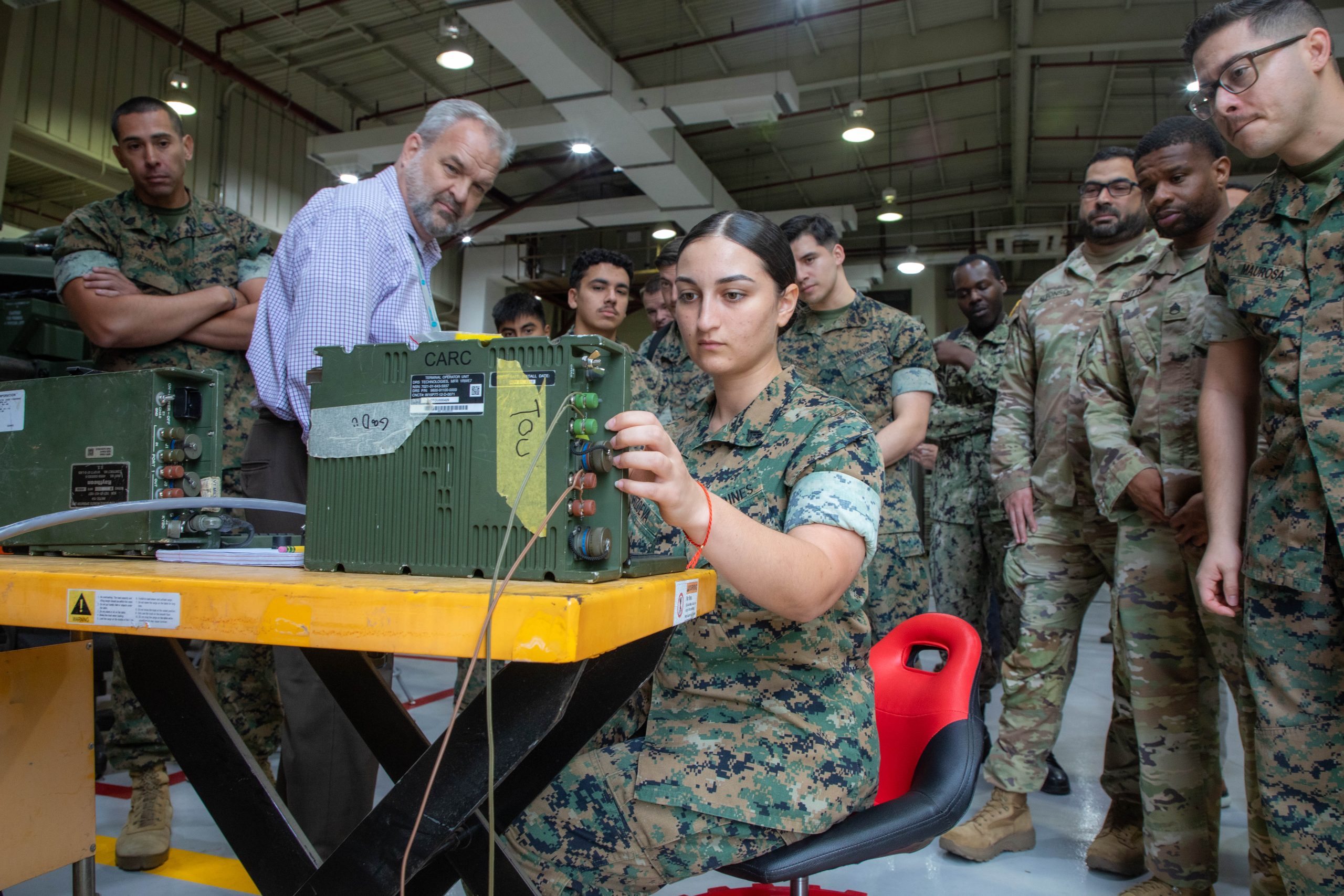

WASHINGTON — The U.S. Air Force has increased by $2 billion the value of a contract with Raytheon to produce and sustain terminals that connect aircraft, command posts and other platforms to the military’s most secure satellite communications network.
The Strategic Communications Division of the Air Force Nuclear Weapons Center announced March 13 that it raised the ceiling of an existing contract for Advanced Extremely High Frequency terminals by $2 billion over five years. The contract was originally awarded to Raytheon in 2021 with a ceiling value of $960 million. With the latest increase, the contract’s total potential value approaches $3 billion.
The Strategic Communications office manages acquisition and sustainment of communications systems used in the U.S. nuclear command, control and communications enterprise, known as NC3. That architecture enables the president and senior military leaders to transmit orders and maintain contact with nuclear forces under any circumstances, including during a conflict involving nuclear weapons.
Within that system, satellite communications are one of the primary pathways for transmitting secure messages between national leadership and operational forces.
The contract covers the terminal segment of that architecture — equipment installed on aircraft, ground stations and command posts that allows them to connect to the Advanced Extremely High Frequency constellation.
AEHF satellites provide highly encrypted, jam-resistant communications links designed to operate in contested environments. The network forms the backbone of the Pentagon’s protected satellite communications architecture and is used for sensitive missions including nuclear command and control.
The AEHF-T program is not a single piece of hardware but a category covering multiple types of user terminals that access the satellite network. The Raytheon contract supports production, integration and sustainment of those systems.
One of the largest is the Family of Advanced Beyond-Line-of-Sight Terminals, known as FAB-T. These airborne terminals provide protected communications for strategic aircraft that must remain connected to national leadership in a crisis. The systems are integrated on military aircraft such as the E-4B Nightwatch and the B-52 Stratofortress, allowing those platforms to exchange encrypted voice and data through AEHF satellites even in heavily jammed environments.
Raytheon has produced FAB-T terminals since 2014 after winning the work from Boeing, the previous contractor.
Another system supported under the AEHF-T contract is the Secure Mobile Anti-Jam Reliable Tactical Terminal, or SMART-T. These transportable ground terminals are used by deployable command posts and senior headquarters units to maintain secure satellite communications in the field. SMART-T was originally designed for the earlier Milstar satellite system but has since been upgraded to operate on AEHF.










Related Posts


Stay Informed With the Latest & Most Important News
Previous Post
Next Post




Advertisement
-
 01Two Black Holes Observed Circling Each Other for the First Time
 -
 02From Polymerization-Enabled Folding and Assembly to Chemical Evolution: Key Processes for Emergence of Functional Polymers in the Origin of Life
 -
 03Astronomy 101: From the Sun and Moon to Wormholes and Warp Drive, Key Theories, Discoveries, and Facts about the Universe (The Adams 101 Series)
 -
 04True Anomaly hires former York Space executive as chief operating officer
 -
 05Φsat-2 begins science phase for AI Earth images
 -
 06Hurricane forecasters are losing 3 key satellites ahead of peak storm season − a meteorologist explains why it matters
 -
 07Binary star systems are complex astronomical objects − a new AI approach could pin down their properties quickly