
Now Reading: Re-framing orbital debris: from a statistical to dosage approach
-
01
Re-framing orbital debris: from a statistical to dosage approach


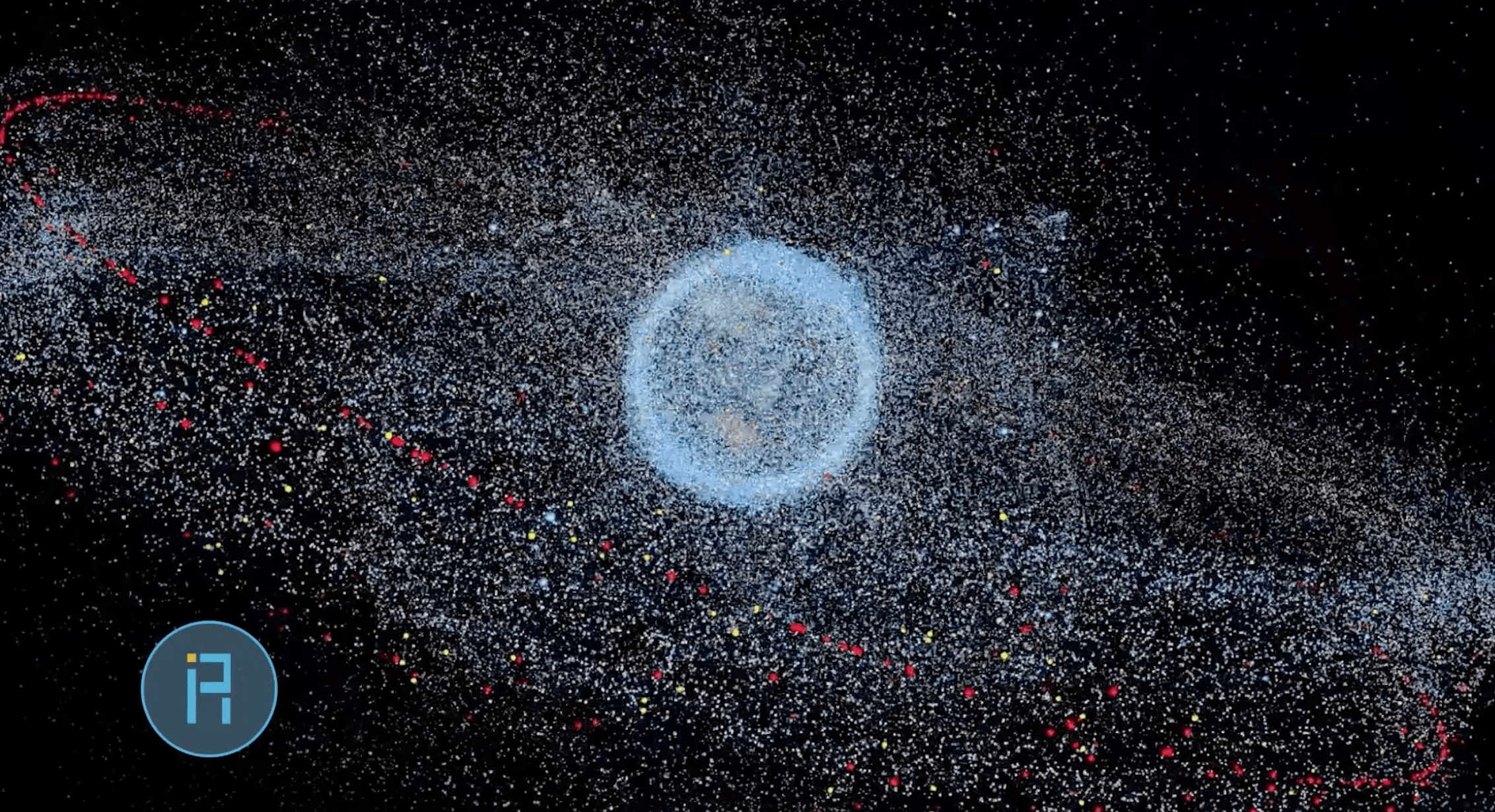

Humanity gains insight on how to operate in space with every satellite that we launch. True learning comes from doing; otherwise we lock into lab-born biases that come from asking the wrong questions. I think we are running into that limit with micrometeoroid and orbital debris (MMOD) collisions, and we are close to an industry-wide shift in how MMOD risk is considered and mitigated on future missions.
If the natural space environment were uniformly, prohibitively dangerous, we would have discovered that long ago. Sputnik would have been blasted out of the sky by meteoroids, comet tails and asteroid fragments. We discovered instead that space was somewhat stable, and developed engineering norms to mitigate against its most extreme characteristics of temperature, vacuum, and charge. What changed since the 1960s is traffic and a slow “polluting” with many millions of pieces of orbital debris. That is the modern MMOD environment.
Most smallsats do not carry dedicated debris protection systems. Orbital Debris Assessment Report (ODAR) analysis and the observed success of commercial operators, plus the instinct to copy what worked last time, have produced modest success. Satellites are small relative to orbital volume, and propulsion allows avoidance when a conjunction is identified. The “big hits” and spacecraft-on-spacecraft collisions feel tractable because we can track them. We can see them. Seeing is not just believing, but knowing, and we have decent instincts for how often to worry and which mitigations work.
Micro-MMOD is a different matter. It may be where the great mysteries lie. Micro-MMOD means the untracked population under 3 millimeters in size. It is the vast majority of objects in low Earth orbit (LEO) by count. If we cannot track them, how do we know they are there? NASA’s Long Duration Exposure Facility (LDEF) which flew between 1984–1990, was built to answer questions like that: fly standard materials and subsystems in LEO for years, then bring them home and let people put hands and microscopes on the scars. What we found was a messy, directional, high-flux environment. As NASA summarized: “Over 30,000 observable MMOD strikes were identified on the exterior of LDEF… approximately 20x more impacts on the forward face relative to the aft face, and 200x more on the forward than Earth-facing sides.” I fell out of my chair when I read that. Thirty thousand holes. Over 5.75 years, that is roughly 5,217 strikes per year at about 450 km altitude. LDEF’s exterior area was roughly 151.975 square meters, which works out to about 34 hits per square meter per year at historical debris levels. That was around 1990, when the population was roughly a third of today. Extrapolate crudely and you are in the neighborhood of 100 hits per square meter per year in busy LEO.
Could it be that modern ESPA-class satellites are getting pinged once or twice a day? When I share this, friends who run constellations cannot believe the number. In the same breath, they’ll say MMOD is not a significant driver and that they have no requirement to go beyond ODAR. How do we square that circle?
Part of the answer is that not all hits are equal. The viral hypervelocity videos that turn aluminum into confetti are accurate, but they are not the average case. LDEF’s majority holes were tiny, sub-millimeter punctures. MMOD strikes do not all look the same. Some are catastrophic, like the cinematic chain-reactions in “Gravity” (2014). Many are micro-perforations through structures, cloth or tanks. Those can still create secondary debris without killing a satellite. And because we seldom see what is happening in situ, failures get misattributed. How many satellites have quietly failed because of MMOD? How many MMOD signatures look a lot like proton hits? We should expect some of that confusion.
This is why I keep saying that video and sample return are prerequisites for honest MMOD risk assessment. Think like an epidemiologist. You are looking at particle populations and exposure, not just discrete conjunctions. Dosage matters. That makes MMOD risk feel a lot more like alpha and beta radiation risk. Both MMOD and these radiations are populations of particles you would prefer not to let into sensitive systems. If dosage is the right lens, then the proper protection strategy becomes clear: magnify protection around the systems you cannot lose, and centralize those systems so the protection can be efficient.
One of the industry’s enduring mysteries is why spacecraft fail. It is obscure by nature. We cannot walk out and tap a panel; we infer from telemetry, hundreds of kilometers away and sometimes many minutes late. I believe there is consistent misattribution in on-orbit failures. Some of what we call radiation, software or workmanship is really micro-MMOD and secondary effects. Both workmanship issues and MMOD would perturb hardware on a millimeter scale away from optimal, and a resulting failure between the two in space would look almost identical to each other from the ground. In practice, that misattribution matters most during deployment, where even a millimeter-scale perturbation, whether from micro-MMOD or marginal workmanship, can cascade into a failure that looks indistinguishable in telemetry but is catastrophic in outcome. Getting attribution right is especially important for solar array manufacturers like Atomic-6. Our business relies on customers’ confidence that we will not be the component that kills their mission. Since each separate part is another chance for errant workmanship or uncertainty to perform in the causal chain of successful deployment, we worked to reduce the parts count of our flagship solar array product, the Light Wing array, to an absolute minimum.
Secondary effects are the counterintuitive part. Metallic spacecraft generate debris every time they get hit, not only when they die and spray parts into traffic. Even if an MMOD particle does not penetrate a metallic skin, the spall and delamination can create fragments larger and more damaging than the original projectile. In some studies, that secondary fragmentation accounts for orders of magnitude more marks around the vehicle than the primary strike that started it. If an operator wanted to avoid generating fragmentation, they would need to avoid all metallic-based MMOD solutions for composite based ones. Composite-based MMOD do not eject hard micro MMOD fragments after getting hit, more effectively capturing the energy and self-preserving via its mesh.
If you are thinking, “But if we are getting hit hundreds of times per year, why are satellites not falling out of the sky every week?” — good question. MMOD may be less damaging than people assume on average, and far more damaging in the tails. That is a sign to deepen our mental model, not to shrug. Atomic-6 has been discovering counterintuitive challenges to the standard MMOD intuition, and we are building products to answer those challenges.
What does the future look like? By our approximation, the risk of debris creation events is going up. Defense Meteorological Satellite Program spacecraft have been “breaking up” years after decommissioning; 16 are still up there, and anyone’s guess is as good as mine on timing. Conflict dynamics in space mean more satellites, more dramatic maneuvers and more opportunities for mistakes. Interceptor concepts powered by solid motors are proliferating. Rendezvous and proximity operations introduce benefits and new, debris producing failure modes. Done well, RPO can reduce debris by extending maneuver lives. Done poorly, the approach and the touch can wreck a satellite. We are entering a moment where a step increase in capability could resolve the problem, and a lesser increase could exacerbate it.
In that kind of environment, protection is not only insurance; it becomes a competitive advantage. The most valuable time to have armor may be during a catastrophic debris event. If you ride through while others scramble, you are the one still providing coverage and service. Customers switch in moments like that. The best time to buy armor is before you need it. The second best is after a near-miss or a wake-up event, before you have to reconstitute a constellation in a far more crowded MMOD field.
Not all parts of a spacecraft are equally critical. Choosing the spots goes far. Make critical systems small and centralized, then wrap shielding — like our composite Space Armor tiles — on the ram side. Put it on true single points of failure — propulsion, communications, batteries, compute you cannot fail over. Protect your thermal protection system (TPS); a crack there can cascade into failure and loss of mission during reentry. Inspection and sensors can help find critical damage before reentry, and if you find it, you need a plan for TPS repair or rescue.
Active debris removal may come, and I hope it does. When we are there, we will likely have the tech base for off-world manufacturing too. Between here and there, the pragmatic path is clear: treat MMOD as dosage, put mass where flux and consequence intersect and make sure your shield does not become a fragmentation source.
Trevor Smith is the president and CEO of Atomic-6.
SpaceNews is committed to publishing our community’s diverse perspectives. Whether you’re an academic, executive, engineer or even just a concerned citizen of the cosmos, send your arguments and viewpoints to opinion (at) spacenews.com to be considered for publication online or in our next magazine. If you have something to submit, read some of our recent opinion articles and our submission guidelines to get a sense of what we’re looking for. The perspectives shared in these opinion articles are solely those of the authors and do not necessarily represent their employers or professional affiliations.










Related Posts
Stay Informed With the Latest & Most Important News



Advertisement
-
 01Two Black Holes Observed Circling Each Other for the First Time
 -
 02From Polymerization-Enabled Folding and Assembly to Chemical Evolution: Key Processes for Emergence of Functional Polymers in the Origin of Life
 -
 03Astronomy 101: From the Sun and Moon to Wormholes and Warp Drive, Key Theories, Discoveries, and Facts about the Universe (The Adams 101 Series)
 -
 04True Anomaly hires former York Space executive as chief operating officer
 -
 05Φsat-2 begins science phase for AI Earth images
 -
 06Hurricane forecasters are losing 3 key satellites ahead of peak storm season − a meteorologist explains why it matters
 -
 07Binary star systems are complex astronomical objects − a new AI approach could pin down their properties quickly