
Now Reading: Reliable space rescue is a prerequisite for continued economic opportunity in space and we have a long way to go
-
01
Reliable space rescue is a prerequisite for continued economic opportunity in space and we have a long way to go

Reliable space rescue is a prerequisite for continued economic opportunity in space and we have a long way to go

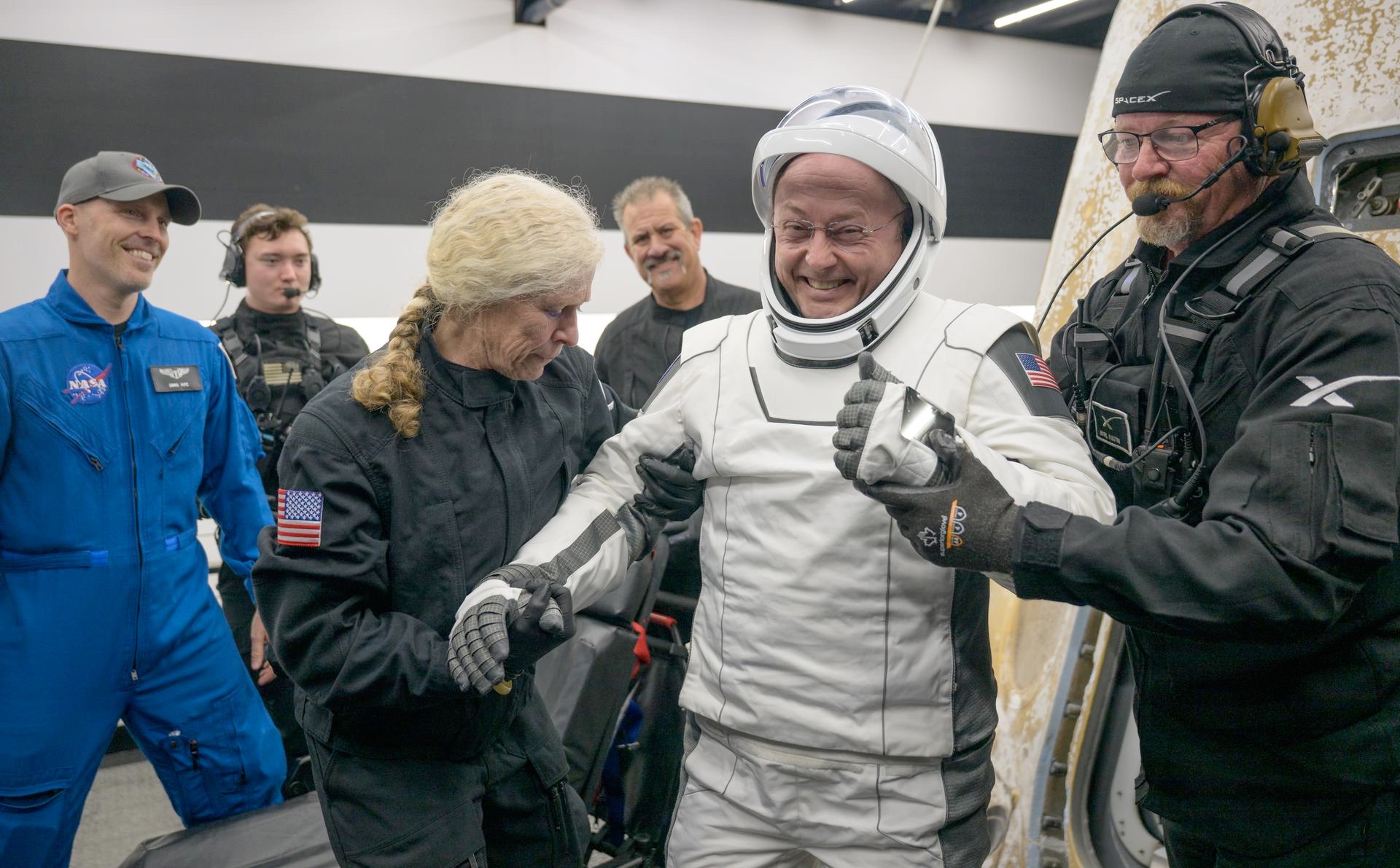

On January 15, 2026, a collective cheer coincided with relief as four astronauts from SpaceX Crew 11 were safely returned to Earth from the International Space Station (ISS). The evacuation came after a crew member experienced a medical emergency that left them in stable condition but in need of terrestrial medical care. The successful return mission came just ten months after the successful, albeit heavily delayed, return of American astronauts Suni Williams and Butch Wilmore after a nine-month stranding. With the crew safely on the ground and the stricken crewmember under care, the space community cheered the first emergency rescue of a crew from space.
Space rescue is a prerequisite for the continued growth of the space economy, particularly with a growing number of non-government missions and ambitions to fly crews outside of low Earth orbit (LEO). Future missions and habitations on the moon or Mars will inevitably encounter medical emergencies, equipment failures, resupply failures and a host of issues for which pre-planning is difficult. And the ability to reliably launch an on-demand space rescue effort is years, possibly decades away. The complexities of international, civil, military and commercial space flight create a web of stakeholders, decision makers, economic interests and international legal questions that make space rescue much more than an exercise in engineering.
The November 2025 rescue of stranded Chinese taikonauts from the Tiangong Space Station is often cited along with the rescue of the SpaceX Crew 11 astronauts as proof that space rescue can be done. These missions were impressive but were of government astronauts on a government-funded space station and were rescued with government funded programs in LEO. A space rescue of a purely commercial craft beyond LEO is far more difficult and is something for which the space economy is not prepared.
While the space economy talks about its potential trillions of dollars in economic value, it often misses the prerequisites. Several of my previous articles call for infrastructure in space that can be used to facilitate and de-risk future economic missions beyond LEO. A significant part of that infrastructure is a consistent and reliable space rescue capability that can intervene in the event of dangers to human life. Right now, no such capability exists even though the first rescue was executed successfully. Governments with interest in facilitating economic value in space must plan and build a space rescue capability as part of their space infrastructure plans. The failure to do so will result in much less uplifting headlines than what we saw in January 2026 — and potentially set back the space industry for years.
Timing a rescue mission
My career began in the Navy aboard an amphibious ship that carried aircraft. When launching aircraft at sea, the Navy always has a search and rescue helicopter in the air and other aircraft ready to launch at a specific interval. For example, the “ready 5” aircraft is an aircraft that is ready to launch within five minutes. The ready 5 must have pilots inside the aircraft, be filled with fuel and have whatever armaments it requires for its mission so that if it is called, it can quickly be airborne.
One of the first considerations around space rescue is how quickly one would need to be launched. In the case of SpaceX Crew 11, the medical issue was identified eight days before the crew’s return. In this specific situation, this timeline worked because of the level of emergency, but that may not be the case during a more urgent emergency in the future. To be effective and reliable, a future space rescue capability would need to be on standby, ready to launch in a given window of time much the way Naval aircraft are positioned. It would not be in a matter of minutes like the ready 5, but there would need to be a rocket, specific supplies, a crew and fuel that could be quickly consolidated for a rescue mission.
The interval at which a space rescue vehicle would need to be ready to launch is also a matter of debate. Space rescue would need to be broken into categories based on the level of emergency faced. Some of these, among others, could be:
- Imminent threat to human life.
- Threat to human life, stable condition.
- Catastrophic outage of critical systems.
- Uncorrectable trajectory problem.
There will be a significant technical and policy challenge to determine what the right launch interval needs to be and under what circumstances, because the technical and economic requirements of a rescue launch would depend on how quickly the craft needs to be airborne.
Cargo
Assuming the technical capabilities and funding are available and that launch intervals are decided, the cargo of a rescue craft is another complex question. Currently, there are many varieties of spacecraft built by different governments and commercial companies that conform to their specific needs. Those craft are equipped with specific systems that have specific technicians, software and hardware. The simple task of bringing the right tools and repair parts creates a huge number of challenges that could be the difference between life and death in a rescue situation. The lack of interchangeable parts and growth of incompatible systems builds upon an already complex environment in the ability to execute a successful space rescue regularly.
In space launch, every kilogram counts and what tools, equipment, and medical supplies that are brought on the mission will make a difference toward the sustainability of the rescue capability.
Personnel
Similar to the challenges of packing the right equipment, the right personnel also matter for the success of a mission.
Given that a rescue mission of a stricken craft would be a dangerous operation, the personnel aboard the rescue craft would need to be highly skilled across different spacecraft types and areas of expertise, such as medical support, piloting, communications, and engineering or repair. Astronauts are inherently highly skilled individuals, but the development of a space rescue capability requires the development of a highly specialized workforce of astronauts and problem solvers on the ground. The complexity of maneuvers, potential to need to land or dock at a fouled or unprepared location and the need to make quick decisions in rescue environments is new and will require specific training. So will the individuals charged with emergency repairs of highly diverse and potentially incompatible systems and the medical personnel.
Policy questions
There are significant questions over what country or countries or private entities should bear the cost for a space rescue capability. The 1967 Rescue Agreement outlines the responsibilities of states to assist astronauts in distress by rescuing and returning them safely to Earth. At the time of its signature, the Rescue Agreement only applied to a very small number of countries that were actively flying in space and their crews. Today, the Rescue Agreement applies much more broadly than it was intended, given that commercial entities from several more countries are operating in space. As these commercial activities expand, the need for consistent and reliable space rescue capabilities is likewise expanding and would be covered under the Rescue Treaty.
How governments begin to think about space rescue must be framed by their obligations under the Rescue Agreement and/or the Artemis Accords if they are a signatory. The decision to host a space rescue capability on one state’s sovereign territory could obligate them to launch if any craft is in peril in LEO or beyond. The determination on this topic would heavily influence a state’s willingness to host a space rescue capability at all, making the technical and personnel exercises potentially moot.
Incentivizing the creation of reliable space rescue capabilities requires a view of them as common use infrastructure, much like future infrastructure beyond LEO. This will require international cost sharing, staffing, training, launch and landing capabilities, which currently falls outside the scope of most international cooperation between global powers. Anything less risks uneven bearing of costs and outsized liabilities falling on one state.
Another significant question would be how the costs are distributed between government and private entities. If an emergency requiring a launch of a space rescue capability was the result of a commercial activity, to what extent does the commercial entity pay the rescue costs and how are those payments made? If a Brazilian company with Indian astronauts requires rescue from a Chinese state-owned rescue launch, how are those costs handled? The safety of astronauts is paramount and obligated under treaty, but the sustainability of hosted space rescue capabilities depends on how we answer questions like these.
Commercial companies launching missions into cislunar space and beyond should not plan to receive government rescue in the event of a problem. This burden will stifle the space economy faster than any regulatory regime because it will rely on taxpayer funding to de-risk and rescue future commercial missions. Instead, the space economy could adopt a model where it insures itself the way the FDIC insures banks. Space companies would pay into a fund that would be managed by the government and would be used in the event of a commercial rescue mission when the treaty and financial obligations are complex. This model would provide more assurance to investors and government regulators alike and open the door to cislunar missions.
The successful rescue of the SpaceX Crew 11 crewmembers was worth celebrating, but it should also cause the space community to critically evaluate space rescue in LEO and beyond. Technical, cargo, personnel and policy questions beckon to build the common use infrastructure required to realize the full scope of economic opportunity in space. Commercial companies and governments with interests in space economic growth should work jointly to develop proposed answers to the policy questions and develop the technical responses to the others. The need to launch rescues is growing and the community should address these problems before it is unable to meet the need of a future space emergency.
Nick Reese is the COO of Optica Labs, an artificial intelligence assurance company based in Washington DC. He was the director of emerging technology policy at the U.S. Department of Homeland Security from 2019 to 2023 and is a professor of emerging technology at the NYU Center for Global Affairs.
SpaceNews is committed to publishing our community’s diverse perspectives. Whether you’re an academic, executive, engineer or even just a concerned citizen of the cosmos, send your arguments and viewpoints to opinion (at) spacenews.com to be considered for publication online or in our next magazine. If you have something to submit, read some of our recent opinion articles and our submission guidelines to get a sense of what we’re looking for. The perspectives shared in these opinion articles are solely those of the authors and do not necessarily represent their employers or professional affiliations.










Related Posts

Stay Informed With the Latest & Most Important News
Previous Post
Next Post


Advertisement
-
 01Two Black Holes Observed Circling Each Other for the First Time
 -
 02From Polymerization-Enabled Folding and Assembly to Chemical Evolution: Key Processes for Emergence of Functional Polymers in the Origin of Life
 -
 03Astronomy 101: From the Sun and Moon to Wormholes and Warp Drive, Key Theories, Discoveries, and Facts about the Universe (The Adams 101 Series)
 -
 04True Anomaly hires former York Space executive as chief operating officer
 -
 05Φsat-2 begins science phase for AI Earth images
 -
 06Hurricane forecasters are losing 3 key satellites ahead of peak storm season − a meteorologist explains why it matters
 -
 07Binary star systems are complex astronomical objects − a new AI approach could pin down their properties quickly