
Now Reading: Return of the (space) SPAC
-
01
Return of the (space) SPAC


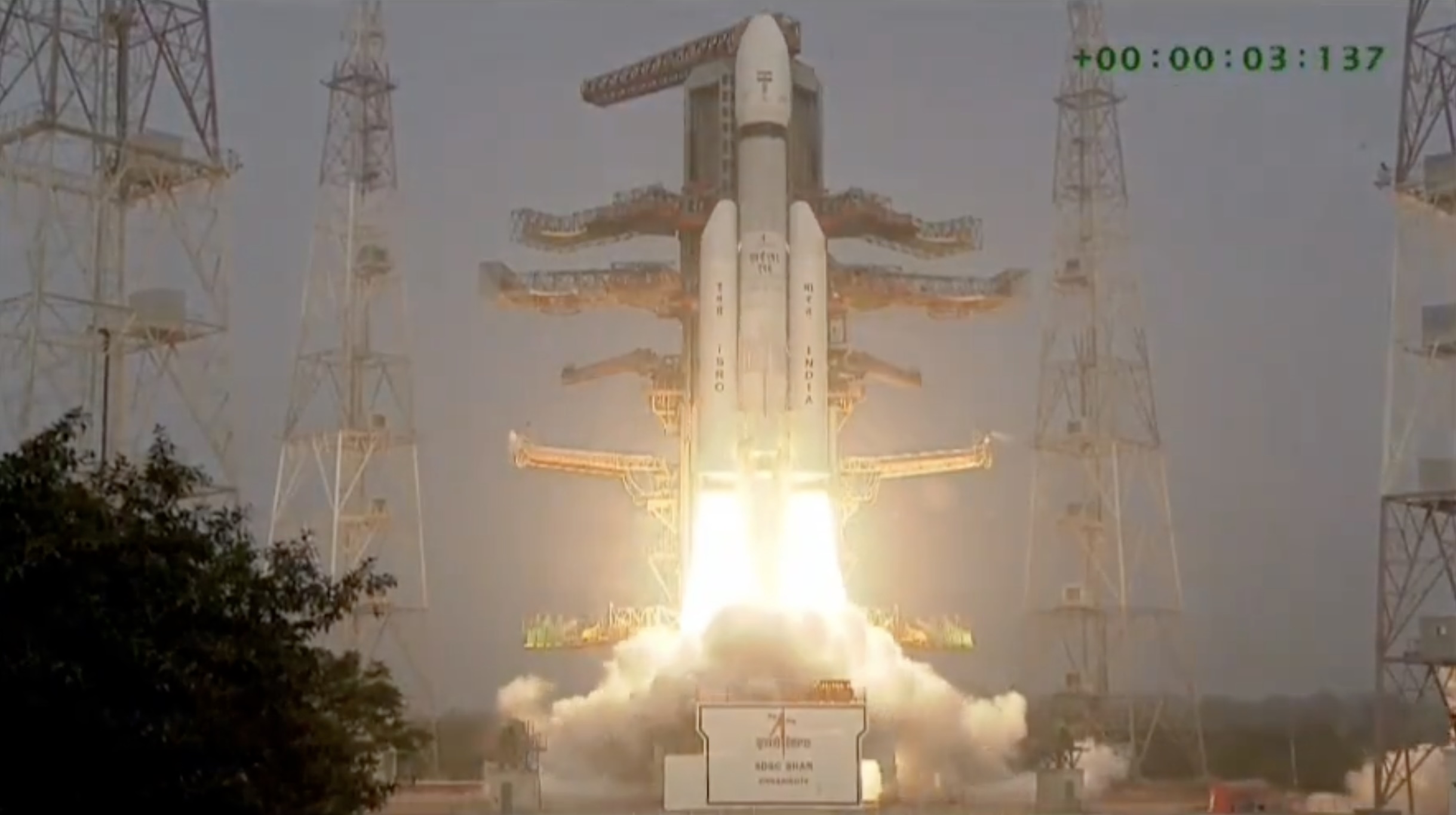

Former investment banker Raphael Roettgen had to abandon a space-focused special purpose acquisition company in 2022 as hype around mergers with blank-check shell companies turned radioactive. Four years later, he’s back after helping raise more than $200 million to take a private space company public.
SPACs raise cash on the stock market and then use it to merge with a private firm, offering investors an early stake in a future listing while giving that business a faster, more flexible alternative to a traditional initial public offering.
In the run-up to tighter regulatory scrutiny introduced a few years ago, SPAC merger candidates could also publish detailed long-term forecasts to drum up investor support.
Many of those financial targets went largely unmet in the space industry, leaving investors with burnt fingers and sending SPACs into retreat.
However, there are signs that activity is picking up again. In July, iRocket agreed to merge with a SPAC backed by former U.S. Commerce Secretary Wilbur Ross to help develop its reusable launch vehicle. And in January 2026, a SPAC chaired by Roettgen, who is also the founding partner of early-stage space investor E2MC, listed on the Nasdaq with a 24-month deadline to find and merge with a space-related business.
Space SPACs “do seem to be inching back,” satellite industry analyst Armand Musey said, though it’s too early to say whether the trend is here to stay.
“It would be hard to imagine that investors have such short-term memories,” he added.
Roettgen does not dispute the hangover. Some mergers, he said, were executed irresponsibly and destroyed investment value, leaving the SPAC financial tool itself “delegitimized” for a time.
But SPACs are a cyclical financial instrument that tends to re-emerge every few years, he added, arguing that the space sector is now far more mature than it was during the last boom.
Roettgen previously served as co-chief executive of Space Acquisition Corp. I, which outlined plans in 2021 to raise $300 million to merge with a space company, but withdrew its offering a year later as appetite for SPACs dwindled.
“There just weren’t a lot of space companies around that were ready for the public markets,” he said, pointing to gaps in revenue maturity, governance structures and accounting infrastructure at the time.
“In 2021, the space sector I think was a lot about vision and future revenues at some point in time,” he said.
There is still plenty of lofty ambition in early 2026, he added, but there is now a broader consensus on just how critical space capabilities are in areas such as national security.
Many more companies have “real revenues — and at times even cash flow,” Roettgen said, “so the universe of SPAC-able space companies, in my opinion, is just much larger.”
His new SPAC, Space Asset Acquisition Corp., went public with about $230 million in trust for a potential merger, subject to potential shareholder redemptions down the line.
SPAC trusts are also often supplemented with additional private financing when a merger is in full swing.
Tapping deeper pools of capital will be increasingly important as space ambitions expand, Roettgen said, particularly under a U.S. executive order signed late last year aimed at strengthening American leadership and competitiveness in the sector.
“To put that into action, it’s going to require significant capital,” he said, with public markets set to form a key plank of that effort.
“We do have a significant amount of capital in the private markets now,” he added, pointing to the massive financing rounds already completed this year, “but nothing rivals the depth of the public markets” and the ability to keep tapping them for funds once listed.
Roettgen contends a well-structured SPAC should also offer more than capital, highlighting how Space Asset Acquisition Corp. has assembled a team with deep sector knowledge in addition to Wall Street deal-making expertise.
“We’re playing a longer-term and repeat game here,” he said. “We’re not here to make a quick buck on the SPAC. We’re here to create, hopefully, substantial value for all of our shareholders, both current and future.”
Of course, not all space companies that emerged from the last SPAC cycle have struggled in the public markets. Direct-to-smartphone satellite startup AST SpaceMobile, for instance, has become one of the most highly valued publicly traded space companies, even as many of its peers trade well below their merger-era highs or no longer trade at all.
This article first appeared in the March 2026 issue of SpaceNews Magazine.










Related Posts
Stay Informed With the Latest & Most Important News
Previous Post
Next Post



Advertisement
-
 01Two Black Holes Observed Circling Each Other for the First Time
 -
 02From Polymerization-Enabled Folding and Assembly to Chemical Evolution: Key Processes for Emergence of Functional Polymers in the Origin of Life
 -
 03Astronomy 101: From the Sun and Moon to Wormholes and Warp Drive, Key Theories, Discoveries, and Facts about the Universe (The Adams 101 Series)
 -
 04True Anomaly hires former York Space executive as chief operating officer
 -
 05Φsat-2 begins science phase for AI Earth images
 -
 06Hurricane forecasters are losing 3 key satellites ahead of peak storm season − a meteorologist explains why it matters
 -
 07Binary star systems are complex astronomical objects − a new AI approach could pin down their properties quickly