
Now Reading: Revolutionising astronaut fitness for deep space missions
-
01
Revolutionising astronaut fitness for deep space missions



16/01/2026
687 views
21 likes
As we prepare for missions beyond Earth orbit, one crucial challenge remains: keeping astronauts healthy in microgravity. Without daily exercise, their muscles, bones and cardiovascular systems weaken, which could impact mission success and astronaut safety, especially in destinations such as the Moon or Mars, where crew will have to operate autonomously immediately after landing.
This is why ESA has developed the European Enhanced Exploration Exercise Device (E4D) – a compact, versatile in-flight exercise system designed to ensure astronauts stay strong and ready for the physical demands of returning to Earth or working on other planetary surfaces.
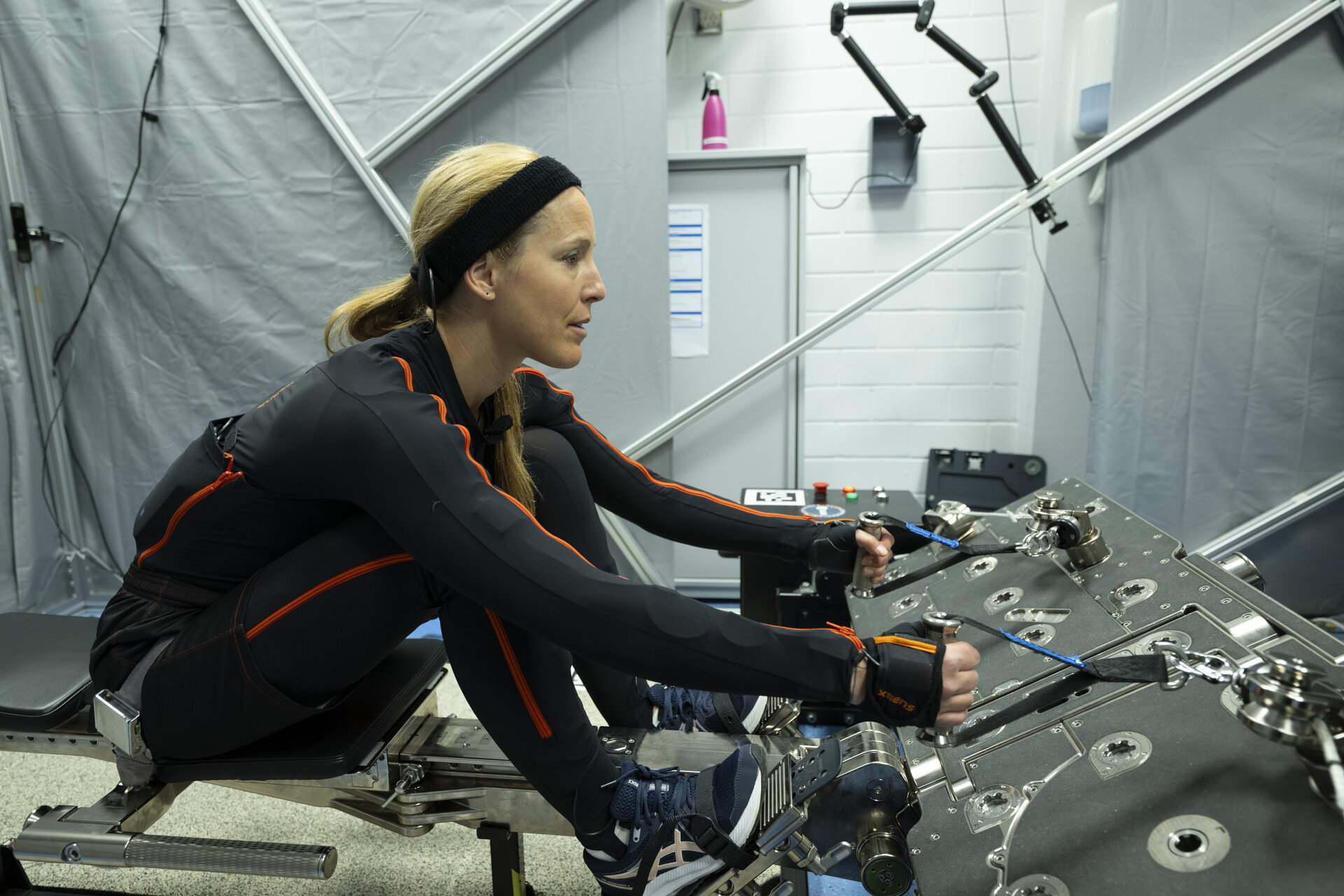
E4D combines four exercise modes: resistive training, cycling, rowing and rope pulling, offering a wide range of workouts and the flexibility to add new ones later.
“E4D is a gamechanger for astronaut health. By enabling a broader and more adaptable range of resistance exercises, it supports the preservation of muscle mass and bone integrity in microgravity which are two of the biggest physiological challenges during long‑duration missions,” says ESA’s E4D principal investigator Tobias Weber.
“Just as important is E4D’s self‑monitoring capability. Using an integrated camera-based motion capture system, it allows astronauts to track their performance, evaluate their movement execution and self‑correct posture in real time. This reduces reliance on ground supervision and helps ensure that every training session remains safe, precise and effective, even in the demanding environment of orbit,” adds Jennifer Struble, ESA’s Operations Team Lead for E4D and Co-Investigator.
“E4D is a system I’m really looking forward to using during the εpsilon mission. I really enjoy exercising for both physical and mental well-being and since it’s especially important to protect our bones and muscles in microgravity, I’m excited to try the new workouts made possible in space thanks to this European technology,” says ESA astronaut Sophie Adenot, who is now practising with E4D on the ground as part of her mission preparations.
Bringing gym-style training to space
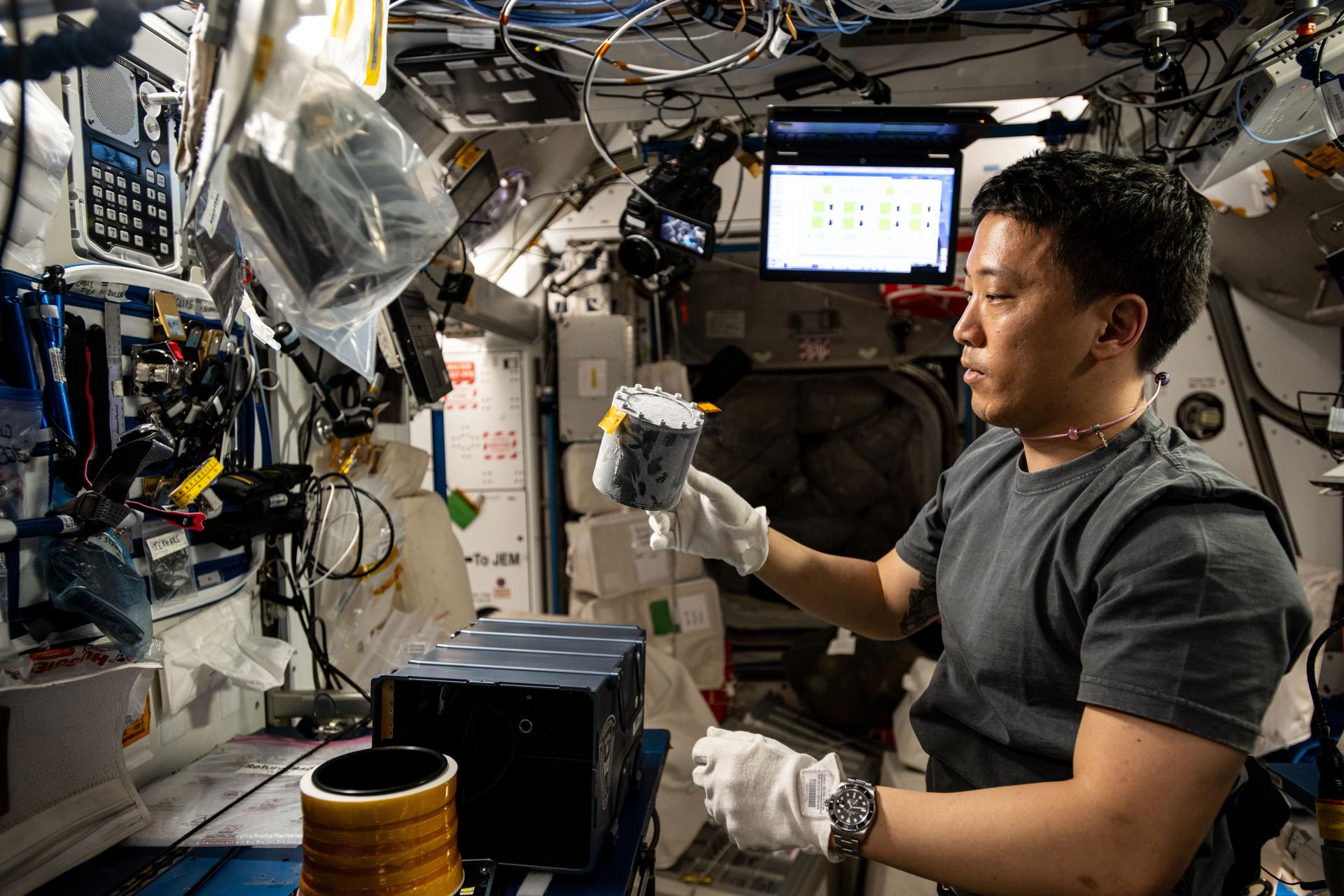
E4D lets astronauts perform over 30 strength exercises and up to 100 different variations of which many have never been performed in microgravity before. It supports loads up to 270 kg and can adjust effort during lifting or lowering phases, making workouts harder or easier as needed.
E4D’s cycling feature uses power-based resistance that ensures astronauts train at a set effort level, creating a realistic biking experience. It supports very intense cycling sessions at high speeds and even custom workout profiles like simulating a mountain climb or a Tour de France stage, which adds to the versatility of our in-flight exercise portfolio.
The rowing tool mimics commercial rowing machines with flywheel resistance and adjustable intensity, while rope pulling provides aerobic and strength training for upper body muscles needed in emergency scenarios, such as pulling a crew member from a capsule.
Beyond physical health, E4D is also a research platform. By comparing space-based exercise data with ground tests, scientists can study how microgravity affects performance and recovery, optimising and refining countermeasures for long-duration missions beyond low Earth orbit.
E4D’s motion capture
A key innovation is E4D’s motion capture system, which ensures safe training and injury prevention.
Four cameras installed in Columbus track astronaut movements, identify anatomical landmarks and send real-time data to Earth. Astronauts see themselves as an avatar on a tablet for posture correction, while plug-and-play artificial intelligence instantly recognises body parts and transmits data for analysis.
Future upgrades could integrate machine learning and virtual reality for enhanced crew feedback. In time, exercise specialists will be able to use a virtual‑reality headset to share the same virtual space as their crewmember, even while separated by thousands of kilometres between Earth and space.
Exercising in the future
Future missions to the lunar Gateway will face space constraints compared to the International Space Station. Existing exercise machines are too heavy and bulky to fit, so E4D offers a smaller, more efficient alternative. The current version is a technology demonstrator, paving the way for even smaller, more compact models in the future.
Scheduled to arrive on the Space Station in April 2026 during ESA astronaut Sophie Adenot’s εpsilon mission, E4D will undergo installation followed by a technology demonstration phase where several crew members will test up to 100 exercise variations. The data collected during this phase will guide a future call for proposals to develop an even more advanced next-generation system.
Over the next two years, E4D will be integrated into the European Columbus module on the International Space Station, making it ESA’s largest payload in terms of size and operational responsibility.
Commissioned by ESA and developed by the Danish Aerospace Company (DAC), with motion capture technology provided by Qinematic from Sweden, E4D represents a major leap forward in astronaut health and mission readiness.
E4D is more than an exercise device – it’s a health safeguard, a research tool and a glimpse into the future of human space exploration. By combining compact design with cutting-edge technology, ESA is ensuring astronauts stay strong and safe as we venture farther into our Solar System.










Related Posts

Stay Informed With the Latest & Most Important News
Previous Post
Next Post
Advertisement
-
 01Two Black Holes Observed Circling Each Other for the First Time
 -
 02From Polymerization-Enabled Folding and Assembly to Chemical Evolution: Key Processes for Emergence of Functional Polymers in the Origin of Life
 -
 03Astronomy 101: From the Sun and Moon to Wormholes and Warp Drive, Key Theories, Discoveries, and Facts about the Universe (The Adams 101 Series)
 -
 04True Anomaly hires former York Space executive as chief operating officer
 -
 05Φsat-2 begins science phase for AI Earth images
 -
 06Hurricane forecasters are losing 3 key satellites ahead of peak storm season − a meteorologist explains why it matters
 -
 07Binary star systems are complex astronomical objects − a new AI approach could pin down their properties quickly