River deltas are sinking faster than the sea is rising

editoresa8 hours ago3 Views


ESA – River deltas are sinking faster than the sea is rising


Applications

17/02/2026
380 views
13 likes

Earth’s river deltas, home to about 5% of the global population and some of the world’s major cities, are experiencing subsidence, which exacerbates the risks from sea-level rise. The Copernicus Sentinel-1 mission has captured a decade’s worth of data showing land sinking faster than previously thought.

Ten of the world’s 34 biggest cities are built on river deltas and as such, these low-lying lands are often home to key infrastructure such as transport hubs that support trade links. They are also critical rural and ecological zones that support both agriculture and biodiversity.

Some of the major delta cities include Kolkata (in the Ganges river delta), Alexandria (Nile), Shanghai (Yangtze), Bangkok (Chao Phraya), Ho Chi Minh City (Mekong) and New Orleans (Mississippi). These cities and their surrounding lowlands are on the frontline of climate change. But until now scientists have lacked consistent, global data on how fast deltas are actually sinking.

Deltas face double risks

The extent of subsidence on a global level, and the reasons behind it, are analysed in a study, published on 14 January in Nature.

Using a decade of radar observations produced by Copernicus Sentinel-1, the researchers mapped surface elevation changes across 40 major river deltas worldwide. The results are striking: more than half of the deltas studied are subsiding at rates faster than 3 millimetres per year. This means that subsidence is a huge challenge for delta regions – posing a risk potentially even greater than current rates of global sea-level rise.

The interactive global map (below) shows the rate of land subsidence in global deltas. Each circle represents the location of the 40 deltas evaluated in the study. Each one is colour-coded by the average land subsidence rate. 

 

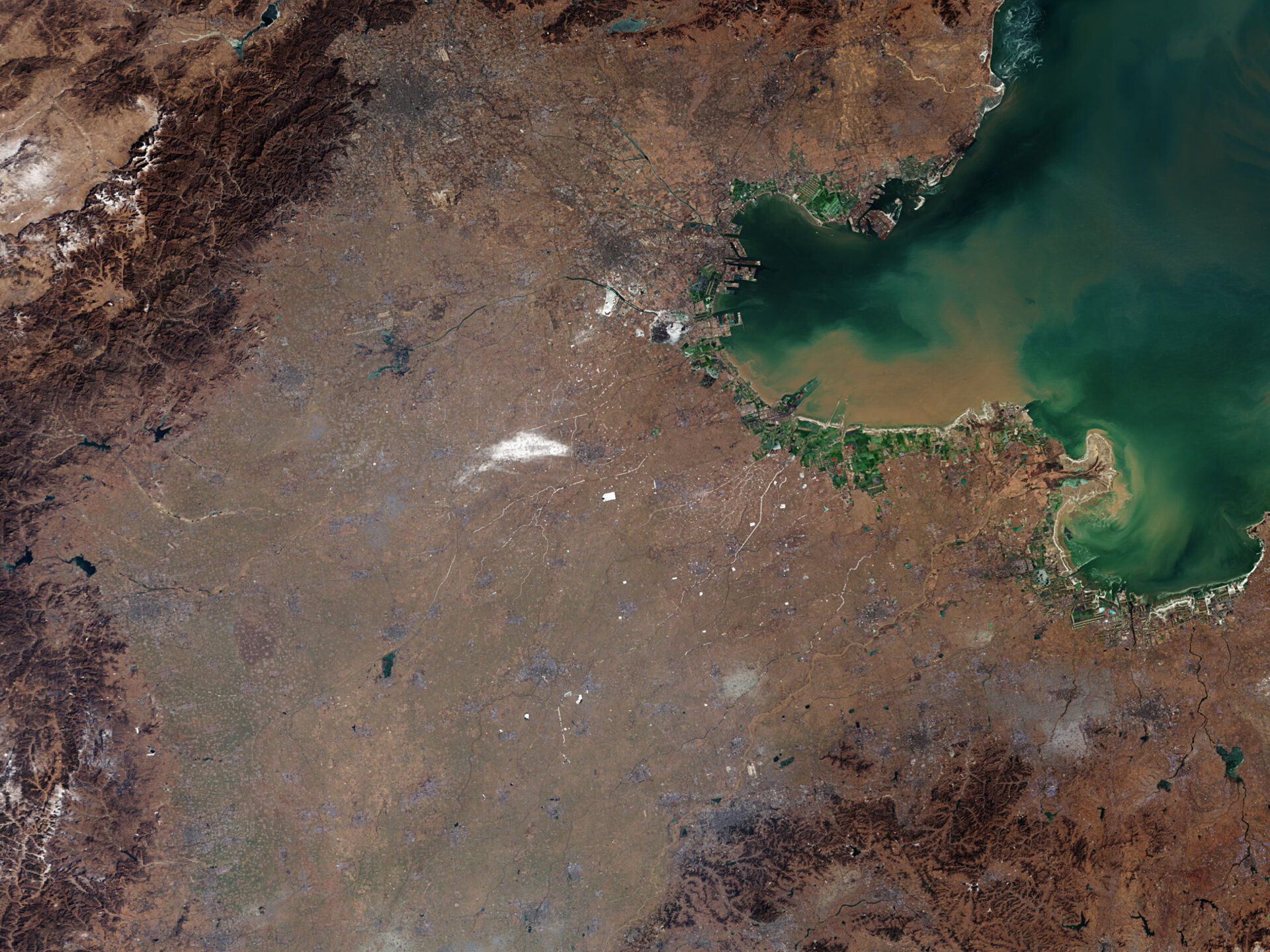
In deltas such as the Chao Phraya in Thailand, the Mekong in Vietnam and the Yellow River in China, sinking land is now the dominant driver of relative sea-level rise. This dramatically increases their vulnerability to flooding, land loss, saltwater intrusion and storm surges.

The research examined all major river deltas with a population of more than 3 million people, as well as historically recognised sinking deltas and some less-studied regions. Often just a metre or two above sea level, the land elevation in deltas can change during natural processes such as sediment distribution or land erosion, as well as due to vertical land motion (VLM), which is upward or downward movements of the Earth’s crust.

Human activity drives subsidence

However, the study identifies several areas of human activity that are accelerating the loss of elevation in the 40 deltas studied. These include:

  • excessive groundwater extraction,
  • oil and gas exploitation,
  • land-use changes associated with urbanisation and agriculture, and
  • changes in sediment deposition caused by upstream activities such as dams.

This is exemplified by the finding that deltas with higher urban population growth tend to have higher rates of subsidence. Examples given in the study include: Yellow River, Po, Nile, Chao Phraya and Mekong deltas.

The study highlighted that coastal cities such as Alexandria, Bangkok, Dhaka, Kolkata, Shanghai, Yangon, Can Tha, Thai Binh, Niigata, Jakarta, Surabaya and Dongying are all experiencing above-average rates of subsidence.

River deltas at risk: Chao Phraya, Mekong and Yellow River

Populations at risk

River deltas make up less than 1% of Earth’s land surface and yet they are home to as many as 500 million people globally. And of the 76 million people living in delta areas with an elevation below 1 m, 84% (63.7 million people) reside in rapidly sinking areas of the deltas, placing them, their homes and their livelihoods at risk.

While deltas in Asia are more exposed to subsidence risk, the study included deltas and cities globally. In North and South America, the Amazon and the Mississippi deltas are among the seven deltas that account for more 57% of total subsidence. The other five were the Nile in Africa and the Ganges-Brahmaputra, Mekong, Yangtze and Irrawaddy deltas, all in Asia.

Lead author of the study, Leonard Ohenhen, Assistant Professor at the Department of Earth System Science, University of California, Irvine, said, “Our analysis shows that current average subsidence rates exceed geocentric sea-level rise in 18 of the 40 deltas studied, and in a few deltas even projected sea level rise at the end of the century. These results call for targeted interventions to address subsidence, in parallel with broader efforts to mitigate and adapt to climate change-driven global sea-level rise.”

Detecting subsidence from space

The study analyses high-resolution datasets of changes in surface-elevation. The data is from the Copernicus Sentinel-1 mission, which has been in orbit since 2014 and has recently celebrated 10 years of producing essential data. The Sentinel-1 satellites carry a synthetic aperture radar (SAR) instrument, which captures interferometric SAR measurements (InSAR). These detect minute changes in land surface, including ground level displacement, making it an ideal detector of land subsidence.

The complete archive of the Sentinel-1 SAR dataset between 2014 and 2023 was analysed using advanced multitemporal InSAR analysis, which provides information about changes in surface elevation, as well as the vertical land motion of Earth’s crust.

Copernicus Sentinel-1D on its way to orbit

The European Space Agency’s Sentinel-1 Mission Manager, Nuno Miranda said, “This study demonstrates Sentinel-1’s unique capacity to provide uninterrupted, high-resolution, global InSAR measurements. It confirms the Sentinel-1 mission as an essential pillar of global climate and hazard science, proving that systematic SAR observations are key for quantifying subsidence drivers and guiding sustainable adaptation strategies at global scale.”

Addressing delta subsidence alongside climate-driven sea-level rise will be critical to protecting some of the world’s most vulnerable and populous river delta regions in the decades ahead, and informing decisions on how these areas will be managed and protected in future.

Related Articles

Related Links

0 Votes: 0 Upvotes, 0 Downvotes (0 Points)

Leave a reply

Recent Comments

No comments to show.
Join Us
  • Facebook38.5K
  • X Network32.1K

Stay Informed With the Latest & Most Important News

[mc4wp_form id=314]
Categories

Advertisement

Loading Next Post...
Follow
Search Trending
Popular Now
Loading

Signing-in 3 seconds...

Signing-up 3 seconds...