
Now Reading: Rocket Lab delays Neutron debut to late 2026
-
01
Rocket Lab delays Neutron debut to late 2026


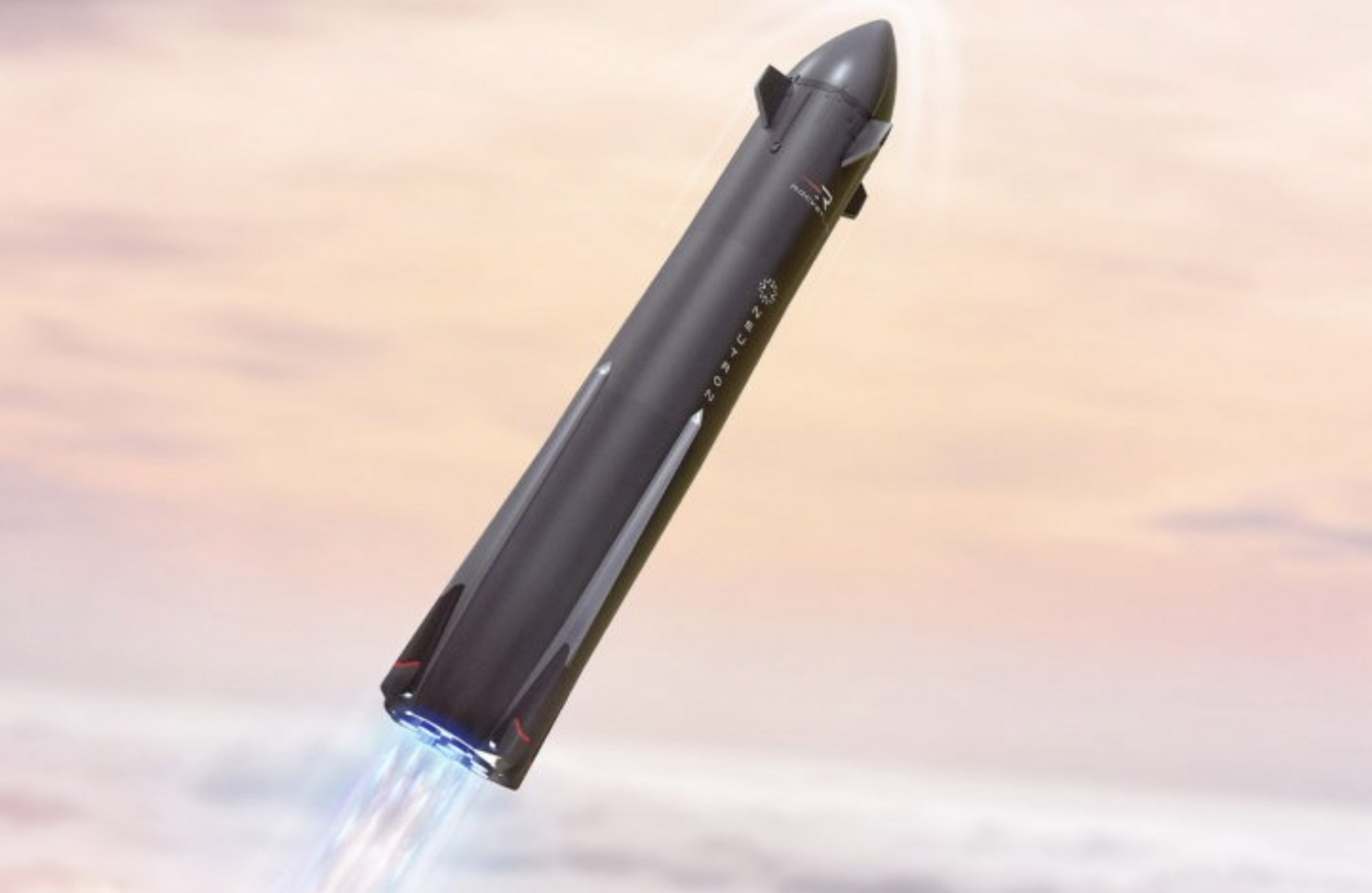

WASHINGTON — The failure of a propellant tank during testing in January will delay the first launch of Rocket Lab’s Neutron rocket to at least the fourth quarter of this year.
In a Feb. 26 earnings release, the company said it was pushing back the inaugural launch of Neutron after a first-stage propellant tank ruptured during testing Jan. 21.
Peter Beck, chief executive of Rocket Lab, said the tank burst during a hydrostatic pressure test at a company facility in Maryland. “I do want to point out that this was unexpected and, ultimately, we had anticipated that this tank would pass qualification,” he said.
“The tank did meet its anticipated flight loads, but as we prepared to open up the test bounds and push the pressures and loads beyond this to understand the margins and the structure, the tank let go earlier than we expected,” he said.
An investigation traced the failure to a manufacturing defect that reduced strength in a critical joint in the structure, a finding confirmed by both engineering analyses and testing. The defect came from the process of hand-laying the composite tank sections, done by a contractor.
The company had already planned to produce future tanks using an automated fiber placement machine that promises faster production while eliminating any chance of creating similar defects. Beck said Rocket Lab will also introduce “some minor design changes” into the tank design that will increase design margins and improve the ability to manufacture it.
“Once completed, the new tank will undergo an extensive test and qualification campaign to verify flight readiness, and we’re going to take our time with that process,” he said. “The priority will always be to bringing a reliable rocket to market, even if it means taking a few extra months.”
That extra work will push back the first launch to no earlier than the fourth quarter of 2026. Before the failure, the company said it expected to have the first vehicle on the pad in the first quarter, but had not specified when it would launch.
The company is continuing to work on other elements of the first Neutron and plans to use the extra time for more testing of those components.
“It just has given the other subsystem teams the opportunity to really fully exorcise all the demons, if you will, much more than they could have under the compressed time schedule that we were working towards,” Adam Spice, Rocket Lab’s chief financial officer, said on the call. “In some ways, the tank letting go will create certainly a lower risk test flight when that happens later this year.”
Beck, though, declined to say if the company could have achieved its previous goal of putting the first Neutron on the pad this quarter had the tank not failed. “The moment that happened, everybody just stopped what they were doing in a lot of senses to get onto the tank to figure out what went wrong.”
Electron demand
While Neutron faces delays, Rocket Lab says it is seeing strong demand for its existing Electron small launch vehicle. The company announced Feb. 26 a new contract with BlackSky for four dedicated Electron launches of that company’s Gen-3 imaging satellites.
The contract brings the number of Electron launches for BlackSky to 17 since 2019. Beck stated in the earnings call that Rocket Lab sold more than 30 Electron launches in 2025, including flights of the HASTE suborbital version of the rocket.
He said the contracts cement the company’s position as the leading provider of dedicated small satellite launches.
“It’s very clear when smallsat operators need a dedicated ride to orbit, they come to Rocket Lab, and we’re proud to hold this title and look forward to expanding the record again further this year,” he said.
He contrasted Rocket Lab’s success — the company performed 21 Electron and HASTE launches in 2025 — with the struggles of other small launch vehicle developers, noting that no American or European company successfully flew a new small launch vehicle in 2025.
That included being almost dismissive of European startups developing small launchers. “They’re certainly giving it a good college try, but not having tremendous success, I would say. That is just how difficult launch is,” he said.
Only one European newcomer, Isar Aerospace, attempted an orbital launch of a small rocket in 2025, with its first Spectrum rocket crashing shortly after liftoff last March. Isar and other European companies are working towards launches this year, although one leading player, United Kingdom-based Orbex, filed for bankruptcy earlier this month.
Rocket Lab said it expects to conduct more than the 21 launches it performed in 2025. “We’ve nominally pointed people towards 20% growth,” said Spice when asked about launch plans for 2026. “I think that is a pretty reasonable estimate for where we see this business growing over the near and intermediate to maybe long term.”
A 20% growth in launches would mean at least 25 Electron launches in 2026. “We’ve certainly given the production team direction to produce significantly more rockets in 2026 than in 2025,” he said.










Related Posts

Stay Informed With the Latest & Most Important News
Previous Post
Next Post



Advertisement
-
 01Two Black Holes Observed Circling Each Other for the First Time
 -
 02From Polymerization-Enabled Folding and Assembly to Chemical Evolution: Key Processes for Emergence of Functional Polymers in the Origin of Life
 -
 03Astronomy 101: From the Sun and Moon to Wormholes and Warp Drive, Key Theories, Discoveries, and Facts about the Universe (The Adams 101 Series)
 -
 04True Anomaly hires former York Space executive as chief operating officer
 -
 05Φsat-2 begins science phase for AI Earth images
 -
 06Hurricane forecasters are losing 3 key satellites ahead of peak storm season − a meteorologist explains why it matters
 -
 07Binary star systems are complex astronomical objects − a new AI approach could pin down their properties quickly