
Now Reading: Roman Space Telescope on track for September launch
-
01
Roman Space Telescope on track for September launch


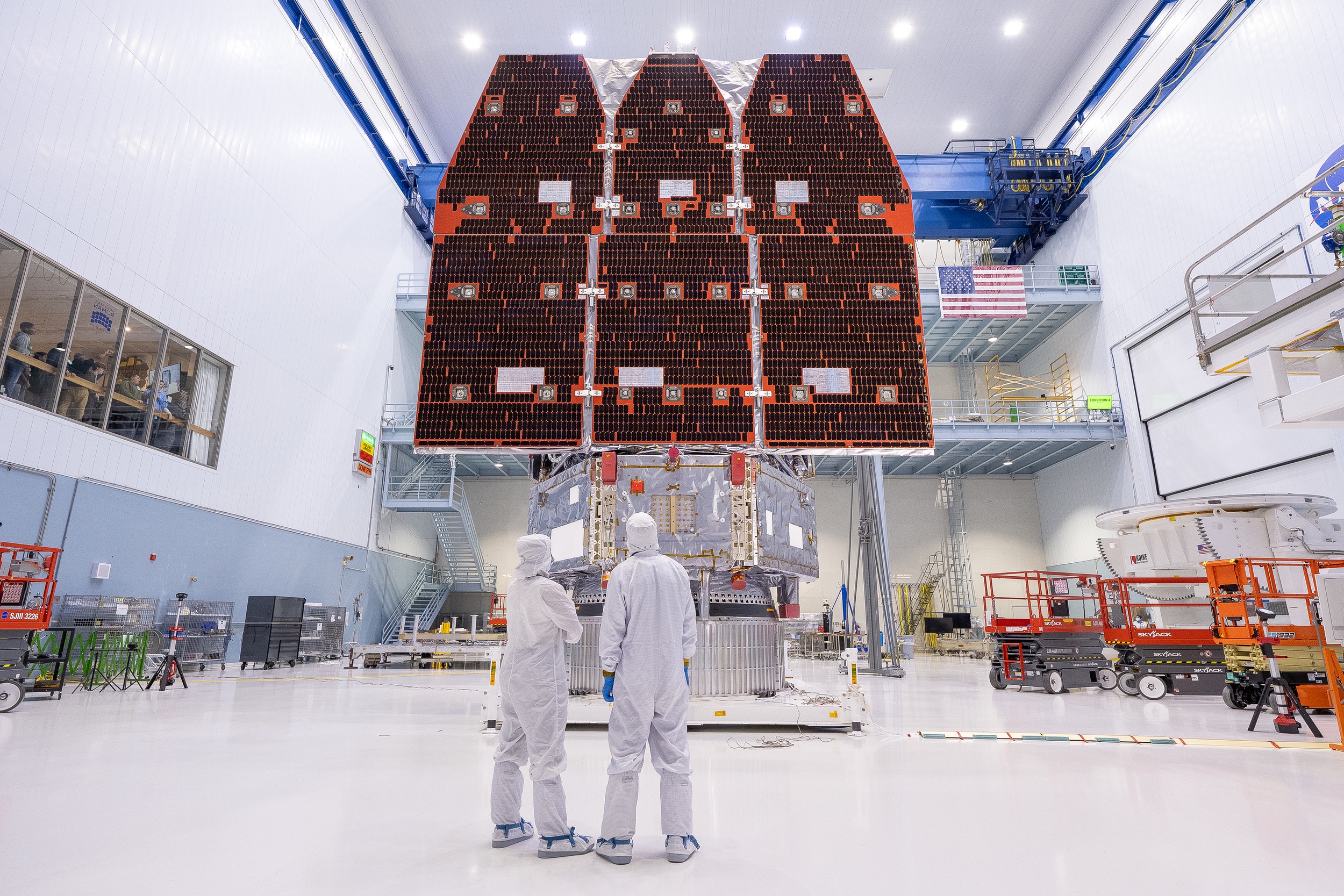

PHOENIX — NASA expects to launch the Nancy Grace Roman Space Telescope as soon as September, citing the mission as evidence the agency can do flagship major science missions on time and within budget.
During a town hall session at the 247th Meeting of the American Astronomical Society here Jan. 5, project officials said the spacecraft is entering final testing and launch preparations with no major issues.
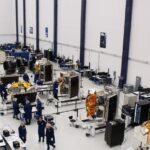
The telescope is fully assembled and housed in a clean room at NASA’s Goddard Space Flight Center. Vibration and acoustic testing are scheduled to begin in February, said Julie McEnery, Roman’s senior project scientist.
If those tests proceed as planned, the spacecraft will ship to Florida in June for launch on a SpaceX Falcon Heavy rocket. The launch is currently scheduled for Sept. 28.
“It’s really real,” McEnery said. “We’re at the finish line here.”
A late-September launch would be more than six months ahead of the mission’s formal launch commitment date of May 2027. The project also remains within its approved budget, with an estimated total lifecycle cost of $4.3 billion.
McEnery said the mission has met its cost and schedule targets without sacrificing performance.
“We have not made compromises. This mission meets or exceeds all science requirements,” she said. “The mission that we described at the mission confirmation review is the one that we built.”
Following launch, commissioning of the spacecraft and its instruments is expected to take about 90 days, after which the science mission will begin. Much of the town hall discussion focused on Roman’s planned surveys and how scientists will handle the large volumes of data the telescope will produce, rather than on spacecraft development itself.
Roman’s progress is significant for NASA, which has pointed to the mission as proof it has absorbed lessons from earlier flagship programs such as the James Webb Space Telescope. Webb experienced years of delays and billions of dollars in cost overruns, raising concerns about NASA’s ability to manage large science missions, even though it has since delivered major scientific results.
“The Nancy Grace Roman Space Telescope project is still not just on schedule but ahead of schedule and under budget. That’s incredible,” Shawn Domagal-Goldman, director of NASA’s astrophysics division, said during a separate agency town hall at the conference.
The project has stayed on track despite external challenges, such as the COVID-19 pandemic and two lengthy government shutdowns, including one last fall as spacecraft integration was nearing completion, he added.
“I don’t want to hear that we can’t do flagships on time and on budget,” he said. “The Roman team has proven that we can.”










Related Posts
Stay Informed With the Latest & Most Important News
Previous Post
Next Post
Advertisement
-
 01Two Black Holes Observed Circling Each Other for the First Time
 -
 02From Polymerization-Enabled Folding and Assembly to Chemical Evolution: Key Processes for Emergence of Functional Polymers in the Origin of Life
 -
 03Astronomy 101: From the Sun and Moon to Wormholes and Warp Drive, Key Theories, Discoveries, and Facts about the Universe (The Adams 101 Series)
 -
 04True Anomaly hires former York Space executive as chief operating officer
 -
 05Φsat-2 begins science phase for AI Earth images
 -
 06Hurricane forecasters are losing 3 key satellites ahead of peak storm season − a meteorologist explains why it matters
 -
 07Binary star systems are complex astronomical objects − a new AI approach could pin down their properties quickly