
Now Reading: Saltzman: Space ‘baked into’ modern combat operations
-
01
Saltzman: Space ‘baked into’ modern combat operations


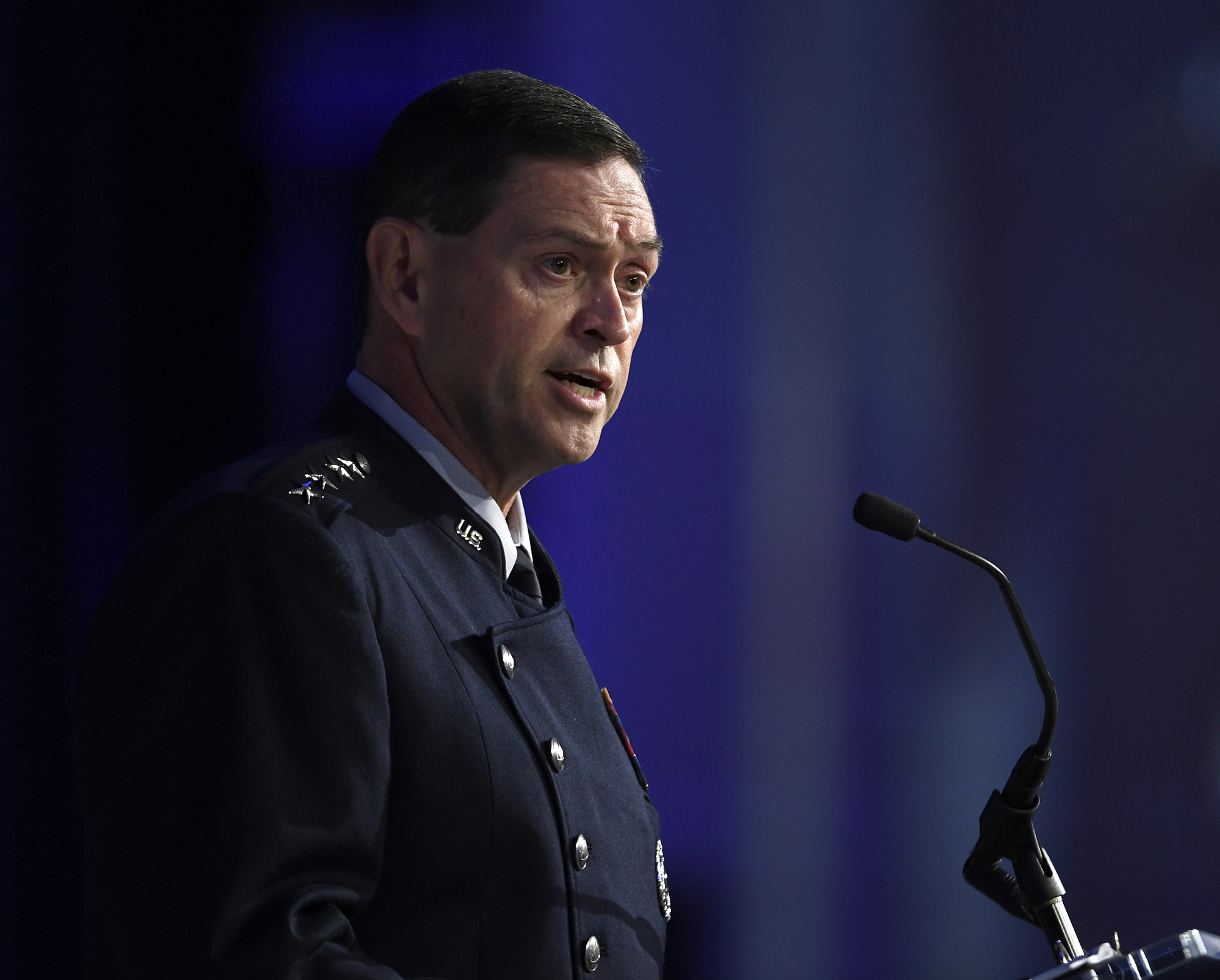

ARLINGTON, Va. — The U.S. Space Force is playing a central but largely unseen role in ongoing military operations tied to Iran, supplying the data, timing and connectivity that underpin joint force activities while helping disrupt adversary capabilities, according to its top officer.
Gen. Chance Saltzman, chief of space operations, said April 1 that Space Force units are “sitting at the center” of recent U.S. military campaigns, including operations under U.S. Central Command. Speaking at the Mitchell Institute’s Spacepower Security Forum, Saltzman said the service has been “instrumental in every one of the recent high profile military operations around the globe, from Venezuela to Nigeria to Iran,” even if those contributions have received limited public attention.
“Guardians and space capabilities have played an outsized role in enabling the joint force to project power and meet our national strategic objectives,” Saltzman said.
His comments add to a growing body of official statements pointing to the importance of space and cyber capabilities in the Feb. 28 U.S.-Israeli strikes on Iran and subsequent operations. Gen. Dan Caine, chairman of the Joint Chiefs of Staff, said earlier that U.S. Space Command and U.S. Cyber Command acted as “first movers,” using non-kinetic effects to disrupt Iranian communications and sensor networks ahead of the strikes.
Space operations, particularly those involving counter-space capabilities or electronic warfare, are both highly classified and difficult to observe directly, with their effects often appearing indirectly through degraded communications or reduced targeting effectiveness.
Still, he outlined the core functions Space Force units are providing. These include missile warning, satellite communications and the links that allow forces to operate over long distances. “Communications is as important now as it ever has been,” he said.
Space Force personnel supporting operations under U.S. Central Command are positioned across the region, at headquarters in Tampa, Florida, and at Shaw Air Force Base in South Carolina, where air combat units specialize in suppressing enemy air defenses. The service’s regional component, U.S. Space Forces–Central, is responsible for planning and conducting space operations in the Middle East theater.
Saltzman described the service’s role as creating “disruption for an adversary” — a term that refers to degrading or denying an opponent’s use of space-enabled capabilities such as communications, navigation and surveillance without physically destroying satellites. That can include interfering with satellite links, degrading GPS signals or disrupting sensors that feed intelligence and targeting systems, often through reversible means such as electronic warfare or cyber operations.
Over the past year, he said, the Space Force has continued deploying more distributed missile warning and communications architectures, part of a broader effort to make space capabilities more resilient. “The capabilities from space systems makes them think twice before they take the first shot,” Saltzman said.
He pointed to a shift in how space is integrated into military planning. “The fact that it doesn’t feel like space was just added on to the operation … we are baked in from the beginning,” he said. “The plan didn’t move forward without the guardians of the Space Force fully integrated.”
That integration comes with new risks. Some Space Force capabilities are operating within contested areas, requiring additional measures to protect systems and maintain continuity under attack. “We have to make sure that we can continue to do the mission under attack, and we’ve been able to do that effectively,” Saltzman said.










Related Posts
Stay Informed With the Latest & Most Important News
Previous Post
Next Post
Advertisement
-
 01Two Black Holes Observed Circling Each Other for the First Time
 -
 02From Polymerization-Enabled Folding and Assembly to Chemical Evolution: Key Processes for Emergence of Functional Polymers in the Origin of Life
 -
 03Astronomy 101: From the Sun and Moon to Wormholes and Warp Drive, Key Theories, Discoveries, and Facts about the Universe (The Adams 101 Series)
 -
 04True Anomaly hires former York Space executive as chief operating officer
 -
 05Φsat-2 begins science phase for AI Earth images
 -
 06Hurricane forecasters are losing 3 key satellites ahead of peak storm season − a meteorologist explains why it matters
 -
 07Binary star systems are complex astronomical objects − a new AI approach could pin down their properties quickly