
Now Reading: See the delicate crescent moon dance with the ‘Seven Sisters’ of the Pleiades tonight
-
01
See the delicate crescent moon dance with the ‘Seven Sisters’ of the Pleiades tonight

See the delicate crescent moon dance with the ‘Seven Sisters’ of the Pleiades tonight

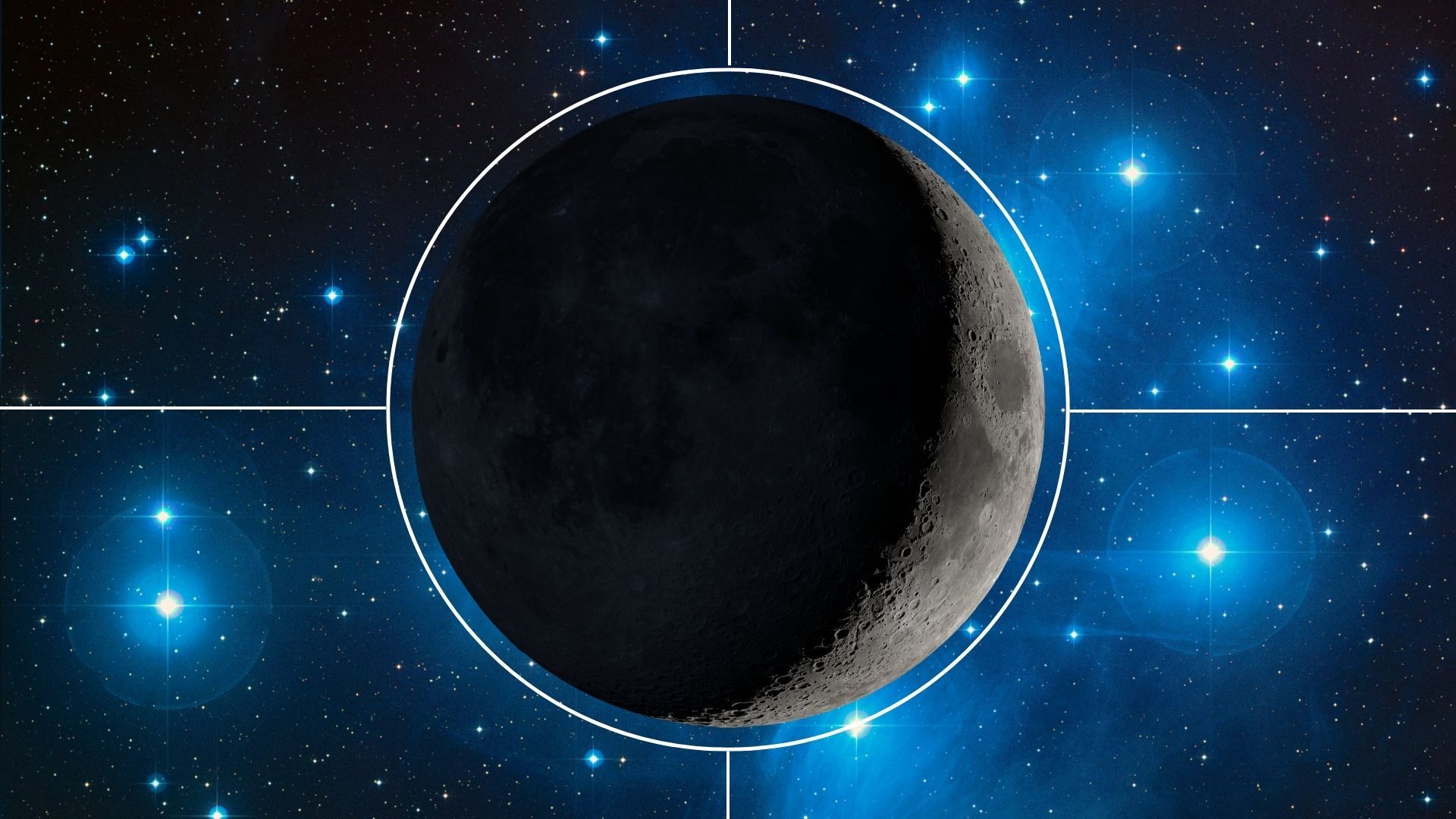
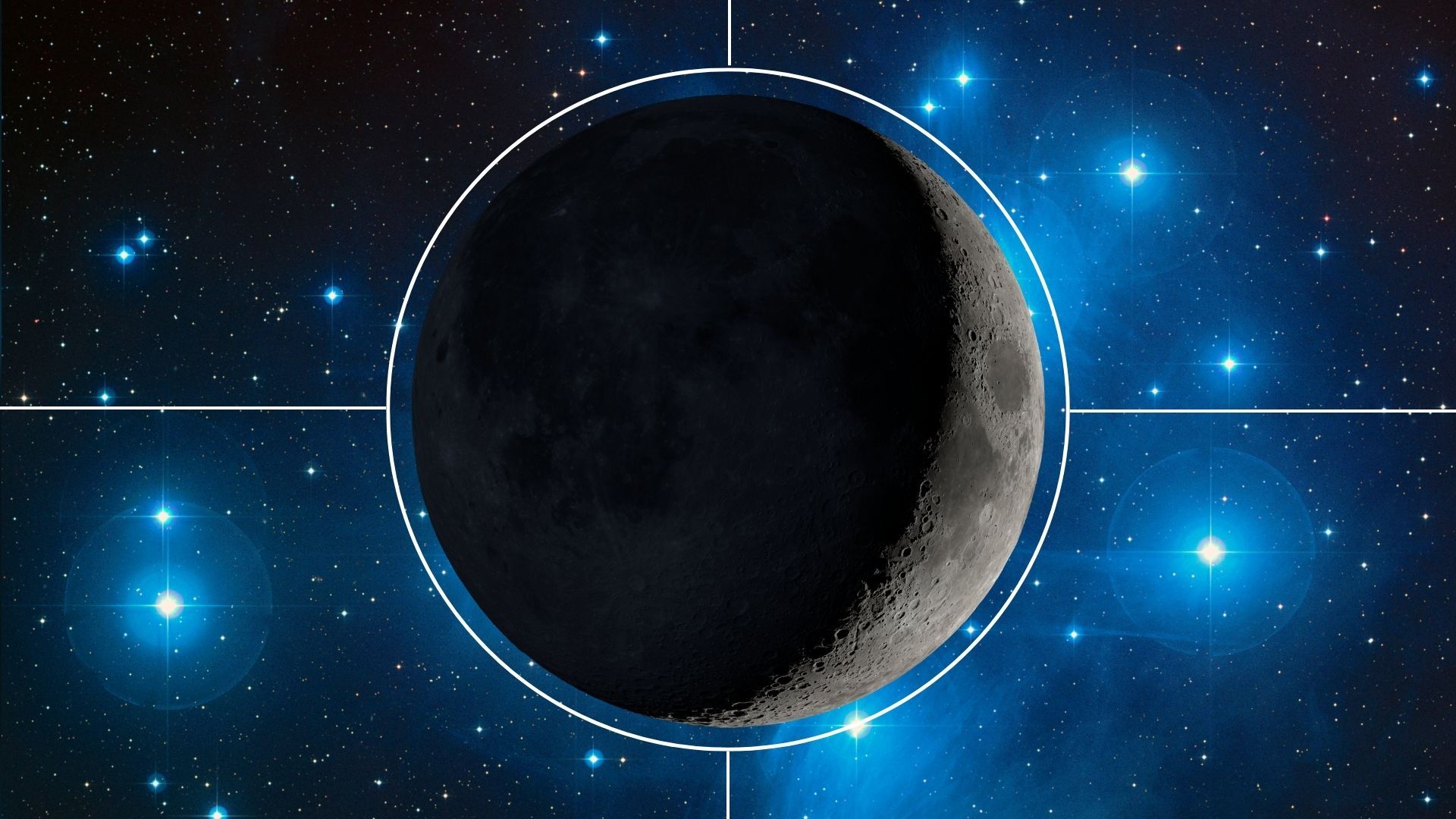
Heads up, stargazers! The waxing crescent moon will glide close to the Pleiades tonight and tomorrow (March 22-23), putting on a gorgeous display as its upturned crescent shines close to the ancient light of the open star cluster.
Look to the western horizon after sunset on March 22 to find the Pleiades glowing 5 degrees above the 14%-lit sickle-like form of the waxing moon — roughly the width of your three middle fingers held at arm’s length against the sky.
Article continues below
Under dark skies, the Pleiades will appear as a hazy patch of light to the naked eye but will reveal its seven brightest members — along with dozens more of its blue-white stars— through a pair of binoculars. By tomorrow night (March 23), the crescent moon will have leapt above the Pleiades on a course that will see it leapfrog Jupiter in the coming week.
The Pleiades have been known to humanity since ancient times and may even have been depicted in the Nebra Sky Disk, a 3,800-year-old bronze artifact that represents the most ancient depiction of the night sky discovered to date.
Thousands of years later, famed astronomer Galileo Galilei made the first observations of the open star cluster with a telescope, revealing dozens more of its blue-white stars. The Pleiades remains a spectacular sight today through a pair of 10X50 binoculars or a telescope, even the most modest of which would astound the old scientist who first examined the deep sky object in detail.
Our understanding of the enigmatic cluster continues to evolve. Only recently, astronomers discovered that the Pleiades may have 20 times more stars than was originally believed, with thousands of long-lost siblings now spread across the night sky.
Hoping to get a closer look at the Pleiades? Then you’d do well to read our roundups of the best telescopes and binoculars for exploring the night sky, If you’re interested in photography, be sure to check out our beginner’s guide to imaging the night sky, along with our picks of the best cameras and lenses for astrophotography.
Editor’s Note: If you would like to share your astrophotography with Space.com’s readers, then please send your photo(s), comments, and your name and location to spacephotos@space.com.










Related Posts

Stay Informed With the Latest & Most Important News
Previous Post
Next Post
Advertisement
-
 01Two Black Holes Observed Circling Each Other for the First Time
 -
 02From Polymerization-Enabled Folding and Assembly to Chemical Evolution: Key Processes for Emergence of Functional Polymers in the Origin of Life
 -
 03Astronomy 101: From the Sun and Moon to Wormholes and Warp Drive, Key Theories, Discoveries, and Facts about the Universe (The Adams 101 Series)
 -
 04True Anomaly hires former York Space executive as chief operating officer
 -
 05Φsat-2 begins science phase for AI Earth images
 -
 06Hurricane forecasters are losing 3 key satellites ahead of peak storm season − a meteorologist explains why it matters
 -
 07Binary star systems are complex astronomical objects − a new AI approach could pin down their properties quickly