
Now Reading: ‘Serving the country and pushing the boundaries of human existence is very purposeful.’
-
01
‘Serving the country and pushing the boundaries of human existence is very purposeful.’

‘Serving the country and pushing the boundaries of human existence is very purposeful.’

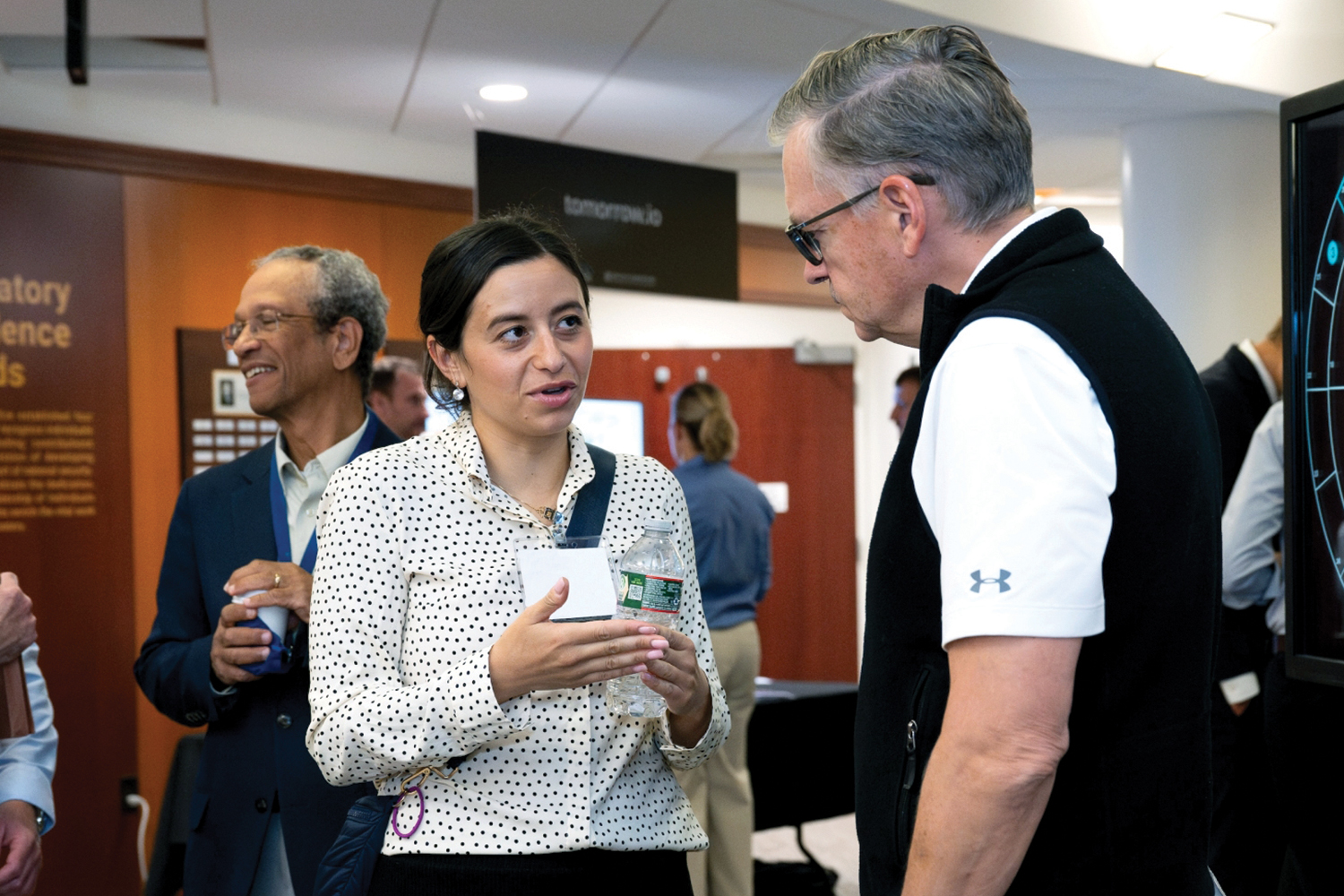

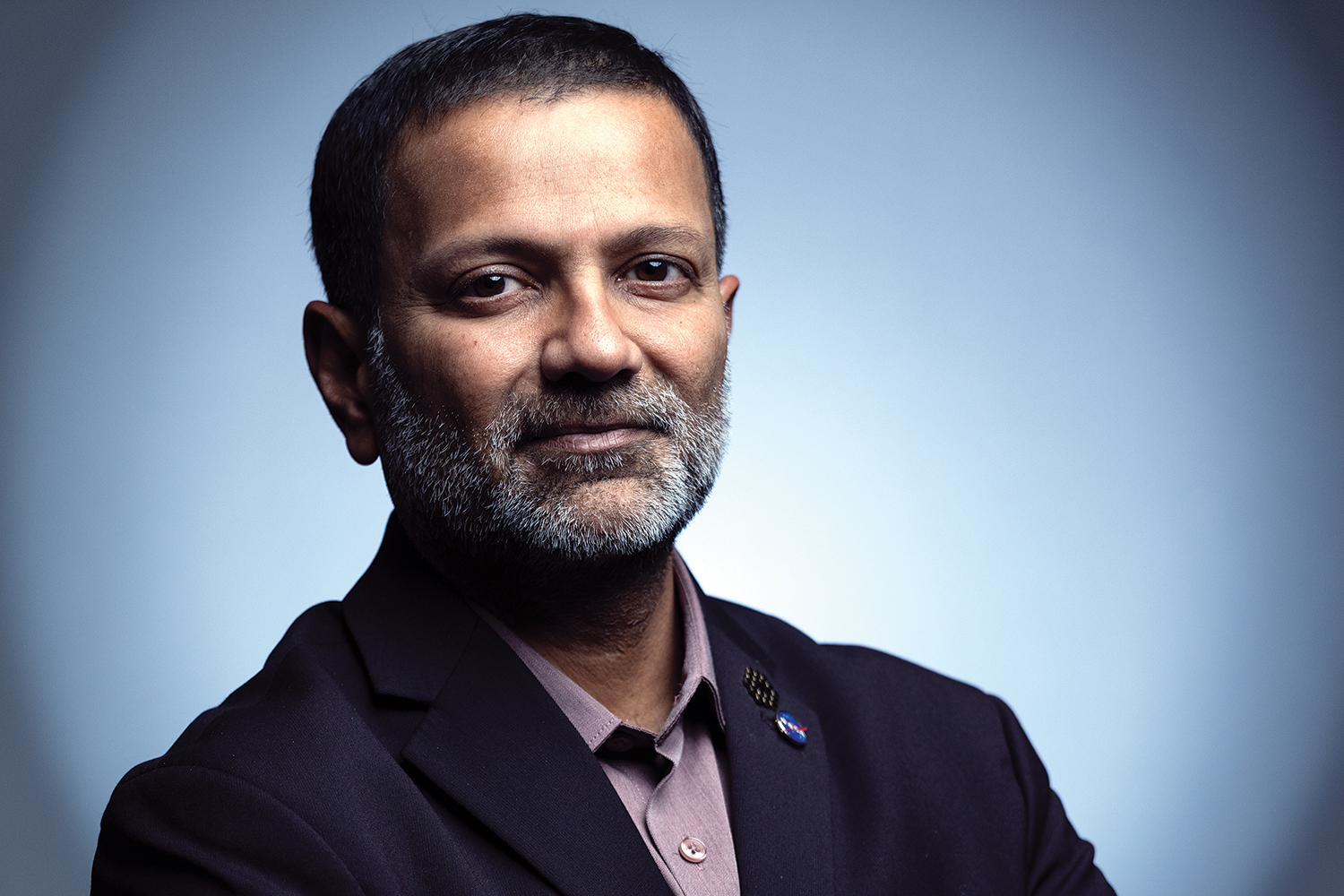
In 2025, more than 322,000 civil servants left jobs voluntarily or were dismissed out of a workforce of roughly 2.4 million. The 13% drop in staffing is the largest single-year decline since the end of World War II. In total, more than 5,000 people who were part of the federal space workforce left their positions. Senior executives with decades of experience retired alongside younger staffers whose posts were eliminated or who sought opportunities in the private sector or academia. This is one of eight conversations with some of the remarkable people who recently left the federal workforce.
Evana Gizzi
Last position: NASA Goddard Space Flight Center Artificial Intelligence Research Lead
Before leaving NASA in January, spacecraft autonomy specialist Evana Gizzi was laying the groundwork for a NASA AI Innovation hub in Boston, the Regional Alliance for Intelligence Systems Research (RAISR). RAISR, is also the acronym for Research in Artificial Intelligence for Spacecraft Resilience, software Gizzi developed to help spacecraft to quickly detect and diagnose onboard faults. In 2022, she established the NASA Goddard Space Autonomy and Resilience (SPAR) Lab. Under her leadership the SPAR Lab created the Onboard Artificial Intelligence Research platform, an open-source cognitive-architecture tool publicly available on software-developer platform GitHub.
Why did you want to work for NASA?
I was drawn to the nonprofit aspect. Serving the country and pushing the boundaries of human existence is very purposeful. What other place supports research to find life on other planets using AI?
I was going back and forth between Tufts [University] and Goddard throughout my PhD research. Then, when I went to work for NASA, I was approved to have a New England duty station to build RAISR. I was a built-in conduit to the region.
What are some highlights of your career?
Developing the RAISR vision, and getting agency buy-in was a dream come true. As a Massachusetts-native, seeing a NASA meatball in Boston was the vision that kept me motivated to move mountains.
Starting the SPAR Lab and running my own group. As a team, the SPAR Lab provided support for scientists to use AI in space. We gave scientists autonomy tools they trusted.
Why should NASA have an AI Innovation hub in Boston?
My vision was a consortium with the preeminent universities, where each partner has their own NASA landing space for AI innovation. RAISR had buy-in from some high-level people. We were piloting the idea to use the ecosystem in New England, which has been untapped by the agency for the most part.
What’s unique about New England is the collision potential of AI innovation with an overlay of academia. I could drive down the street to Boston Dynamics, iRobot or any of the universities. When it comes to AI research for the government, you have to partner with people because no one’s going to quit their job in Boston to move to Maryland. And prestigious academic institutions need long-horizon, hard problems. What better way to inspire greatness than to say, “Can you help us find life on another planet using AI, which necessitates autonomous capabilities?”
Why did you leave NASA?
I knew RAISR wasn’t going to be a thing. We needed sustained funding from headquarters. With the administration change, that was not going to happen. And I personally had to be at a desk in Maryland five days a week or leave NASA.
What are you doing now?
I’m the Strategic Research Advisor for MIT Small Satellite Collaborative. I’ve been focusing my effort at MIT on democratizing space. I’m currently trying to build a new, AI-enabled open-source flight software stack so people can do more with their satellites on faster timelines — think, the Mac Operating System of space. I want a future where a researcher can develop a new payload algorithm on a Tuesday, and port it to a satellite on a Thursday — all while in sweats from their basements.
An abridged version of this article was first published in the February 2026 issue of SpaceNews Magazine.










Related Posts
Stay Informed With the Latest & Most Important News
Previous Post
Next Post
Advertisement
-
 01Two Black Holes Observed Circling Each Other for the First Time
 -
 02From Polymerization-Enabled Folding and Assembly to Chemical Evolution: Key Processes for Emergence of Functional Polymers in the Origin of Life
 -
 03Astronomy 101: From the Sun and Moon to Wormholes and Warp Drive, Key Theories, Discoveries, and Facts about the Universe (The Adams 101 Series)
 -
 04True Anomaly hires former York Space executive as chief operating officer
 -
 05Φsat-2 begins science phase for AI Earth images
 -
 06Hurricane forecasters are losing 3 key satellites ahead of peak storm season − a meteorologist explains why it matters
 -
 07Binary star systems are complex astronomical objects − a new AI approach could pin down their properties quickly