
Now Reading: Soyuz rocket launch marred by maintenance cabin collapse halting Russia’s crewed space operations
-
01
Soyuz rocket launch marred by maintenance cabin collapse halting Russia’s crewed space operations

Soyuz rocket launch marred by maintenance cabin collapse halting Russia’s crewed space operations

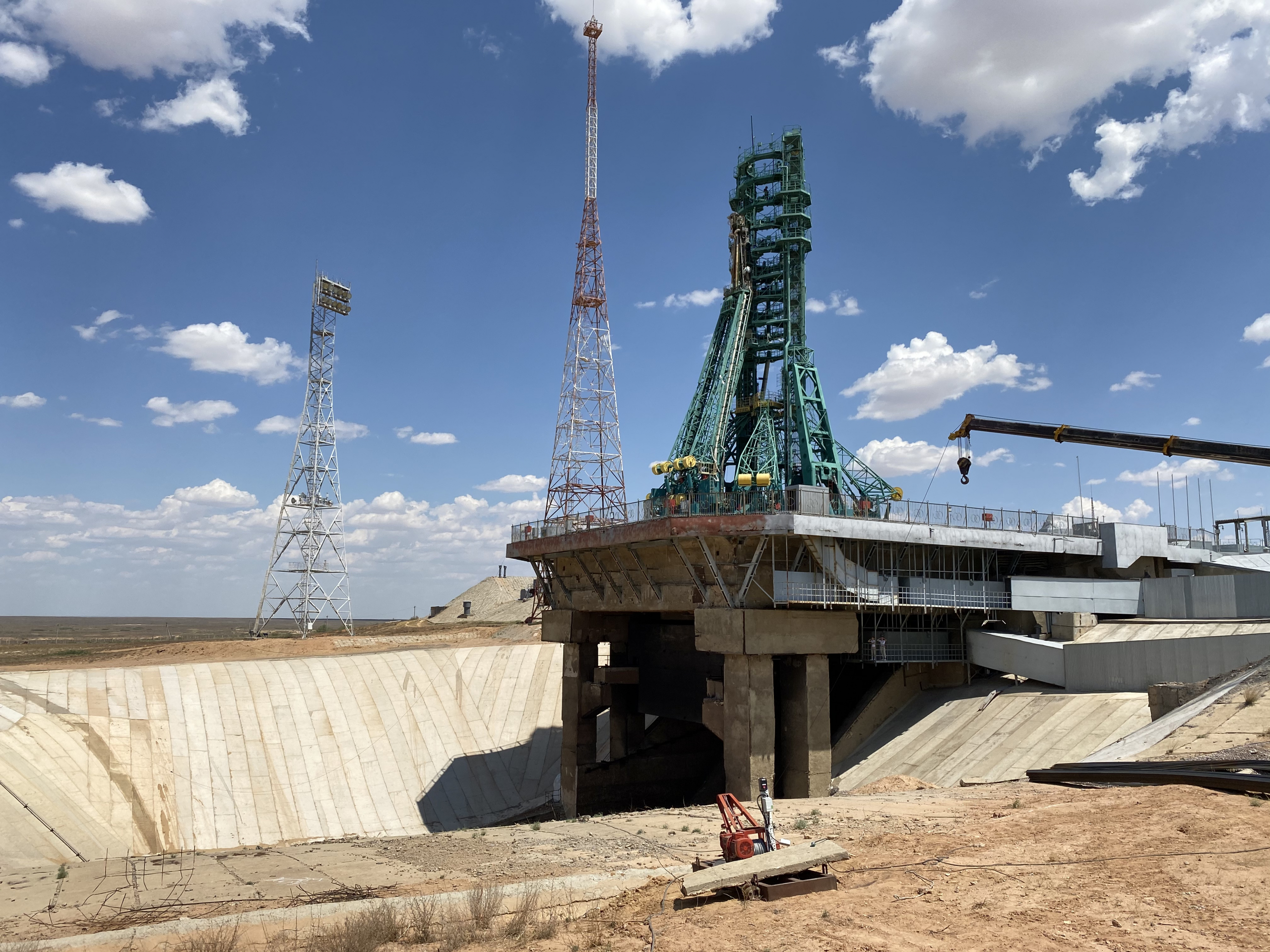

On November 27, a significant incident occurred following the successful launch of the Soyuz 2.1a rocket, which carried the Soyuz MS-28 crew to the International Space Station (ISS). The launch from the Baikonur Cosmodrome marked a successful mission for the crew, made up of Roscosmos cosmonauts Sergey Kud-Sverchkov and Sergei Mikayev, along with NASA astronaut Christopher Williams. However, shortly after liftoff, reports emerged of a serious accident at launch Site 31/6, where the mobile maintenance cabin overturned and fell into the flame trench.
The failure of the maintenance structure poses a critical setback for Russia’s crewed space operations, as Site 31/6 is currently the only launch facility able to send both crewed and cargo missions to the ISS. Although there are alternative launch sites, those either lack the necessary latitude or certifications for human spaceflight, leaving authorities with limited options.
Unverified reports had circulated just after the Soyuz launch that damage had occurred to the launch facility, specifically involving the maintenance cabin. As of now, there has been no official comment from Roscosmos addressing these allegations. The accident results in an immediate halt to Russia’s capability to dispatch Soyuz spacecraft and Progress cargo vessels to the ISS, affecting plans for an upcoming Progress MS-33 mission scheduled for December 21.
The collapsed 8U216 maintenance cabin, which measures approximately 19.06 by 16.92 meters and weighs 144 tons, very important for pre-launch operations. It’s designed to provide accessibility to the rocket’s engines, allowing the launch team to perform necessary tasks, including the installation of pyrotechnic devices. Following the successful launch, it was discovered that the cabinet was either improperly secured in its storage nook or that the locks had failed under the stress of the launch.
Subsequent investigations revealed that the maintenance cabin had been dislodged by a pressure change created during the rocket’s liftoff, resulting in its fall from a height of 20 meters. Images of the damaged structure indicate severe impacts, likely beyond repair. Restoring launch operations from Site 31/6 now depends on either installing a replacement cabin or the construction of a new one.
Although the maintenance cabin has a history dating back to the 1960s, two similar units have been produced more recently for other launch sites, yet they were not built for emergency situations. Initial statements from Roscosmos indicated that spare parts exist for repairing the launch complex, and there are plans to expedite the restoration process. Dismantling a cabin from an unused launch pad, such as Pad 1 – Gagarin’s Start – which has since become a museum, presents additional logistical challenges.
Experts have varied opinions on how long repairs may take, with estimates ranging from several months to three years, particularly if a new maintenance cabin is required. The implications of the accident are immediate, affecting scheduled launches and, by extension, operations aboard the ISS. Upcoming missions, including the next crewed Soyuz launch planned for July 2026, could potentially face delays.
The situation is compounded by the constraints posed by other launch sites. While there might be some possibility of launching Progress ships from Vostochny Cosmodrome, operational challenges make crewed launches from there complicated. The use of other facilities, including the Kourou cosmodrome, is further restricted by geopolitical factors following recent sanctions.
This incident underscores a history of difficulties faced at traditional Russian launch sites. Similar accidents have occurred in the past, including a significant incident at Vostochny in 2016 that delayed future launches for over a year. As it stands, the timeline for restoring Site 31/6 remains uncertain, with limited information available from Roscosmos regarding upcoming launch schedules and recovery plans.










Related Posts


Stay Informed With the Latest & Most Important News
Previous Post
Next Post



Advertisement
-
 01Two Black Holes Observed Circling Each Other for the First Time
 -
 02From Polymerization-Enabled Folding and Assembly to Chemical Evolution: Key Processes for Emergence of Functional Polymers in the Origin of Life
 -
 03Astronomy 101: From the Sun and Moon to Wormholes and Warp Drive, Key Theories, Discoveries, and Facts about the Universe (The Adams 101 Series)
 -
 04True Anomaly hires former York Space executive as chief operating officer
 -
 05Φsat-2 begins science phase for AI Earth images
 -
 06Hurricane forecasters are losing 3 key satellites ahead of peak storm season − a meteorologist explains why it matters
 -
 07Binary star systems are complex astronomical objects − a new AI approach could pin down their properties quickly