
Now Reading: Space Force moves to standardize satellites with ‘Handle 2.0’ contract
-
01
Space Force moves to standardize satellites with ‘Handle 2.0’ contract


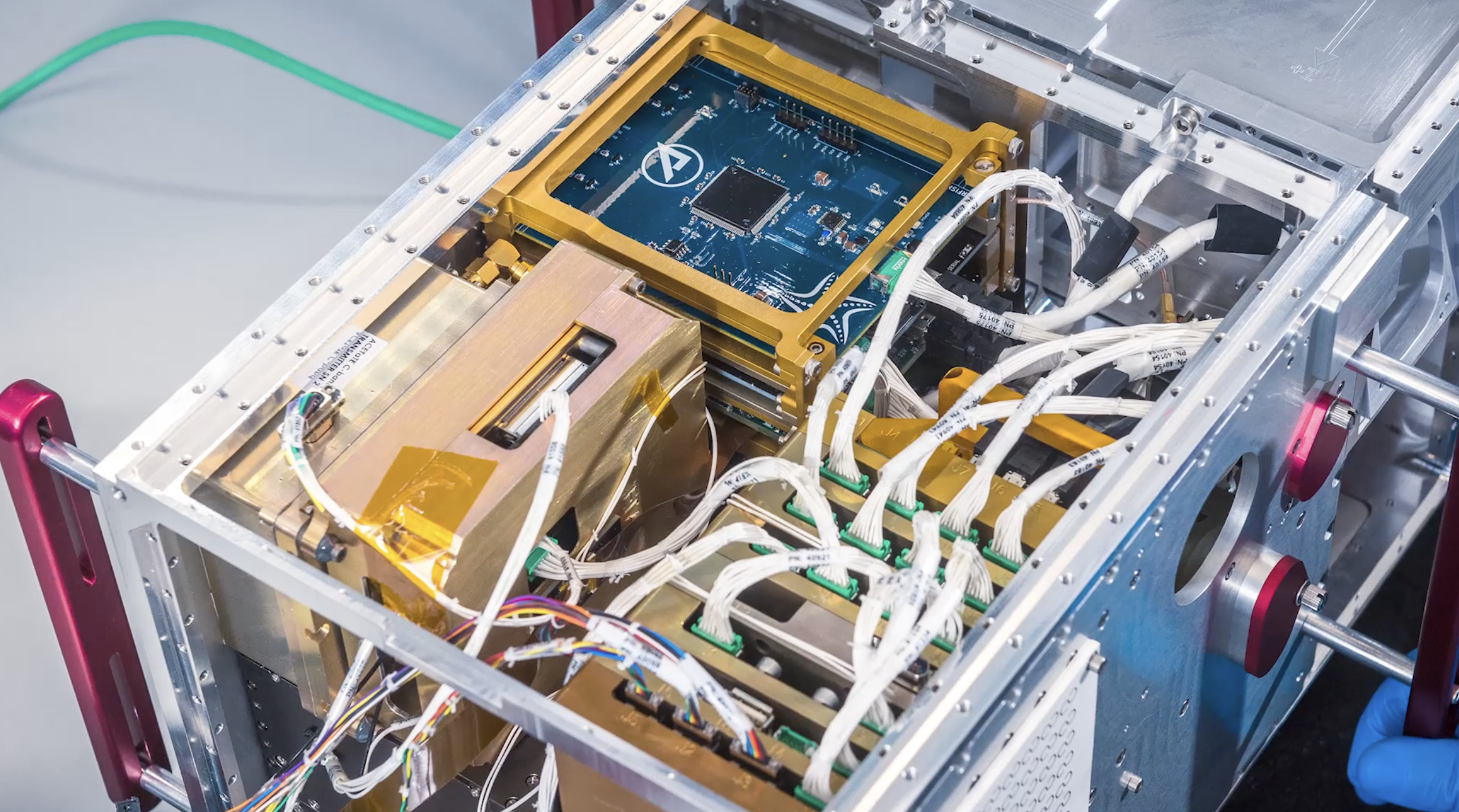

WASHINGTON — Falcon ExoDynamics, a small California-based defense contractor, has been tapped by the U.S. Space Force to help turn a modular satellite interface known as Handle from a research prototype into a commercially supported standard for military space missions.
Under a $3.3 million contract awarded late in 2025, the Space Force’s Space Safari office selected Falcon ExoDynamics to develop Handle 2.0, an upgraded version of a modular, open-system electronics interface that serves as a common connection point between satellite buses and payloads.
The effort supports the military’s push to shorten satellite development and deployment timelines under the Tactically Responsive Space, or TacRS, initiative. TacRS missions are intended to demonstrate the ability to launch and operate spacecraft on short notice in response to emerging threats in orbit.
Handle was originally developed by The Aerospace Corporation to reduce the need for custom redesign when integrating payloads onto small satellites. The architecture centers on a standardized power-and-data interface that allows sensors or other payloads to be swapped late in the build process.
The interface was first demonstrated in orbit during Aerospace’s Slingshot 1 mission, launched in July 2022. That flight validated the basic Handle design, including its electrical, data and command links.
The updated design is expected to fly on an upcoming Space Force mission called Victus Salo, slated for launch in late 2026. Victus Salo is intended to demonstrate rapid deployment and on-orbit maneuvering to counter potential threats to U.S. spacecraft.
Handle 2.0 is designed to expand the range of payloads that can be supported, as the Space Force looks to standardize elements of its satellite designs. By separating the spacecraft “bus” from the mission payload, the approach would allow satellites to be built or stored in advance, with sensors installed only once a specific mission requirement emerges.
That model is aimed at cutting months from traditional satellite development cycles, which defense officials have said are increasingly mismatched with the pace of modern counterspace threats. Under a responsive space concept, the military could, for example, launch a surveillance satellite on short notice to inspect a suspected anti-satellite weapon or other object of concern.
Space Safari announced Dec. 29 that Falcon ExoDynamics was selected to develop Handle 2.0 in partnership with the Aerospace Corporation.
“The Space Safari team’s work on Handle is crucial to enable the implementation of smart systems engineering practices that allow for faster, easier integration of complex subsystems,” said Col. Bryon McClain, program executive officer for space combat power.
McClain said traditional satellite development timelines are too slow to meet current operational needs, adding that greater flexibility and speed are required as orbital threats evolve.
Victus Salo is one of several demonstrations under the TacRS program aimed at proving rapid-response launch and more agile space domain awareness. The mission is projected to launch to low Earth orbit via SpaceX’s rideshare program and will carry a government-furnished payload developed by MIT Lincoln Laboratory.
Impulse Space is building an orbital maneuver vehicle that will carry the Lincoln Laboratory payload, allowing the spacecraft to reposition once on orbit as part of the mission demonstration.










Related Posts


Stay Informed With the Latest & Most Important News
Previous Post
Next Post



Advertisement
-
 01Two Black Holes Observed Circling Each Other for the First Time
 -
 02From Polymerization-Enabled Folding and Assembly to Chemical Evolution: Key Processes for Emergence of Functional Polymers in the Origin of Life
 -
 03Astronomy 101: From the Sun and Moon to Wormholes and Warp Drive, Key Theories, Discoveries, and Facts about the Universe (The Adams 101 Series)
 -
 04True Anomaly hires former York Space executive as chief operating officer
 -
 05Φsat-2 begins science phase for AI Earth images
 -
 06Hurricane forecasters are losing 3 key satellites ahead of peak storm season − a meteorologist explains why it matters
 -
 07Binary star systems are complex astronomical objects − a new AI approach could pin down their properties quickly