
Now Reading: Space Force set to choose contractors for next-gen GEO spy satellites
-
01
Space Force set to choose contractors for next-gen GEO spy satellites


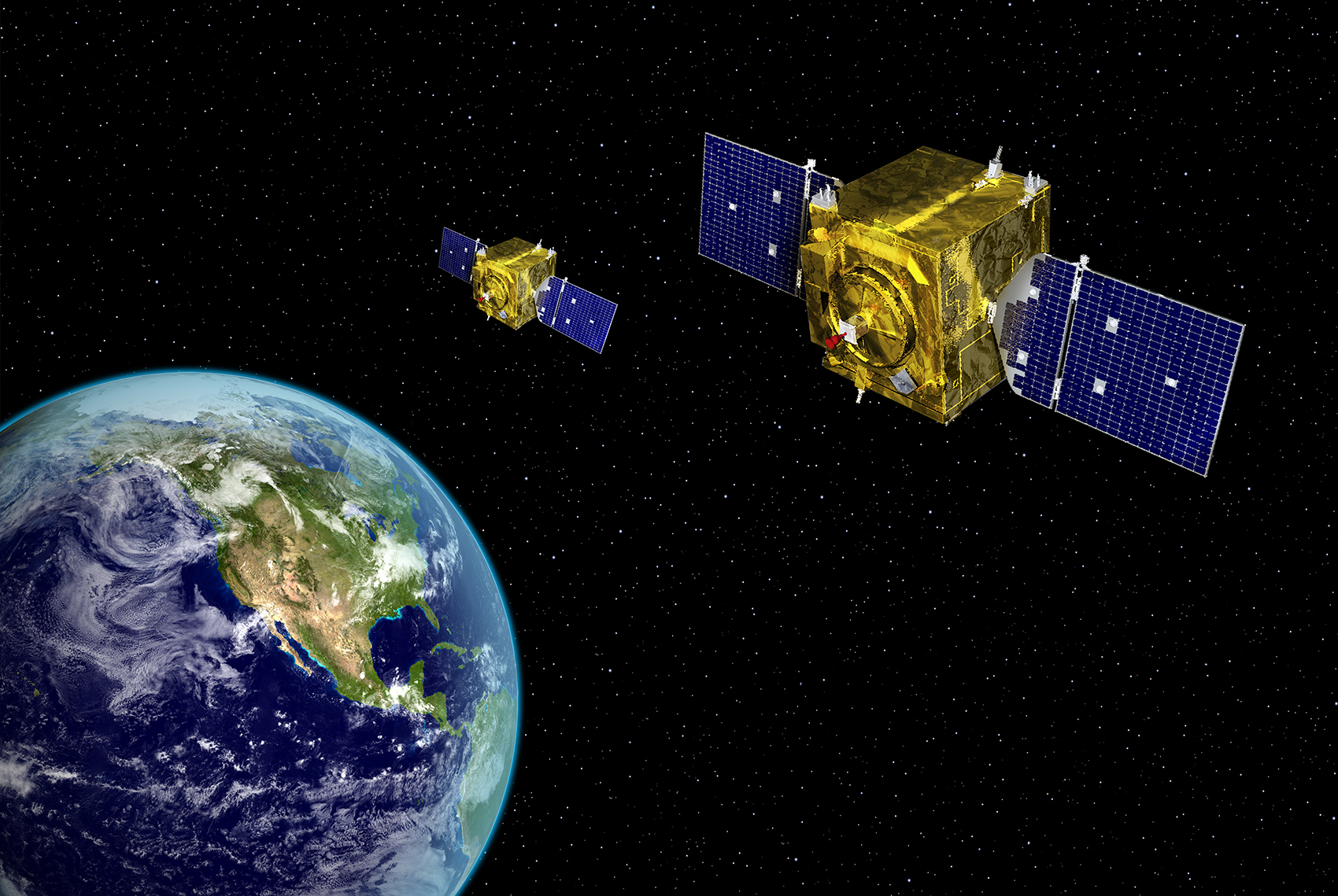

WASHINGTON — The U.S. Space Force is closing in on its first contractor selections for a next-generation geostationary surveillance program that could reshape how the Pentagon buys some of its most sensitive satellites.
Officials said last week that the service plans to select satellite manufacturers as soon as March for the Geosynchronous Reconnaissance & Surveillance (RG-XX) program, an effort to build a new constellation of reconnaissance satellites using commercial offerings rather than bespoke military designs.
Speaking at the AFCEA Space Industry Days, program leaders framed RG-XX as a test case for the Space Force’s push toward a “commercial first” acquisition strategy. The program is widely viewed as the likely successor to the Geosynchronous Space Situational Awareness Program (GSSAP), a constellation built by Northrop Grumman.
GSSAP satellites perform some of the military’s most demanding space domain awareness missions, tracking and characterizing objects operating near the geostationary orbit (GEO) belt roughly 22,000 miles above Earth. Those spacecraft are often described by officials as “exquisite” systems: highly capable, custom-built, and expensive, with only a small number on orbit.
Upcoming launch
The Space Force is preparing to launch the 7th and 8th GSSAP satellites in mid-February aboard a United Launch Alliance Vulcan rocket, while the 9th and 10th spacecraft remain in production.
Officials said that the threat environment and the technology landscape have prompted the service to consider a proliferated constellation that could provide broader coverage and more resilience.
Lt. Col. Darren Ng, system program manager for RG-XX at the Space Systems Command, said the program office plans to tap more than one company and expects the constellation to be significantly larger than GSSAP.
The Space Force is setting up an indefinite delivery, indefinite quantity (IDIQ) contract vehicle, with vendor selections targeted for March. A task order for the first batch of satellites would follow.
“Just two or three years ago, we wouldn’t have been able to kick off something like RGXX,” Ng said. “It was incredibly difficult. But I think it’s actually a tangible example of some of the support and advocacy from senior leaders, showing that they actually are trying to think differently.”
RG-XX, he added, is “really about building a proliferated GEO architecture to deliver surveillance reconnaissance, for space warfighting at scale.”
The IDIQ structure is intended to speed contracting and reduce overhead. The framework, Ng said, allows for “rapid acquisitions … and fixed price contracts so we can reduce bureaucracy and program execution overhead, both on the government side and on the industry side.”
A request for proposals went out earlier this month, with submissions expected in early February.
What’s still undecided
Col. Bryon McClain, program executive officer for space combat power at Space Systems Command, said the number of satellites in the first RG-XX order will depend on available funding and vendor cost proposals.
“GSSAP has provided us with a phenomenal capability. It is very much a high demand asset doing a lot of exquisite and capable work,” McClain said. “What we’re trying to do with RG-XX is look at the opportunity to harness a lot of change in the defense industry since we started the GSSAP program.”
Over time, he said, RG-XX could take on much of GSSAP’s mission—but not as a one-for-one replacement. “Long term strategy, it is possible that RG-XX can really take on most of the majority of that mission, but it’s not going to be the exact same thing in the exact same way.”
The ground segment for RG-XX is still being defined, with plans for a common system that works across satellites from different manufacturers.
A bet on the future of servicing
One notable design choice: RG-XX satellites are being built to allow on-orbit refueling so their operational life can be extended beyond their initial fuel loads. GSSAP satellites were not designed for refueling and are retired once propellant is depleted, even if their sensors remain functional.
McClain said RG-XX is laying the groundwork for future refueling services. “What is the long term refueling plan and architecture? I don’t have an answer to that, as the service is still trying to work through what makes sense,” he said. “We’re trying to lay the groundwork for bigger service decisions that haven’t been made yet … and we’re really trying to give industry some trade space to propose potential solutions.”










Related Posts

Stay Informed With the Latest & Most Important News
Previous Post
Next Post





Advertisement
-
 01Two Black Holes Observed Circling Each Other for the First Time
 -
 02From Polymerization-Enabled Folding and Assembly to Chemical Evolution: Key Processes for Emergence of Functional Polymers in the Origin of Life
 -
 03Astronomy 101: From the Sun and Moon to Wormholes and Warp Drive, Key Theories, Discoveries, and Facts about the Universe (The Adams 101 Series)
 -
 04True Anomaly hires former York Space executive as chief operating officer
 -
 05Φsat-2 begins science phase for AI Earth images
 -
 06Hurricane forecasters are losing 3 key satellites ahead of peak storm season − a meteorologist explains why it matters
 -
 07Binary star systems are complex astronomical objects − a new AI approach could pin down their properties quickly