
Now Reading: Space Force shows off snowy new Alaska radar post | Space photo of the day for Jan. 1, 2026
-
01
Space Force shows off snowy new Alaska radar post | Space photo of the day for Jan. 1, 2026

Space Force shows off snowy new Alaska radar post | Space photo of the day for Jan. 1, 2026

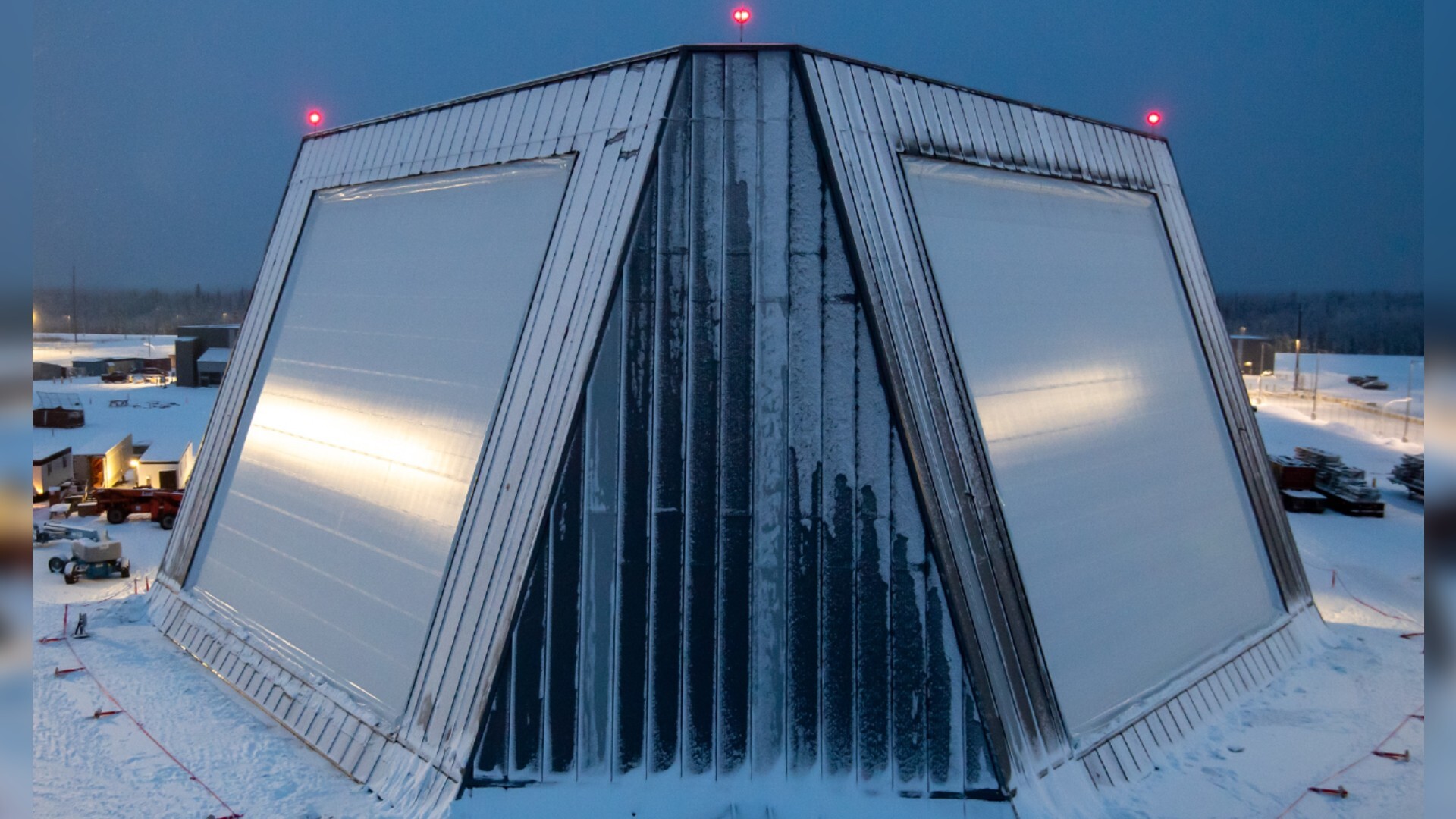
Early in December, the U.S. Space Force‘s Combat Forces Command (CFC) formally accepted operational responsibility for the Long Range Discrimination Radar (LRDR) after the successful completion of a series of tests. This advanced radar system now moves from extended testing into real-world, day-to-day use to support U.S. missile defense.
What is it?
LRDR has been in the works for years. In late 2021, the Missile Defense Agency marked the radar’s initial tests in Alaska, kicking off the long process of testing, training and integration into the larger missile defense network.
Where is it?
The LRDR is located at Clear Space Force Station in Alaska.

Why is it amazing?
Missile defense isn’t just about seeing something, it’s also about knowing what you’re seeing in time to respond. LRDR is designed to provide more precise tracking and discrimination data which the Space Force says can improve interceptor precision and shorten reaction times.
Now controlling LRDR, the Space Force emphasizes that the system will be continuously monitoring our skies and atmosphere, making the system a key sentinel in the U.S. missile defense strategy.
Want to learn more?
You can learn more about radar systems and the U.S. Space Force










Related Posts


Stay Informed With the Latest & Most Important News
Previous Post
Next Post



Advertisement
-
 01Two Black Holes Observed Circling Each Other for the First Time
 -
 02From Polymerization-Enabled Folding and Assembly to Chemical Evolution: Key Processes for Emergence of Functional Polymers in the Origin of Life
 -
 03Astronomy 101: From the Sun and Moon to Wormholes and Warp Drive, Key Theories, Discoveries, and Facts about the Universe (The Adams 101 Series)
 -
 04True Anomaly hires former York Space executive as chief operating officer
 -
 05Φsat-2 begins science phase for AI Earth images
 -
 06Hurricane forecasters are losing 3 key satellites ahead of peak storm season − a meteorologist explains why it matters
 -
 07Binary star systems are complex astronomical objects − a new AI approach could pin down their properties quickly