
Now Reading: Spacecraft, stars and city lights | Space photo of the day Feb. 25, 2026
-
01
Spacecraft, stars and city lights | Space photo of the day Feb. 25, 2026


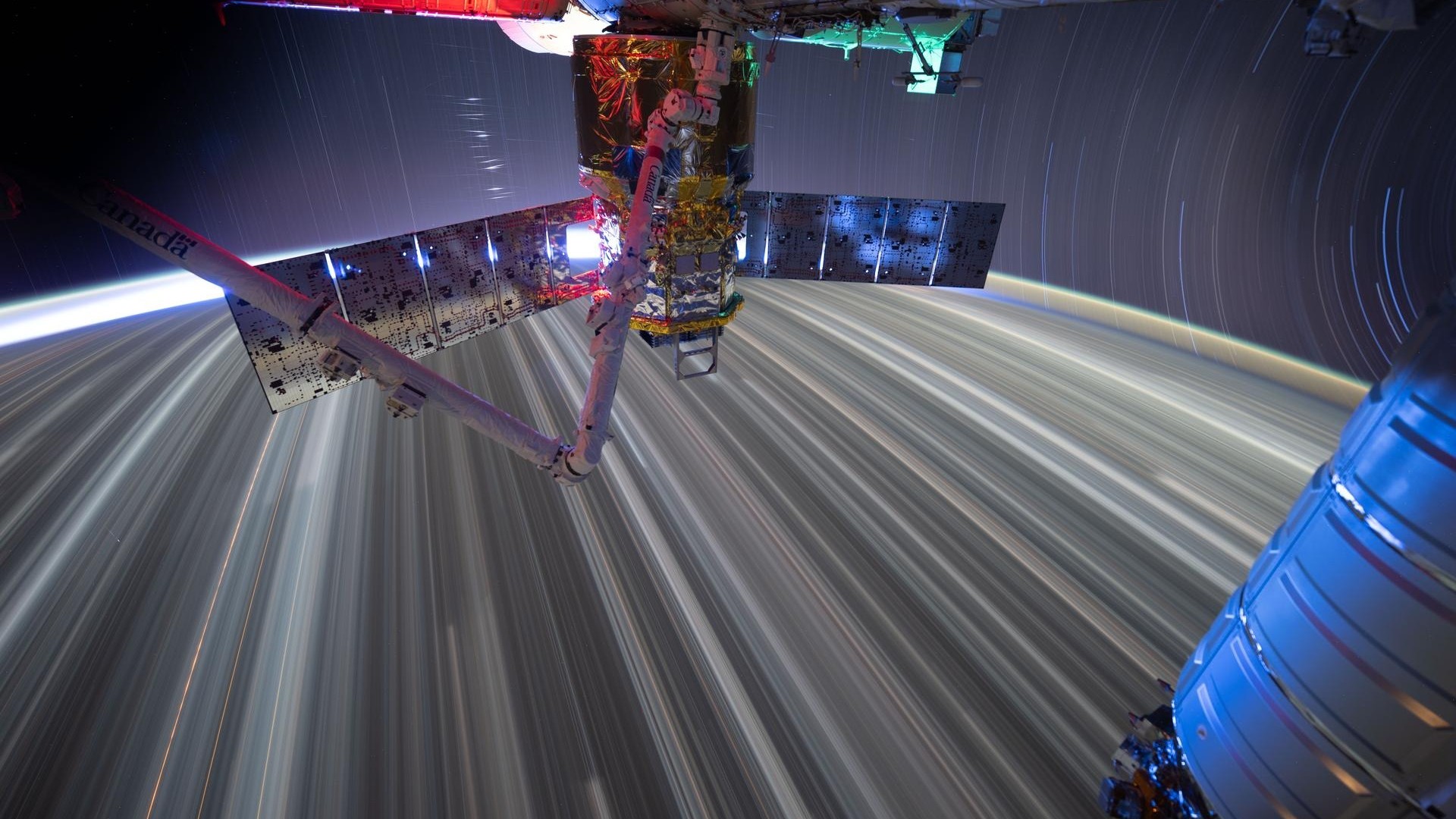
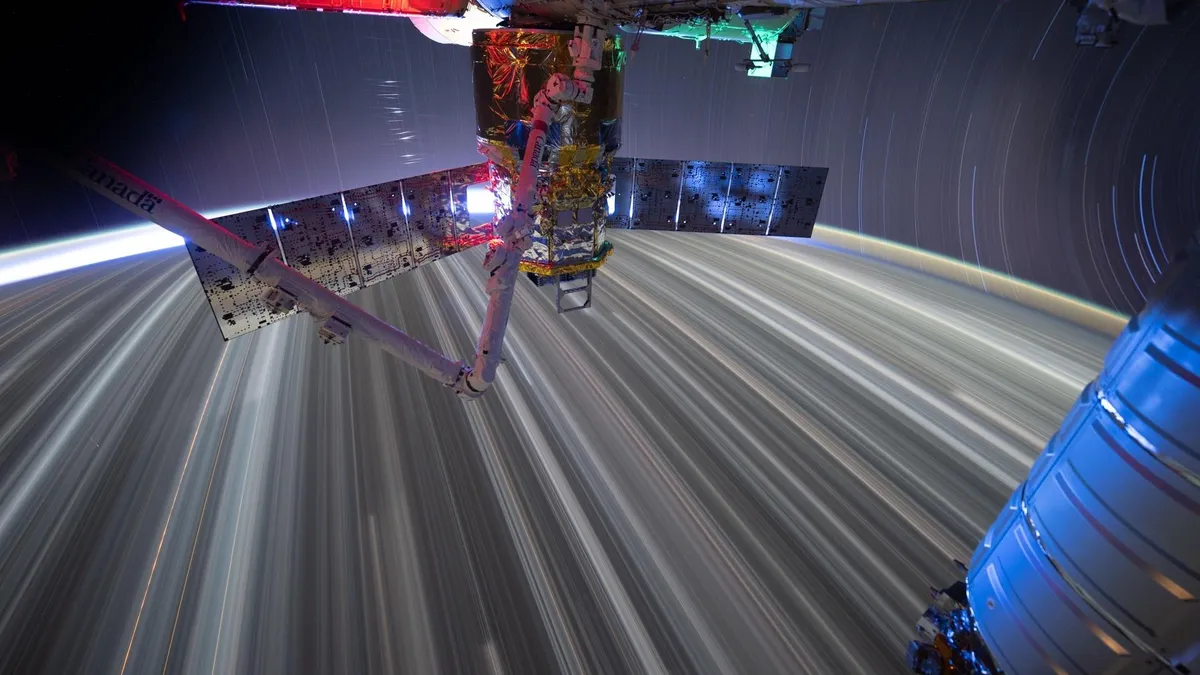
Cities far below the International Space Station (ISS) and stars far in the cosmic distance create ghostly trails of light in this long-exposure photograph from NASA astronaut Chris Williams.
What is it?
In the background of the image, city lights far below streak by rapidly as the ISS flies over Earth at an orbital velocity of around 17,500 mph (28,000 km/h). Farther behind, stars in the distance create circular star trails. As the ISS orbits Earth, it also rotates to keep the same side facing the planet. This creates the circular trails we see in photos taken aboard the orbital laboratory.
In the foreground of the image, several pieces of ISS hardware are visible close to Williams’ perch aboard the orbital laboratory. To the right of the photo, the Cygnus-23 cargo craft is docked at the space station’s Unity module. This new, larger version of Northrop Grumman’s robotic supply vehicle brought some 11,000 pounds (4,990 kilograms) of cargo to the ISS in September 2025.
JAXA’s (Japan Aerospace Exploration Agency) HTV-X1 cargo craft can also be seen at the top of the image docked to the Earth-facing port of the ISS’s Harmony module just behind the Canadarm2 robotic arm.
Why is it amazing?
From the spacecraft docked at the ISS in the foreground, to the lights of Earth below, then to the stars seen far in the far background across distances hard for our minds to fathom, this striking timelapse photograph is a stark reminder of the vastness of space and the incredible technological wonder that is the International Space Station.










Related Posts
Stay Informed With the Latest & Most Important News
Previous Post
Next Post

Advertisement
-
 01Two Black Holes Observed Circling Each Other for the First Time
 -
 02From Polymerization-Enabled Folding and Assembly to Chemical Evolution: Key Processes for Emergence of Functional Polymers in the Origin of Life
 -
 03Astronomy 101: From the Sun and Moon to Wormholes and Warp Drive, Key Theories, Discoveries, and Facts about the Universe (The Adams 101 Series)
 -
 04True Anomaly hires former York Space executive as chief operating officer
 -
 05Φsat-2 begins science phase for AI Earth images
 -
 06Hurricane forecasters are losing 3 key satellites ahead of peak storm season − a meteorologist explains why it matters
 -
 07Binary star systems are complex astronomical objects − a new AI approach could pin down their properties quickly