
Now Reading: SpaceX files plans for million-satellite orbital data center constellation
-
01
SpaceX files plans for million-satellite orbital data center constellation


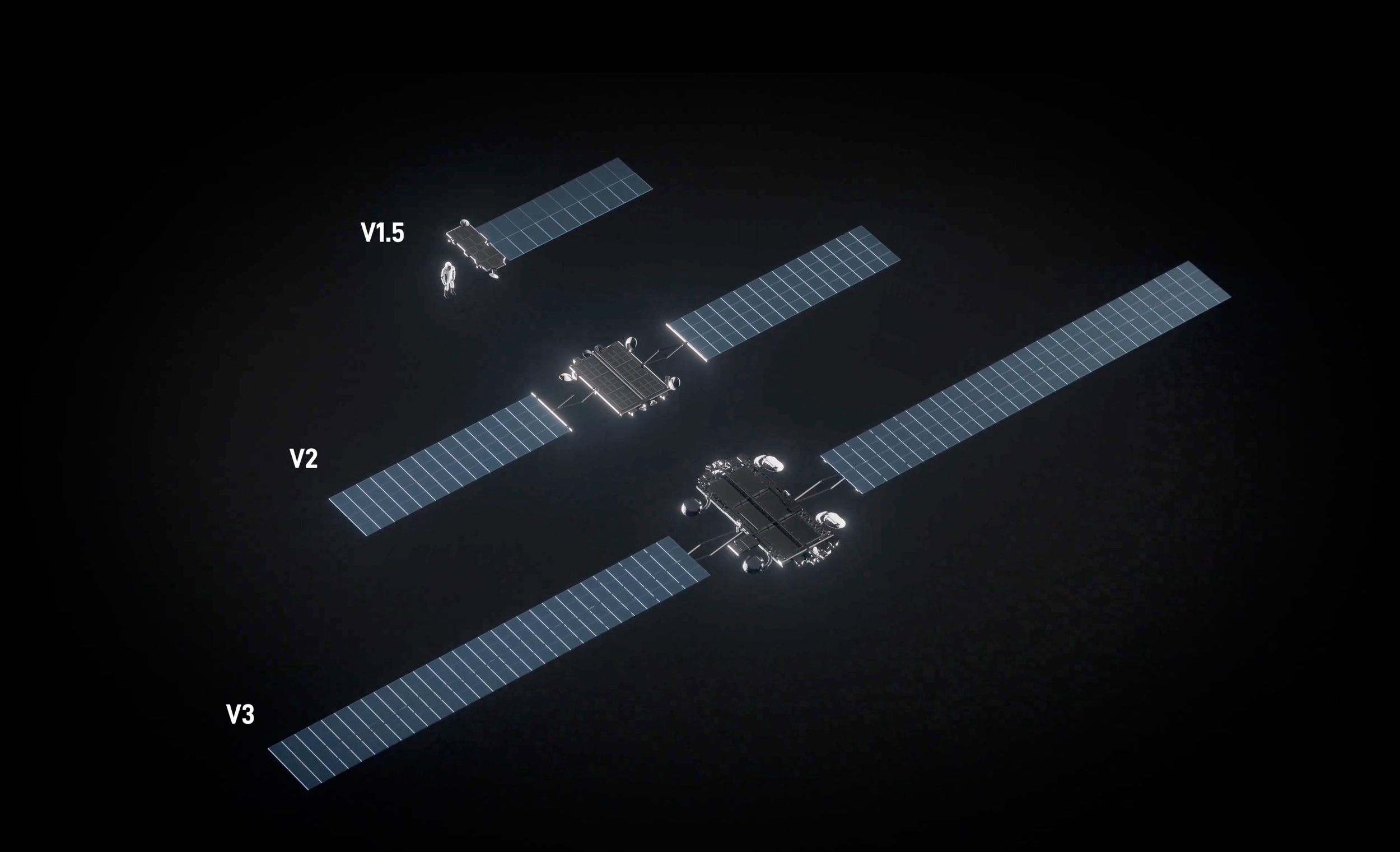

WASHINGTON — SpaceX is seeking Federal Communications Commission approval for a satellite constellation of unprecedented scale intended to function as an orbital data center.
In a filing with the FCC late Jan. 30, SpaceX proposed an orbital data center constellation of up to one million satellites in low Earth orbit. The satellites would operate at altitudes between 500 and 2,000 kilometers, in 30-degree and sun-synchronous inclinations, to maximize time in sunlight for solar power generation.
“By directly harnessing near-constant solar power with little operating or maintenance cost, these satellites will achieve transformative cost and energy efficiency while significantly reducing the environmental impact associated with terrestrial data centers,” the company said in the filing.
“Launching a constellation of a million satellites that operate as orbital data centers is a first step toward becoming a Kardashev Type II civilization — one that can harness the sun’s full power — while supporting AI-driven applications for billions of people today and ensuring humanity’s multiplanetary future among the stars,” SpaceX added.
A constellation of one million satellites would far exceed any system seriously considered. China filed plans with the International Telecommunication Union in late December for two constellations totaling nearly 200,000 satellites. In 2021, Rwanda filed ITU plans for constellations exceeding 300,000 satellites, linked to proposals by startup E-Space, which no longer appears to be pursuing such a system.
The application included few technical details, such as satellite size, mass or specific orbital parameters. SpaceX said it plans to place the satellites in “largely unused orbital altitudes” within the proposed range. Satellites in higher sun-synchronous orbits, which would remain in sunlight more than 99% of the time, would support applications requiring constant computing capacity, while those in lower-inclination orbits would handle peaks in demand to balance system loads.
A key feature of the proposed system is reliance on intersatellite optical links for communications among the satellites and with Starlink spacecraft, which would then relay data to the ground.
However, the satellites will also operate in the Ka-band, primarily as a backup for telemetry, tracking and command uses. SpaceX said those communications, which would require an FCC license, would take place on “a non-interference, unprotected basis.”
The filing did not include a deployment schedule or cost estimate. SpaceX requested a waiver of FCC milestone requirements that typically require half of a constellation to be deployed within six years of authorization and the full system within nine years. The company argued the milestones are intended to prevent spectrum warehousing and are unnecessary because it would use Ka-band spectrum on a non-interference basis.
SpaceX and its chief executive, Elon Musk, have shown a strong interest in orbital data centers in recent months as demand for computing power to support artificial intelligence applications grows. That demand is a key driver behind SpaceX’s plans for an initial public offering, which could occur as early as this summer and raise tens of billions of dollars.
Recent reports have suggested Musk is also considering merging SpaceX with xAI, his artificial intelligence and social media company, or potentially combining SpaceX with Tesla, the publicly traded electric vehicle manufacturer that has invested heavily in AI technologies for autonomous driving and robotics.
Much of the filing emphasizes the advantages of orbital data centers, a concept being explored by both established companies and startups. SpaceX argues that rising costs and power demands of terrestrial data centers, combined with falling launch costs, could make space-based computing more economical in the coming years.
“Freed from the constraints of terrestrial deployment, within a few years the lowest cost to generate AI compute will be in space,” SpaceX said, enabling advances in AI models at “unprecedented speeds and scales.”
The system would leverage SpaceX’s experience with its Starlink constellation and its Starship launch vehicle, which the company plans to use to deploy next-generation Starlink satellites as well as the orbital data center constellation.
“With Starship’s ability to deliver unprecedented tonnage to orbit for AI compute, the capacity for intelligence processing in space could surpass the electricity consumption of the entire U.S. economy, without the immense cost and disruption of rebuilding Earth’s strained electrical grid to support the explosive demand for data centers,” SpaceX said.










Related Posts
Stay Informed With the Latest & Most Important News



Advertisement
-
 01Two Black Holes Observed Circling Each Other for the First Time
 -
 02From Polymerization-Enabled Folding and Assembly to Chemical Evolution: Key Processes for Emergence of Functional Polymers in the Origin of Life
 -
 03Astronomy 101: From the Sun and Moon to Wormholes and Warp Drive, Key Theories, Discoveries, and Facts about the Universe (The Adams 101 Series)
 -
 04True Anomaly hires former York Space executive as chief operating officer
 -
 05Φsat-2 begins science phase for AI Earth images
 -
 06Hurricane forecasters are losing 3 key satellites ahead of peak storm season − a meteorologist explains why it matters
 -
 07Binary star systems are complex astronomical objects − a new AI approach could pin down their properties quickly